Any hour, any loss type
24/7 Emergency Response for Water, Fire, Storm and Mold Damage
A supply line lets go at two in the morning. The fire crew leaves at midnight and the house still has to be dealt with. Water, fire, smoke, storm and mold calls all come to one number here, and we respond within an hour, at any hour. Tell us what you can see from where you're standing: that's enough to start.
Request Help Online
What the room isn't showing you
What the First Read Finds
Smoke settles in rooms the fire never reached, on surfaces that still look clean. Water does the opposite: one wet patch on the floor, and the rest of it under baseboards, along the joists and inside the wall cavity. Neither one shows its size from the doorway, and at the point you call, which of them you're dealing with may not be settled either.
Two instruments settle it. Calibrated moisture meters put a number on material that feels dry to a hand. A thermal imaging camera shows the cold spot behind a surface nobody has opened yet. What those readings turn up is what the scope gets built from, and what the estimate is written against.
One number, every loss type
What the Emergency Line Covers
Water, fire, smoke, storm and mold all come to the same number, and so does what tends to arrive with them: no power at the property, an opening in the structure, contents sitting in the wet. Each one changes what the first visit starts with.
Any Hour of the Day
Warrior takes emergency calls at night, on weekends and over holidays. Three response units cover the service area.
Power at the Property
Extraction and air movers need electricity, and a flooded house often has the breakers off. Warrior owns generators, so the drying can start without waiting on the utility.
Water Still Moving
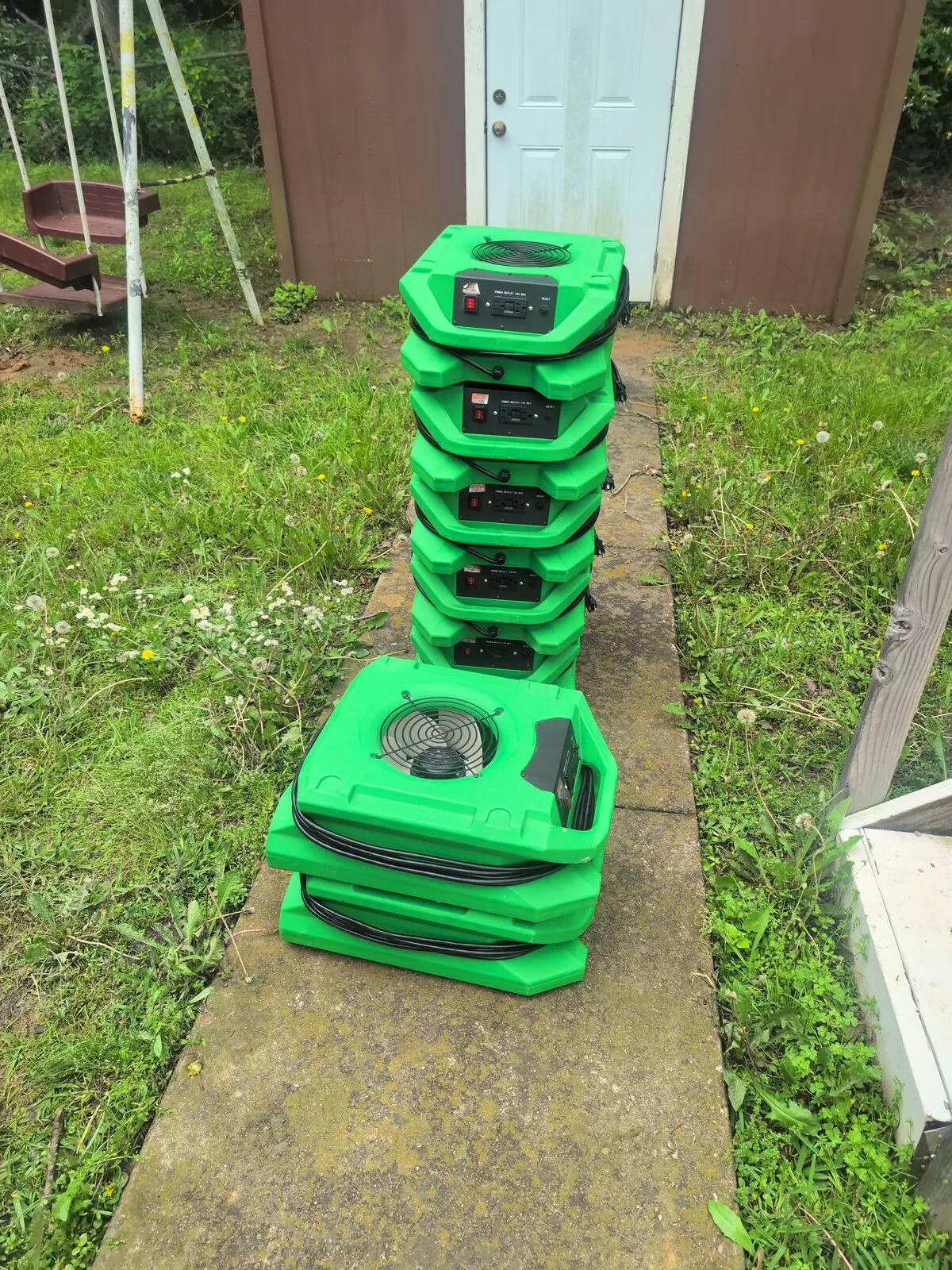
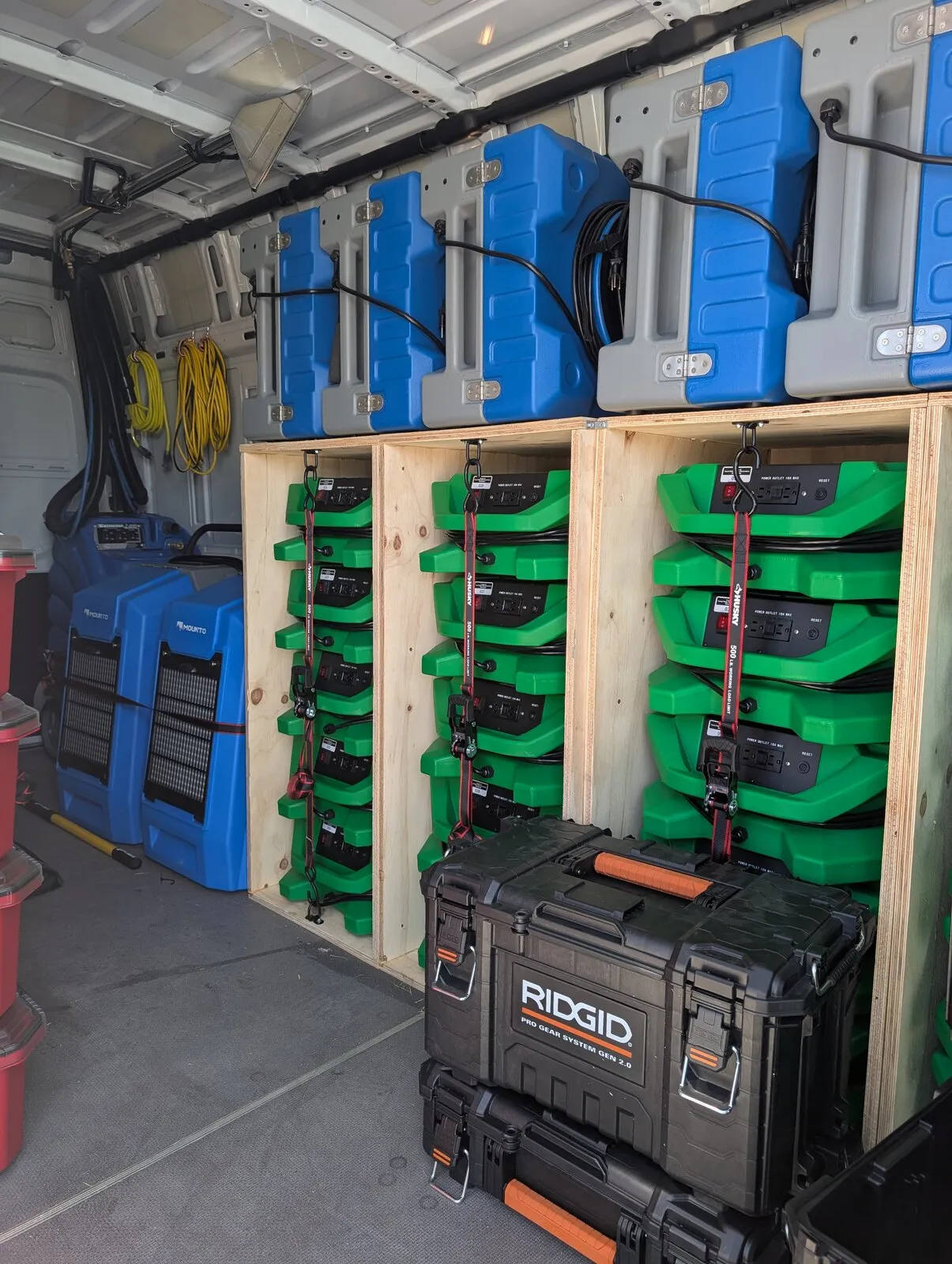
Portable extraction units take standing water off the floor and out of carpet pad. High-velocity air movers and commercial dehumidifiers follow, and Injectidry panels dry a wall cavity without opening it up.
After the Fire Is Out
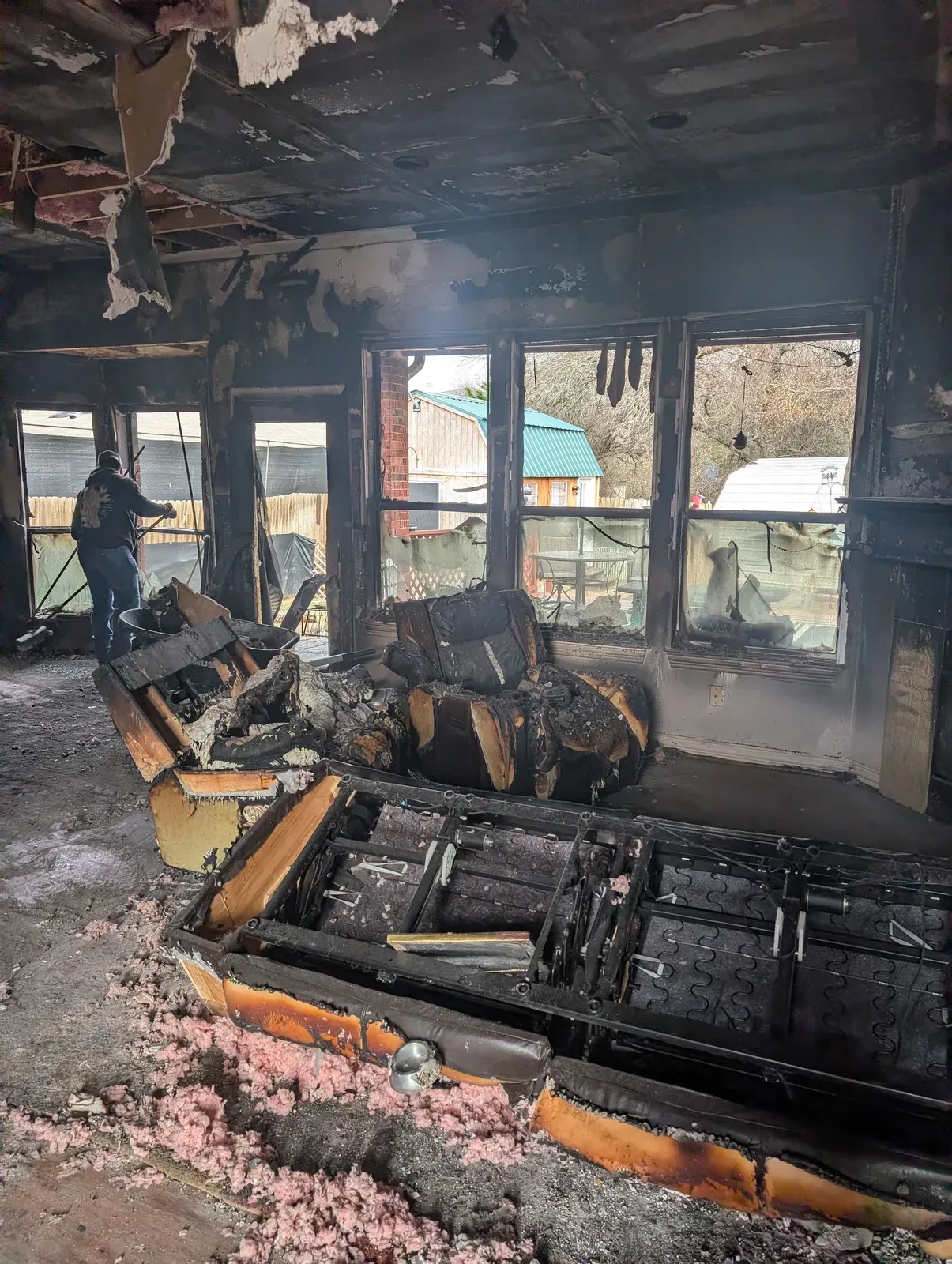
HEPA air scrubbers go on the air, including in rooms the fire never got to. Board-up closes what the fire and the fire crew opened up, and soot removal and contents cleaning start from there.
Growth Behind a Wall
Material that stayed wet long enough grows. Once an opened wall shows growth the job changes: poly barriers with zipper doors, negative air, and full PPE for anyone working inside them.
An Opening in the Structure
Emergency tarping and board-up close what a storm opened, so the inside stops taking weather while the repair gets scoped. The roof itself is Warrior Roofing, the sister company under the same owner.
The Crew That Turns Up
Warrior is owner-operated, with a crew of 6. Reconstruction is in-house as well, so one company carries the job from the first night through to the finishes.
A Written Estimate, at No Charge
The on-site estimate is free. It sets out the work from what the crew measured in the house, and it's the document your carrier gets if you claim.
From the call to the finishes
How an Emergency Job Runs
The order holds whatever the loss type turns out to be. What changes between a water call and a fire call is the work inside each step.
You Call
One line takes water, fire, smoke, storm and mold. You don't need to know which one it is or what the work is called: describe the room and what's happening in it.
The First Visit
The crew starts where you called from and works out to wherever the loss actually reached. That sets the size of the job: how much equipment goes in, where the cuts fall, what has to come out tonight.
The House Is Stabilized
Standing water comes out, an opening gets tarped or boarded, and drying equipment starts running. This is the part that keeps tonight's damage from turning into next month's.
The Scope Is Written
A written estimate comes out of what the crew found and measured, and it costs you nothing. That document is what you decide from, and what any claim is built on.
Your Carrier, If You're Claiming
The scope goes straight to your insurer, and we meet your adjuster at the house. Scope and pricing get negotiated with them on your behalf, and a supplement is filed if hidden damage turns up after approval.
The House Goes Back Together
Drywall hung, taped and finished, then trim, paint and flooring, by Warrior's own crew. The finishes go back after the scope is settled, not before.
The gap in between
What Happens Between the Call and the Truck
You don't need the right words for any of it. What you can see is enough: which room, what's coming through, whether it's still coming. Those few answers are what the visit gets built on, and they're most of what the call is for.
There's useful work in the wait, too. If the shut-off is safe to reach, close it. If the power to that area is off, lift out what you can carry: rugs, electronics, anything sitting low on a wet floor. If it's still on, stay off the wet floor and leave all of it where it is. Photograph the room while it still looks the way it does now, because it won't for long. Stay out from under a ceiling that's sagging or holding water, and leave that one to us.
The visit runs in one order: the affected rooms get read, the standing water comes out or the opening gets closed, and the equipment goes in. The scope of the work goes down in writing, and the estimate costs you nothing.
Call (903) 993-5663What to Have Ready When You Call
- What happened, and roughly when it started
- Whether the source has stopped, or is still running
- Whether the power is on in those rooms, and whether it's safe to use
- How many rooms are affected, and on how many floors
- What's underfoot in them: carpet, laminate, tile, hardwood
- Whether the building is safe to be in right now
- The address, and who will be there to let the crew in
- Whether a claim is already open, and which carrier it's with
After the first visit
The Job the Call Turns Into
The emergency work holds the damage where it is. What comes after it depends on what you're dealing with, so read the one that matches your house.
Water Damage Restoration
If it's water, the first visit turns into extraction, structural drying, and then the drywall, paint and flooring that put the room back.
Learn MoreFire Damage Restoration
Board-up and air scrubbers are only the first night of a fire loss. Soot removal, contents cleaning, odor work and the rebuild are the job itself.
Learn MoreMold Remediation
Water that sat before anyone called shows up later as growth, which is a different job again: containment, negative air, and taking out the material it's living in.
Learn MoreSTILL GOT QUESTIONS?
Frequently Asked Questions
If yours isn't here, call (903) 993-5663 and ask.
24/7 Emergency Response
Call the Emergency Line and Tell Us What Happened