Category 2 and Category 3 Water
Flood Damage Cleanup
Floodwater is already dirty by the time it reaches your floor, and that's what separates this from a burst supply line. What the water was carrying decides which materials in the room get washed, treated and dried, and which ones leave the house. Warrior Restoration is owner-operated and answers 24/7. Call at any hour and we respond within an hour, and the on-site estimate that follows costs nothing.
Request Help Online
Past the Water Line
Where Floodwater Actually Goes
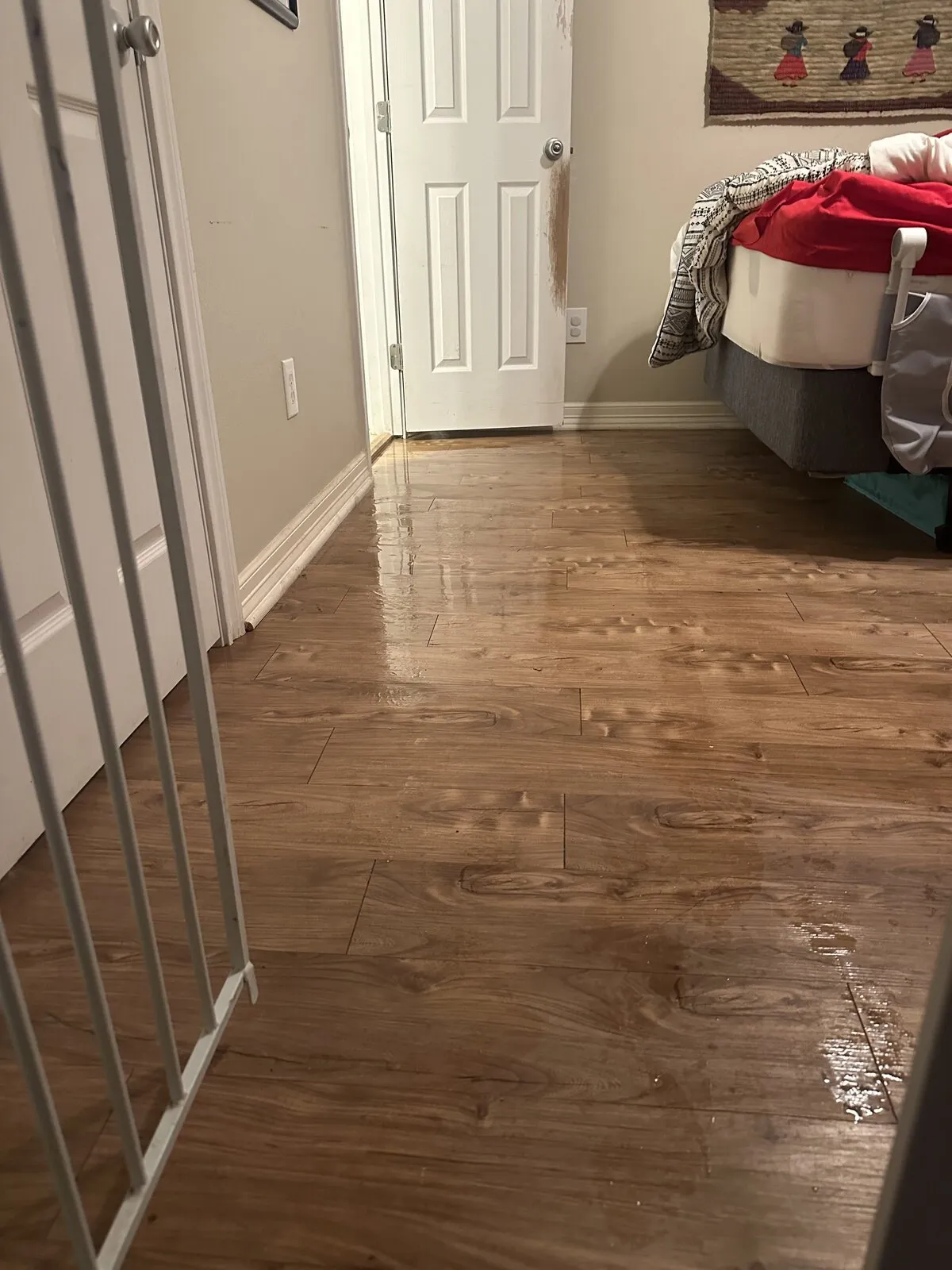
The mark on the wall is where the water stopped, not where it went. Water wicks: it runs sideways under a floor and climbs into a wall, so pad stays soaked under carpet that feels dry underfoot, and the bottom of the board holds water above the line you can see. Whatever the water was carrying goes with it into all of that.
So the first visit reads the room before anything is disturbed. We take moisture readings in the materials themselves and use a thermal camera to see where the wet areas run behind a finish, then walk the house with you and name what is staying. That reading is what sets the size of the job, and it's done before a hose or a saw comes off the van.
What We Do
What a Flood Cleanup Covers
Extraction is one step of a flood cleanup. Contaminated water leaves something behind on and inside everything it reached, so the work runs through tear-out, cleaning, drying and the rebuild, all of it by our own crew.
Grading the Water
The grade is the first thing established on a flood loss, and the rest of the scope is built on it.
Extraction and Debris Removal
Portable extraction units pull the standing water, including what is sitting under flooring and behind baseboards.
Air Filtration During Tear-Out
Negative air machines run while contaminated material is being cut out. HEPA vacuums take the fine debris and silt an extractor leaves behind.
Structural Drying
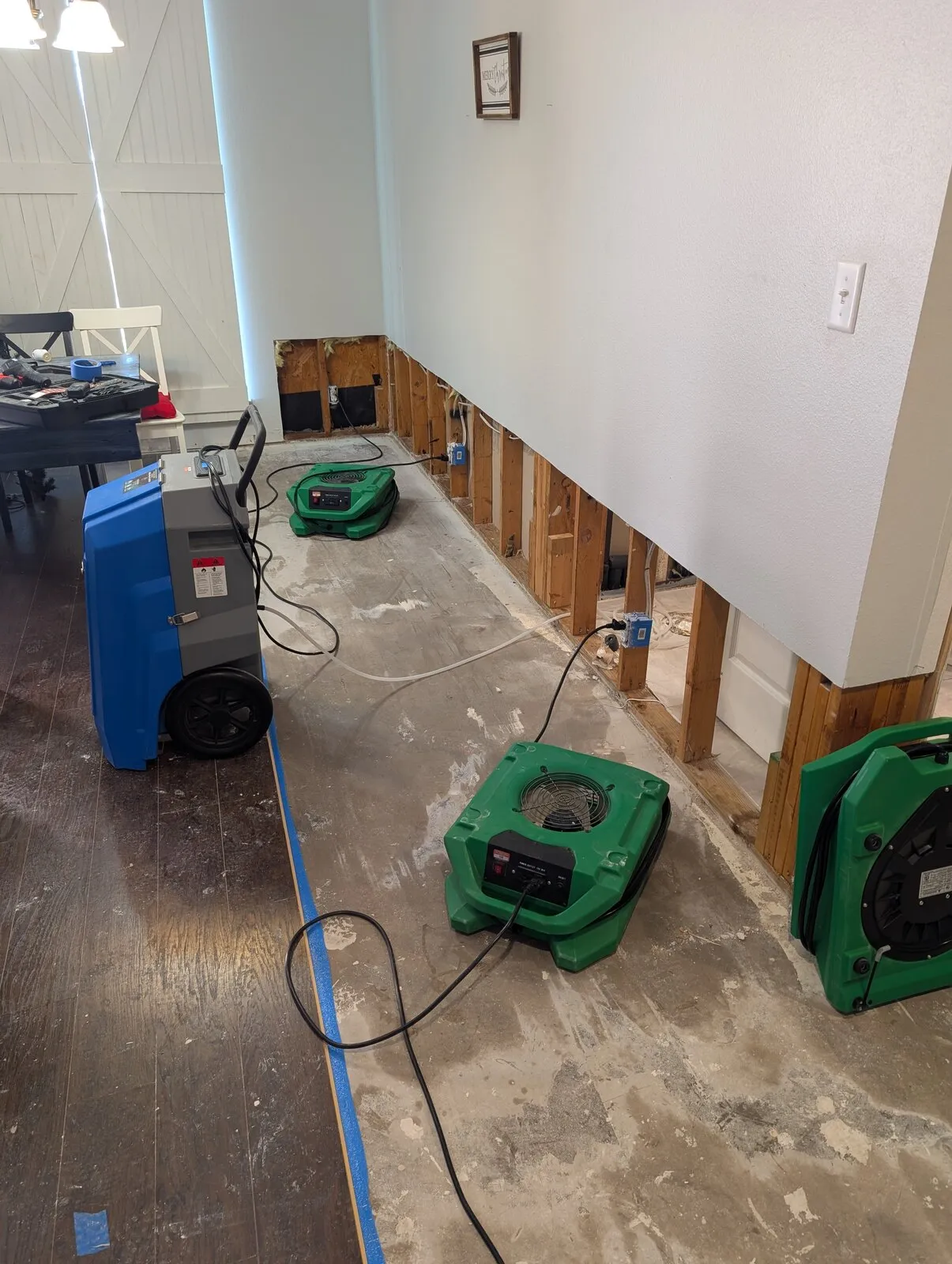
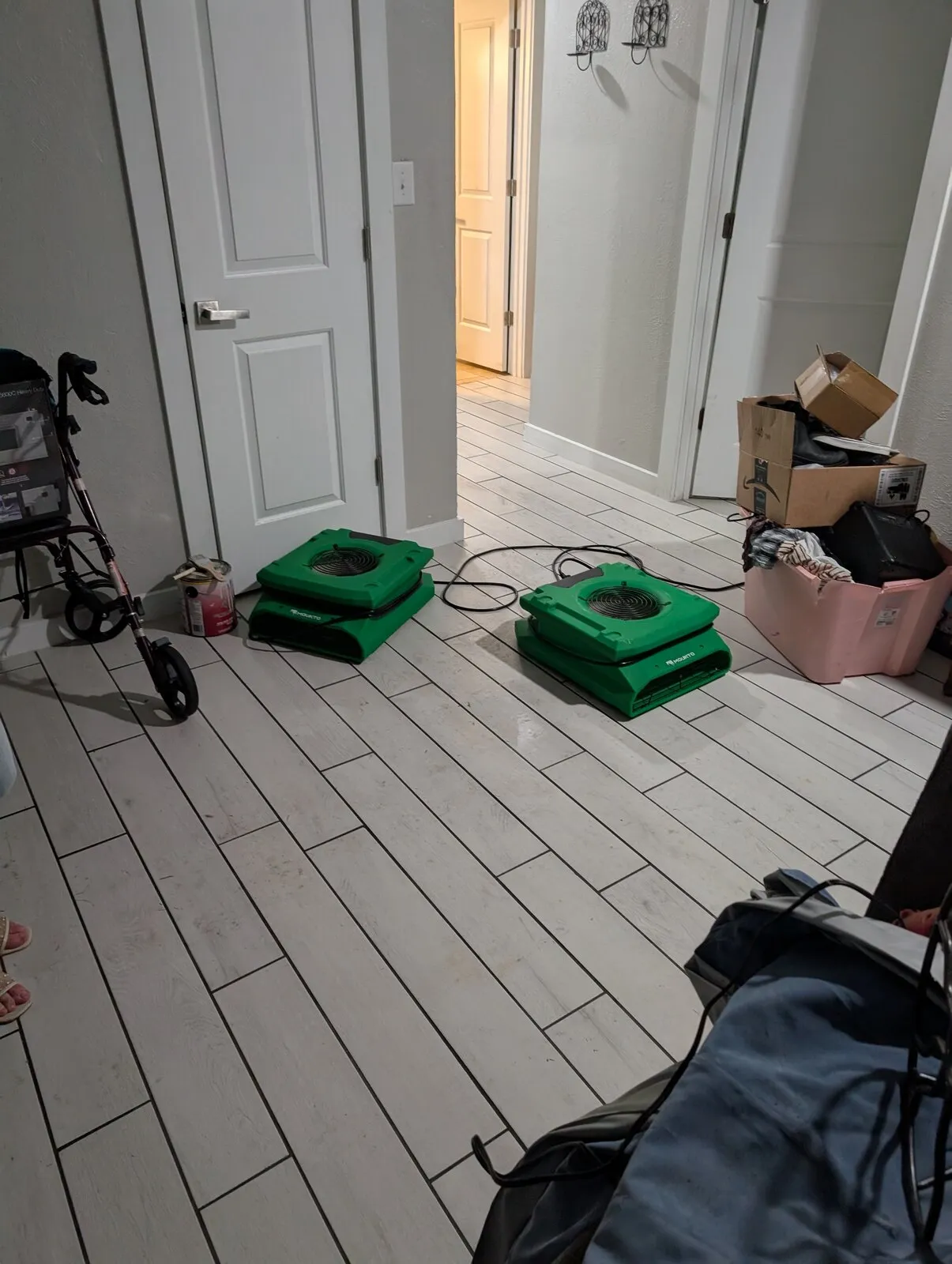
High-velocity air movers and commercial dehumidifiers run on what stayed: framing, subfloor, and the wall above the cut.
Finding Where the Water Went
Thermal imaging and calibrated moisture meters trace the water behind cabinets, under flooring and into wall cavities. The water's almost always traveled further than the visible line.
Selective Tear-Out
Soaked pad and carpet come up, wet insulation comes out of the cavity, and the drywall below the line goes to the dumpster with them. The meter and the grade set that line, not the eye.
Rebuild, In House
We hang, tape and finish the drywall, then trim, paint and flooring go back on. It's our own crew, with no handoff to a separate contractor.
The Scope and Your Carrier
Your carrier receives one written scope covering the removal, the cleaning, the drying and the rebuild, sent from us rather than through you. We're there when the adjuster inspects.
How We Work
Inside a Flood Damage Cleanup
The order is fixed, and most of it's settled by the grade and the meter rather than by preference. What you decide is whether the loss goes to your carrier, and what you want done with the contents. The rest is sequence.
The Call
We answer 24/7, and we respond within an hour. The visit and the written estimate don't cost anything.
The Category Call
Where the water came from, how long it has been standing, and what it ran through on the way in decide the category. That call is made on site and written into the scope, because everything after it depends on which one it is.
Extraction
Power to the affected circuits comes off before anyone steps into standing water, and contaminated water is worked in full PPE. Extraction runs from the low point of the room outward, and what won't lift with the water (sludge, silt, storm debris) comes out by hand and with HEPA vacuums.
Marking the Removal Line
Readings around the room set what leaves: pad, carpet, laminate, insulation, and drywall to a line above where the water stood. Cabinets and vanities come out or get their toe kicks opened, depending on what the meter reads behind them.
Tear-Out and Cleaning
Porous material comes out and goes to the dumpster, bagged where the water was Category 3. Framing, subfloor and every hard surface the water touched are cleaned and treated with an antimicrobial.
Drying, Then the Rebuild
Air movers and dehumidifiers run on the materials that stayed until they read dry. The rebuild waits on those readings, because a finish closed over a damp cavity won't stay closed.
Category 1, 2 and 3
What the Grade Decides Gets Kept
The trade sorts water by what's in it, under the IICRC S500 standard. Category 1 comes off a clean supply source: a burst pipe, a supply line, a water heater. Category 2 carries waste or contaminants that can make someone sick, which covers a washing machine overflow, a dishwasher line, and clean water that has since run through building materials. Category 3 is grossly contaminated: sewage, ground surface water, and water that crossed a yard or a street before it came through the door.
A grade isn't fixed at the moment of the loss. Clean water that sits warm in a closed room long enough stops being clean, which is why a small leak found late can be a harder job than a large one found early. Water that starts at Category 3 stays there. Nothing walks it back up, so the grade set on the first visit is the one the whole job is built on.
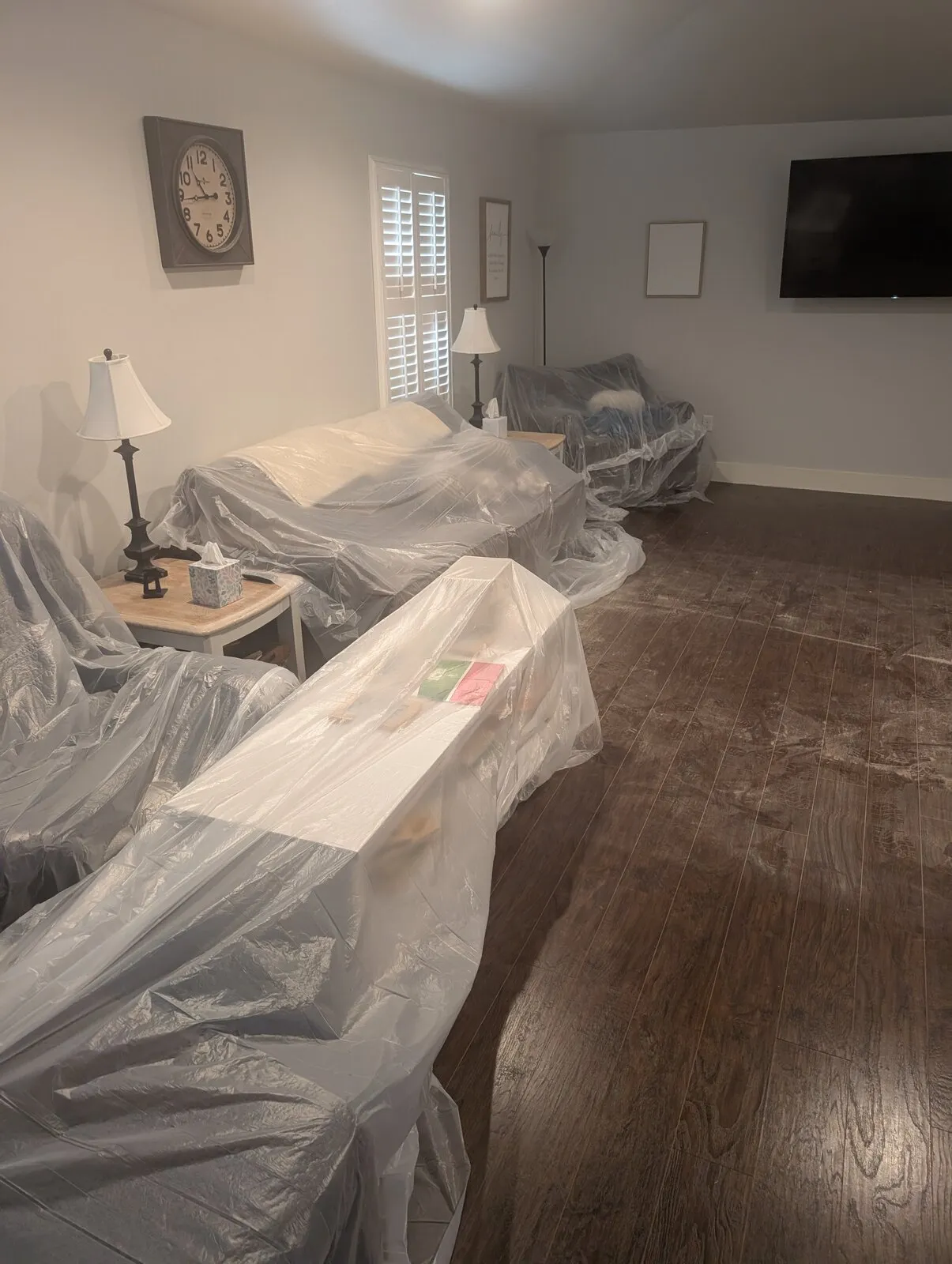
The sorting that follows is blunt, and it turns on one property: porous material holds contamination inside itself, where a cleaner can't reach, so on contaminated water it leaves the house instead of drying in place. Semi-porous and non-porous surfaces are washed, treated and dried where they are. Your belongings split along the same line, which is why the plastic goes over the furniture on day one: what can be washed is protected, and what absorbed the water is listed for the claim instead.
Call (903) 993-5663Material by Material
- Carpet pad: out of the house on anything worse than a clean supply source.
- Carpet: sometimes cleanable after Category 2, gone after Category 3.
- Insulation: wet batts come out of the cavity rather than dry inside it.
- Drywall: the cut goes above the water line, not level with it.
- Particleboard, laminate and engineered flooring: swollen at the seams and rarely worth drying.
- Studs and subfloor: cleaned, treated and dried in place where the readings allow.
- Tile, sealed concrete and other hard surfaces: washed, treated and kept.
- Solid hardwood: the judgment call. We read underneath it and pull a board before deciding.
Related Services
Other Water Damage Work
If your loss started somewhere else in the house, or the water hasn't stopped yet, one of these is closer to it.
Water Damage Restoration
The hub for every water loss we take, with the insurance side of a claim laid out in one place.
Learn MoreBasement Water Removal
Water in a below-grade room has nowhere to drain, which changes how it comes out and the grade it's reached by the time you find it.
Learn MoreEmergency Water Removal
If the water's still moving and nobody's found the source yet, start there: that page is about the first hours.
Learn MoreSTILL GOT QUESTIONS?
Frequently Asked Questions
What people ask most after a flood. For anything specific to your house, call (903) 993-5663, any hour.
24/7 Emergency Response
Get a Free Flood Damage Cleanup Estimate