After the Fire Is Out
Smoke Odor Removal
The fire is out, the walls have been washed, and the house still smells like the fire. Smoke gets inside porous material and stays there, giving a little of it back every day it's in the building. Finding that material and getting it out of the house is what this work is. We answer at any hour and respond within an hour. The on-site estimate is free and it comes in writing.
Request Help Online
Where the Smell Is Coming From
What Holds the Smell After a Fire
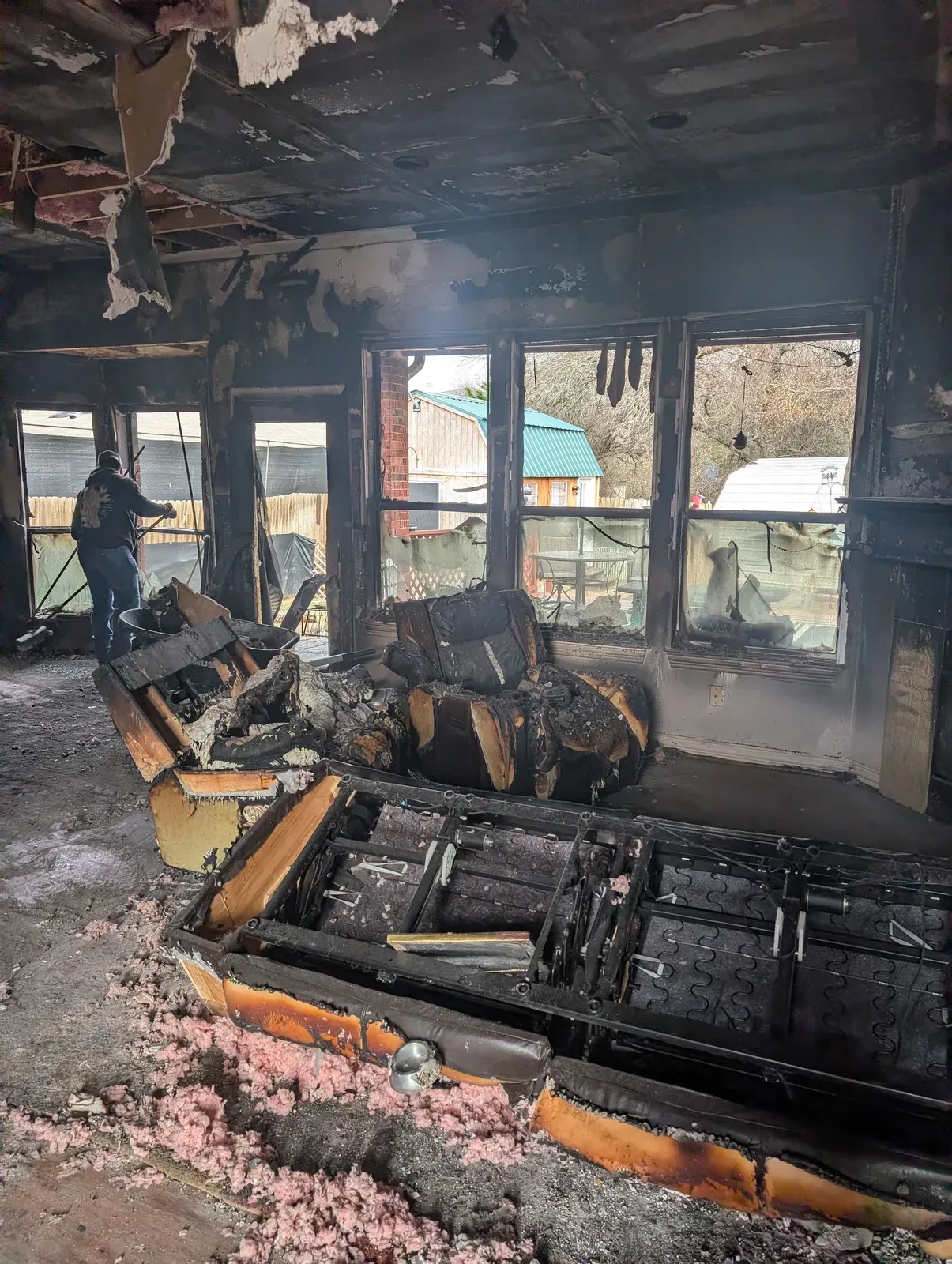
Smoke goes where the air goes, and it soaks into whatever is porous on the way: the pad under a carpet, the paper face of drywall, batt insulation in a wall or an attic, upholstery foam, unfinished wood inside closets and cabinet boxes, the dust coating a return duct. Those materials take the smoke in and release it slowly, which is why a room can look finished and still smell like the fire.
That is what sets the size of the job. A smoke odor scope gets written material by material: what is cleaned where it sits, what leaves the building for good, and what goes out for cleaning and comes back at the end. Two houses with the same amount of fire damage can need very different amounts of this work, depending on what the smoke found to settle into.
What We Do
What a Smoke Odor Job Includes
Odor work is a removal job first. The cleaning and the equipment matter and they come after. How much of each a house needs depends on which materials the smoke got into and how long it sat in them.
Thermal Fogging
A thermal fogger heats a deodorizer until it travels the way smoke travels, so it reaches the same voids, gaps and cabinet backs. It runs at the end of the job, once the removal work is finished.
HEPA Air Scrubbing
HEPA air scrubbers run while material is coming out and surfaces are being washed, so what leaves a wall doesn't land on something a technician already cleaned.
Ductwork After a Fire
Smoke pulls through the return and settles into the dust inside the duct runs, and the system carries it back into finished rooms. We clean the ductwork rather than replace it.
Surface Cleaning
Dry chemical sponges take the smoke film off painted walls, ceilings and trim without driving it further in. A wall that has been cleaned this way stops being one of the things feeding the smell.
Contents Cleaning and Pack-Out
Soft contents hold smoke and keep giving it off in a room that is otherwise done. Our own crew does the contents cleaning: what can be saved is packed out, cleaned off site and stored there until the rebuild is finished.
Finding the Source
Odor concentrates where porous material took the most smoke. We check the pad beneath the flooring, the insulation in the cavity, the back of the drywall and the dust in the duct runs before a scope is written.
Closets, Cabinets and Cavities
Smoke settles hardest where the air stops moving. A closet interior, the inside of a cabinet box and the space behind a toe kick still carry it after the open rooms have been cleaned, so they get handled on their own account.
The Written Scope
Your estimate lists the removal, the cleaning, the contents and the rebuild in one document. It goes to your carrier from us.
How We Work
Inside a Smoke Odor Removal Job
The order is the part that decides how this goes. Material comes out, then surfaces get cleaned, then the equipment runs. The two calls that are yours are whether this goes on the insurance claim, and what you want done with your contents.
The Call
Someone picks up 24/7. The visit costs nothing, and so does the written estimate it produces.
The On-Site Estimate
The estimate prices the removal, the cleaning, the contents and the rebuild for your house specifically, and it comes back to you in writing. What is in it is the scope the rest of the job runs on.
Contents Out First
Porous belongings leave before anything comes out of a wall, so they are not sitting in the room absorbing what demolition puts into the air. What can be saved goes off site for cleaning and storage.
Taking the Source Out
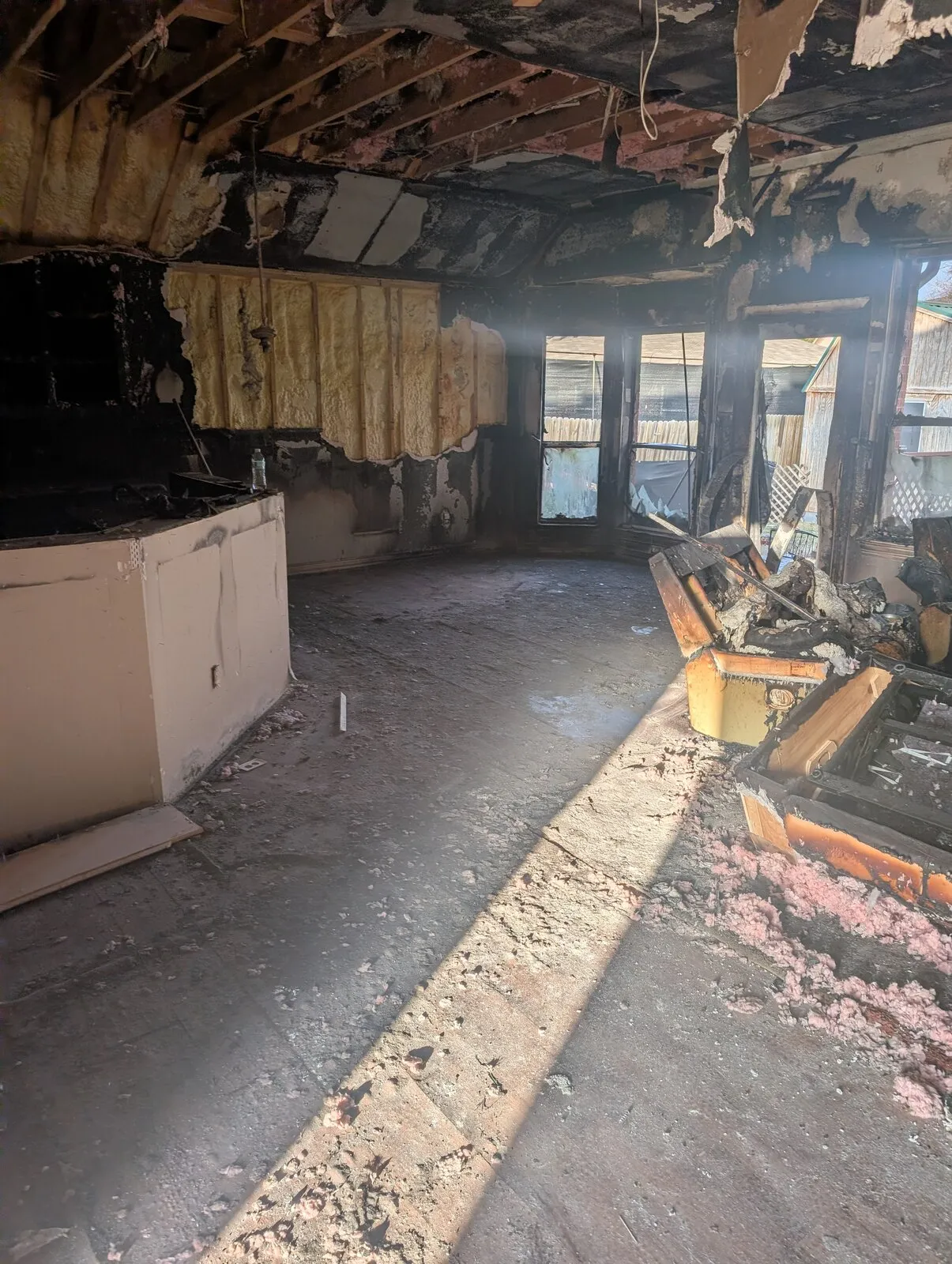
The material holding the smell leaves the building. Carpet and the pad under it come up, insulation comes out of the wall and attic cavities, drywall is cut back past where the smoke got into the paper, and shelving or trim that won't come clean by hand comes off with it.
Cleaning What Stays
Framing, subfloor and every hard surface staying in the house get cleaned by hand. The duct runs are cleaned in the same pass, so the system is not putting the smell back into rooms we have finished.
Scrubbing, Fogging, Then the Rebuild
HEPA air scrubbers run on the affected rooms and a thermal fogger carries deodorizer into the gaps and voids hands don't reach. Drywall, trim, paint and flooring go back after that, by our own crew.
Source Removal Before Deodorizing
Why Removal Comes First on an Odor Job
Smoke odor is a material problem before it is an air problem. Something in the room took the smoke in, and it keeps giving it off for as long as it is in the building. A deodorizer works on air and on surfaces. It does not get inside the pad under a carpet or the batt in a wall.
That is behind a house that smells fine the week the equipment leaves and smells like a fire again a month later. The treatment wore off on its own schedule. The material it was covering had not changed at all.
So the order is removal first. Everything that took smoke in and won't wash clean of it leaves the building, porous belongings go out for cleaning, and what stays gets cleaned where it sits. The scrubbers and the fogger come last, run on a house with nothing left in it feeding the smell. The equipment finishes the job. What came out of the house is what settles it.
Call (903) 993-5663What Comes Out and What Stays
- Carpet pad absorbs more smoke than anything else on a floor, and it leaves with the carpet over it.
- Insulation comes out of the wall and attic cavities. Smoke moves through a batt and stays in it.
- The paper face of drywall takes odor in, so the board is cut back instead of washed.
- Unfinished wood soaks it up: closet shelving, the inside of a cabinet box, the back of a baseboard.
- Upholstery foam, mattresses and pillow inserts hold smoke and seldom give it up again.
- Clothing, bedding and curtains usually clean up, and they go off site to be cleaned.
- Duct dust holds smoke residue, so the runs are cleaned rather than pulled out and replaced.
- Painted walls, tile, glass and finished floors hold the smell on top, so they are cleaned where they are and they stay.
Related Services
The Rest of the Fire and Smoke Work
Odor is one part of a fire loss. Start on one of these if what you are dealing with is the damage you can see, or a unit that has to turn over on a date.
Fire Damage Restoration
The whole loss in one place: emergency board-up and tarping, drying out the water the fire department left, demolition, and the rebuild afterward. Start here if the fire itself is what you are dealing with.
Learn MoreMarijuana Odor Removal
For a rental that has to be re-let or a house that has to be shown. Same removal-first work, on a landlord's or a realtor's deadline instead of an insurance claim.
Learn MoreSoot Removal
If there is visible residue on the walls and the contents, go there: what burned changes how soot behaves and which cleaning method touches it first.
Learn MoreSTILL GOT QUESTIONS?
Frequently Asked Questions
The questions that come up once the smell is the part that's left. Call (903) 993-5663 and ask about your own house, any hour.
24/7 Emergency Response
Get a Free Smoke Odor Removal Estimate