Below-Grade Water Removal
Basement and Below-Grade Water Removal
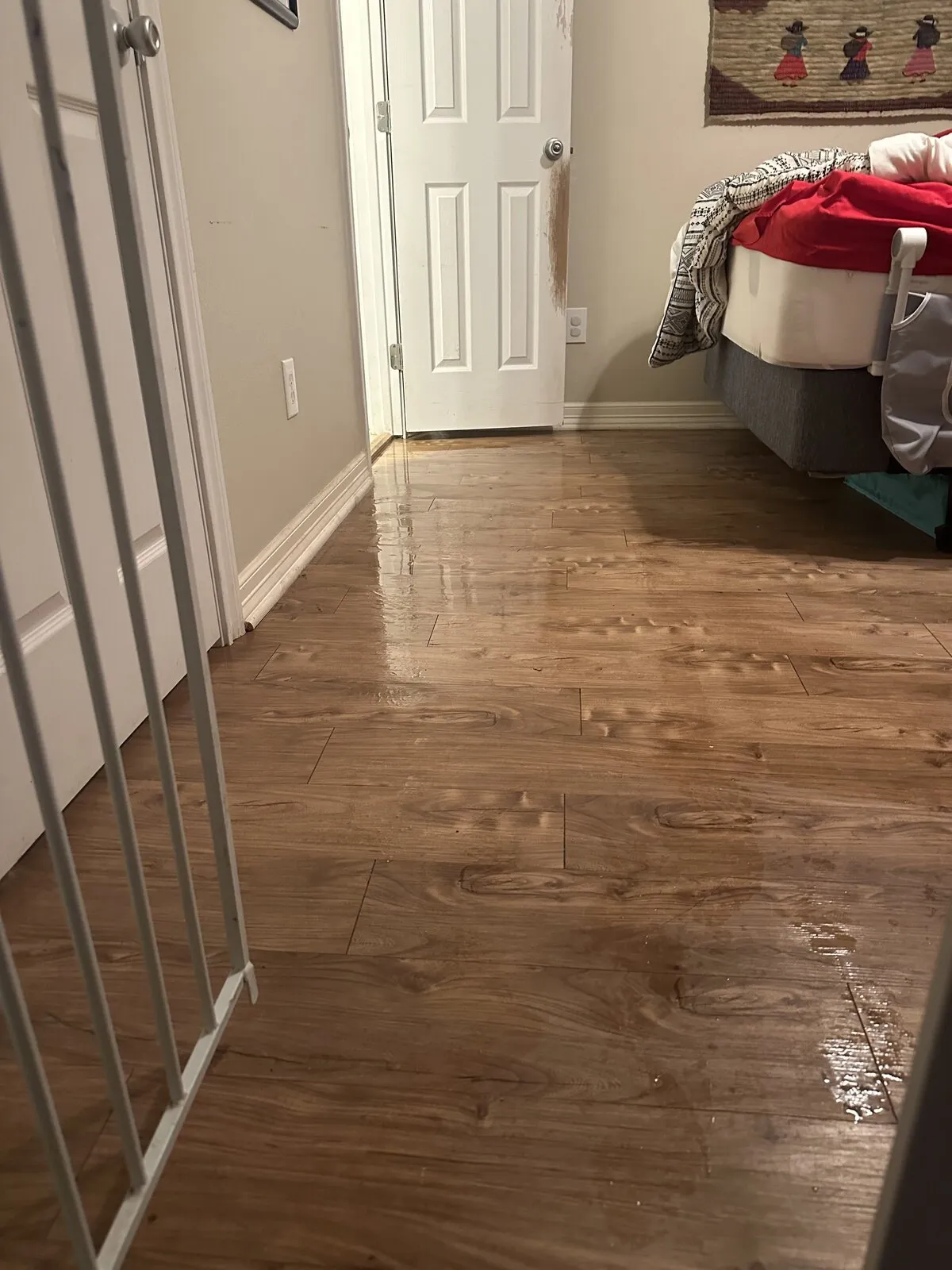
Water that reaches the lowest floor in a building has run out of downhill. It stays where it landed, spreads to the low point, and starts working into the concrete and the framing around it. We lift it out, dry what it soaked into, and put back whatever had to come out. Call any hour and we'll respond within an hour.
Request Help Online
More Than the Puddle
What Below-Grade Water Soaks Into
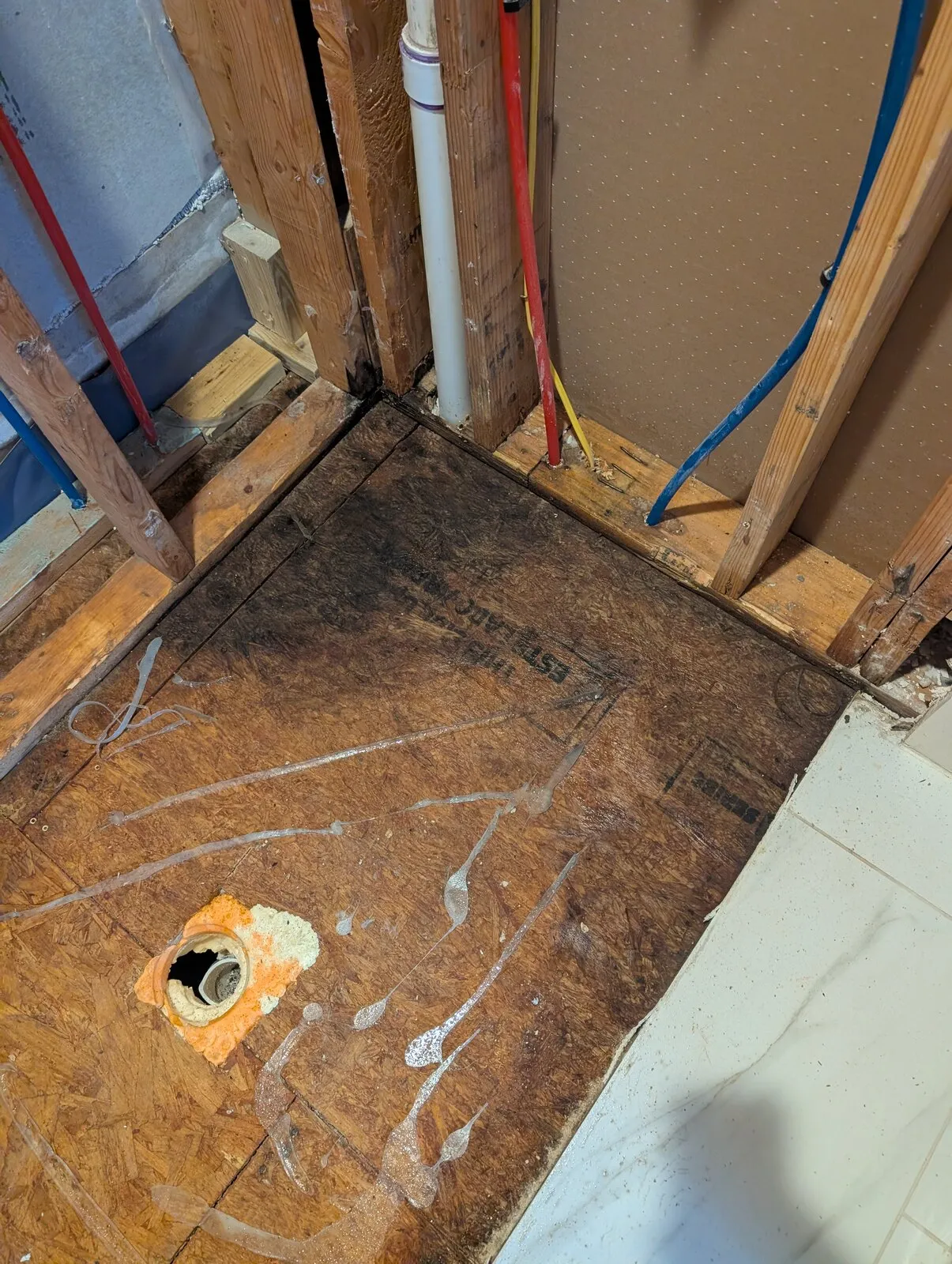
The water on the floor is the part you can point at. Below grade it's also in the base of the wall, because a poured or block foundation wall draws water upward out of the slab, and it's in whatever has been furred over that wall. In a crawl space the wet material is over your head rather than under your feet: subfloor, joists, and the insulation stapled between them.
So the measuring starts as soon as the standing water is gone. Calibrated moisture meters read the material itself, working up from the slab, and a thermal imaging camera shows the cooler band where water is sitting behind a finish. Those numbers set how far the work reaches, and they usually reach further than the tide line on the drywall does.
The Work Itself
What a Below-Grade Water Job Covers
Every below-grade call is a version of the same problem: water at the bottom of the building, material holding on to it, and a room with no way to dry itself out. Each part of the job answers one piece of that.
Lifting the Water Out
Portable extraction units and hose carry the standing water up the stairs or out through the hatch, until the floor is walkable again.
Crawl Spaces and Shelters
A confined space takes equipment chosen to fit through one opening, and hose runs long enough to reach daylight from the far corner.
Air Across the Wet Surfaces
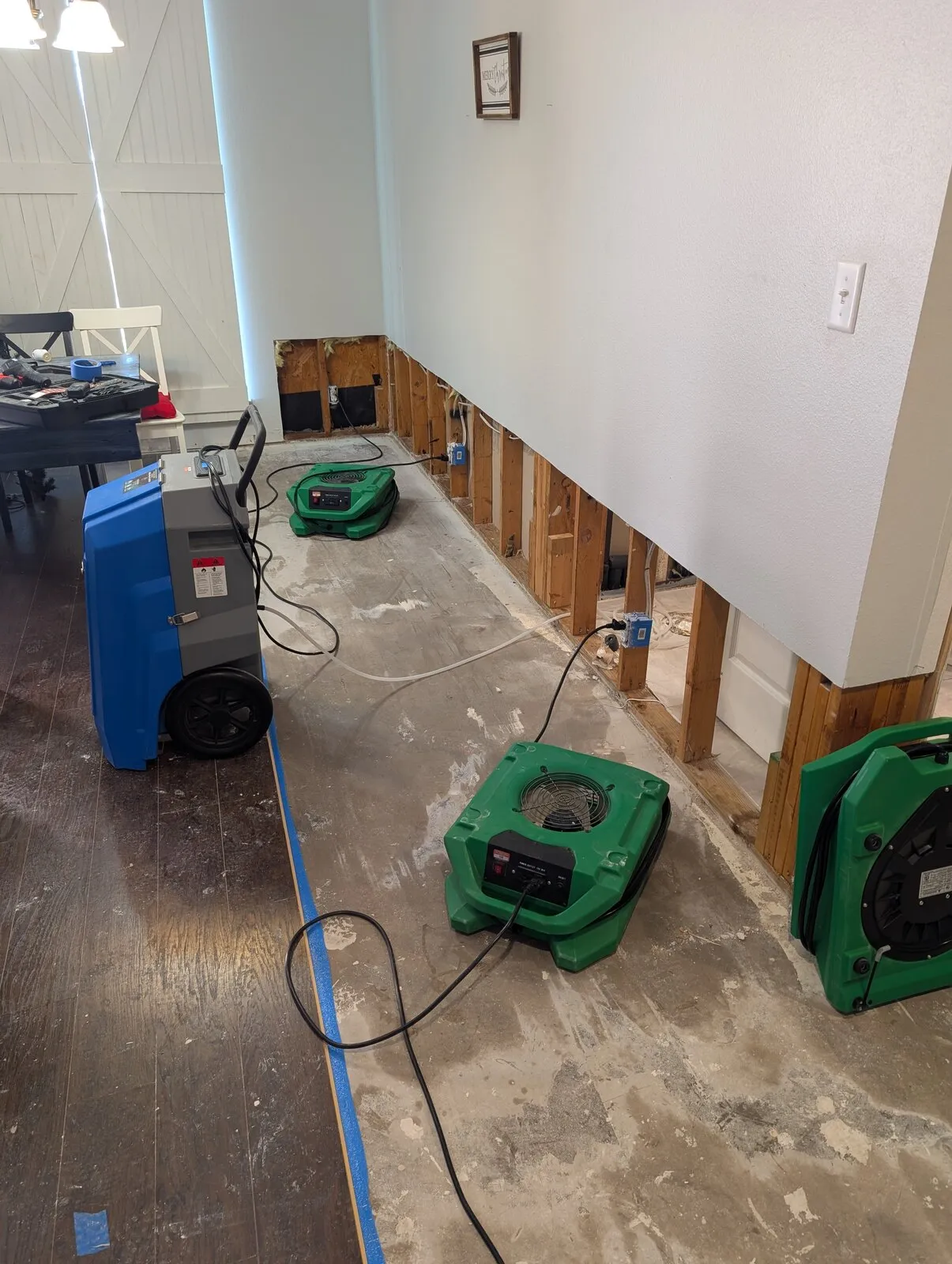
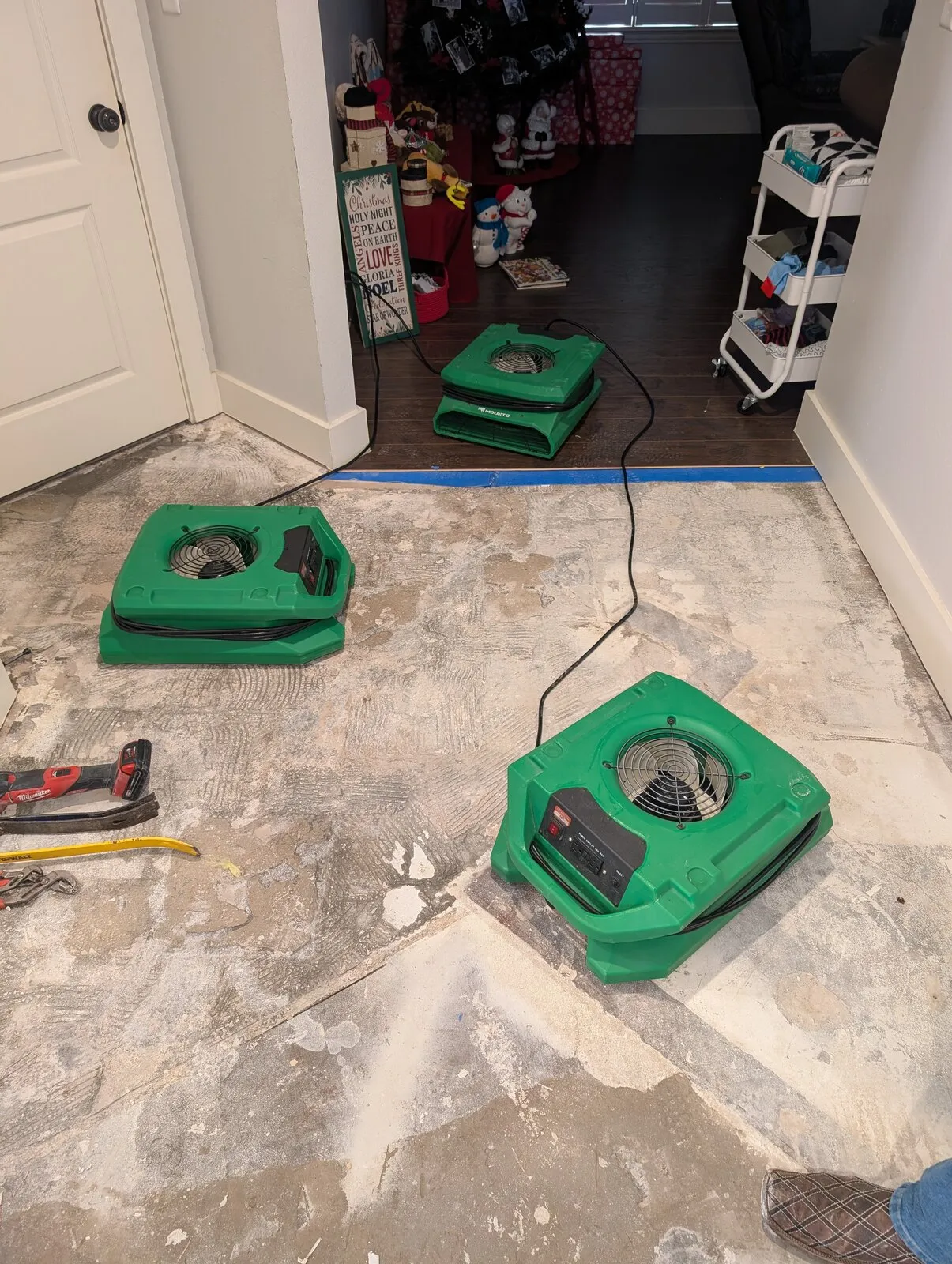
High-velocity air movers, angled so the air sweeps along wet material instead of into the middle of the room.
Dehumidification
Commercial dehumidifiers matched to the volume of the space, taking back the water that concrete and block keep giving off.
Putting a Number on It
Calibrated meters and a thermal imaging camera measure how high the water climbed, which is what gives the tear-out line a boundary.
Drying a Cavity In Place
Injectidry panels feed dry air behind furring and insulation through small holes, which often saves a finish that would otherwise come down.
Tear-Out and Rebuild
Whatever has to come out goes back with our own people: drywall, trim, paint and flooring.
Contents and the Scope
Pack-out and off-site storage for what's worth cleaning, and a written scope to your carrier for what isn't.
The Order It Runs In
From Your Call to the Finish Going Back
A below-grade job runs the same way in a finished basement, a crawl space or a storm shelter. Access and headroom are what change. Warrior Restoration is owner-operated and disabled-veteran-owned, and the crew of 6 that gets the water out is the crew that rebuilds.
You Call
Someone picks up, day or night. We'll ask how deep the water is, how you get down there, and whether the power to that level is still on, and a response goes out inside the hour.
Power and Access
Extraction and drying run off our own generators, so none of it waits on a circuit that may be sitting in water. A wet panel or outlet is an electrician's work, and your electrician has to clear it before anyone goes down there.
The Water Comes Up
Portable extraction units pull the standing water through hose and lift it clear of the space. Nothing at that level drains anywhere, so every gallon leaves the same way it has to: up, and out the door.
Measuring How Far It Went
Meters read the wall upward from the slab and the thermal camera finds what's sitting behind a finish. Those readings set the boundary for what gets opened. Where a wall could go either way, that's a call we make with you before anything comes off.
Opening and Drying
Wet base trim, saturated insulation and any material pressed against the foundation wall come out. Where a cavity can dry in place instead, Injectidry panels do it through small holes. Air movers and dehumidifiers then run until the meters read dry.
The Space Goes Back
The scope is written and submitted to your carrier before any finish returns. Drywall, trim, paint and flooring then go back with our own crew. If our tile or flooring installation causes an issue, we return to fix it.
The Bottom of the Building
Where the Water Has Nowhere to Go
Most houses around here sit on a slab, so there isn't much below-grade space to begin with. What there is tends to be a storm shelter that took water down the hatch, a crawl space under an older home, a room a step or two down, or a finished basement in a custom build. Small spaces, all of them, and all of them the last stop for anything liquid in the building.
That's the difference the whole job turns on. Water on any other floor keeps travelling: it finds a seam, drains through the assembly, and some of the problem leaves on its own. Below grade there's no down left to use. It pools at the low point and stays, and every gallon that leaves has to be lifted out through hose. The drying is just as deliberate, because a sealed space at the bottom of a house gets no draft and no sun on it, so the only air moving through it is air we brought.
Then there's what the room is made of. Concrete and block take on water readily and give it back slowly, for far longer than a surface takes to look normal again. Down here the material decides what gets kept, not the finish over it: a wall can feel dry to your hand while the meter still reads the block behind it as wet, and anything closed up at that point is closed up wet.
Call (903) 993-5663What Below Grade Changes
- Whatever's stored down there sits in the water first, so contents come up before the drying starts.
- There's soil on the other side of that wall, so none of the water in it evaporates outward.
- Power to that level often has to come off, which puts the equipment on generators.
- Humidity has nowhere to vent, so dehumidification carries more of the load here than it does upstairs.
- Foundation walls wick from the slab up, so readings start at the floor and work upward.
- Furring and insulation sit between the room and the wall, where the room's air never reaches.
- A storm shelter is sealed by design, so what gets into one stays until it's pumped out.
- In a finished basement the drywall runs down to the slab, which puts the first cut at floor level.
Related Services
If Your Water Started Somewhere Else
Water below grade nearly always arrives from higher up in the house or from outside it. These three pages cover where yours came from and what it brought with it.
Water Damage Restoration
The hub for every water loss we take. Start here if the space below grade isn't the only wet part of the house.
Learn MoreCeiling Water Damage Repair
Water that ended up at the bottom came through everything above it. A stained or sagging ceiling on that route is a safety question before it's a cosmetic one.
Learn MoreFlood Damage Cleanup
Water that came in from outside or backed up out of a line is graded by contamination, and that grade decides what can be kept and what's binned.
Learn MoreSTILL GOT QUESTIONS?
Frequently Asked Questions
Anything not covered here, call (903) 993-5663 and ask. The on-site estimate is free.
24/7 Emergency Response
Get the Water Lifted Out and the Space Dried