Inside Repair After a Roof Leak
Roof Leak Water Damage Repair
You've got a stain spreading on a ceiling, a drip that only shows up when it rains, or insulation that came down wet. We take the inside of that job: the tarp over the opening, the wet material out, the assembly dried, and the room put back. Exterior roof repair and replacement is Warrior Roofing, the sister company Justin Miller owns alongside this one, so one call starts both halves. Someone answers at any hour, and we respond within an hour.
Request Help Online
Before Anything Gets Opened
How Far the Water Actually Went
Drywall marks at the low point of whatever is wet behind it, so the ring on your ceiling shows an edge and not an extent. Above it, the water has usually spread across the top of the board, soaked a run of insulation, and darkened the framing it travelled along. Some of that dries on its own between storms. The rest sits where no air moves.
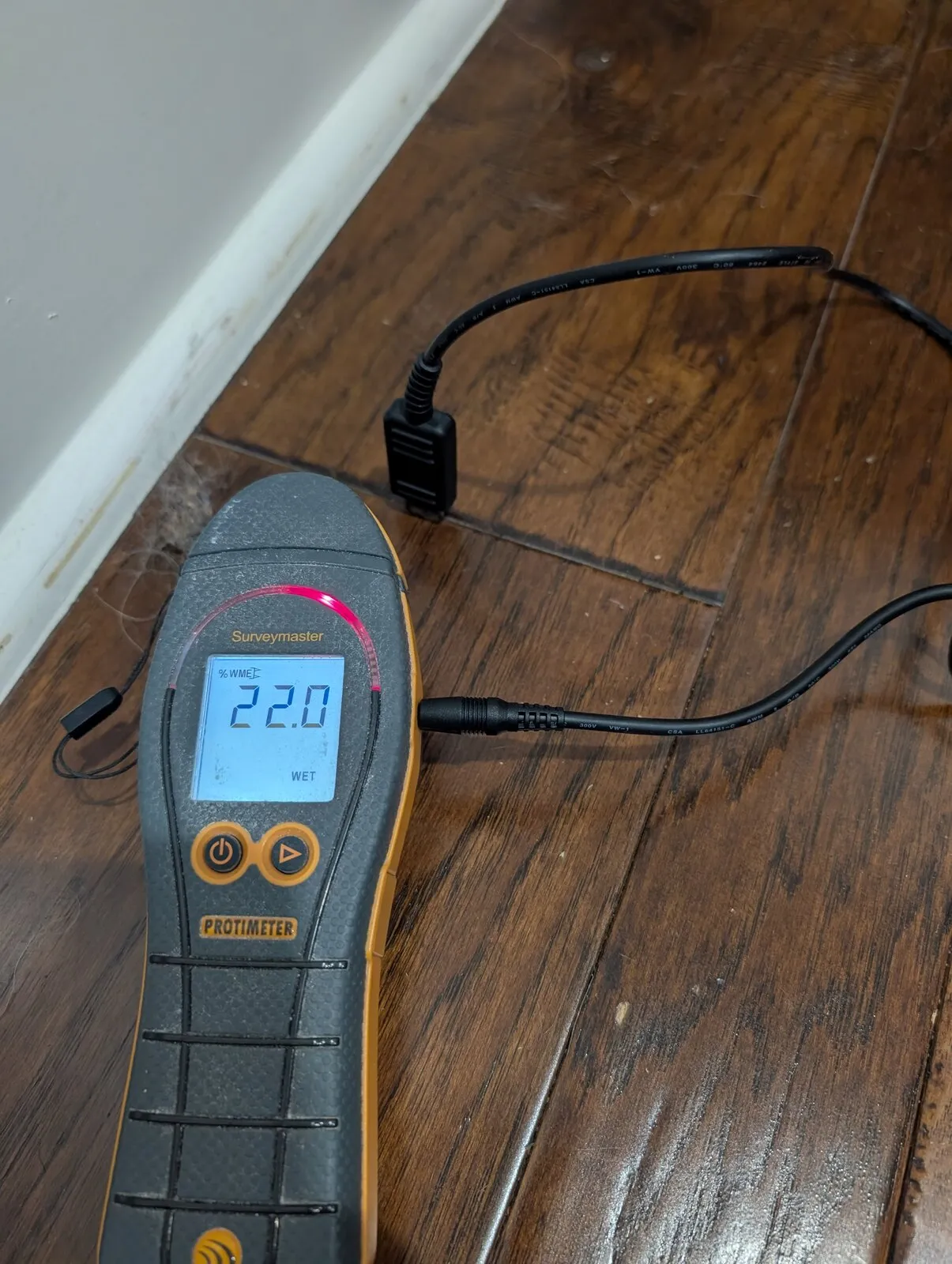
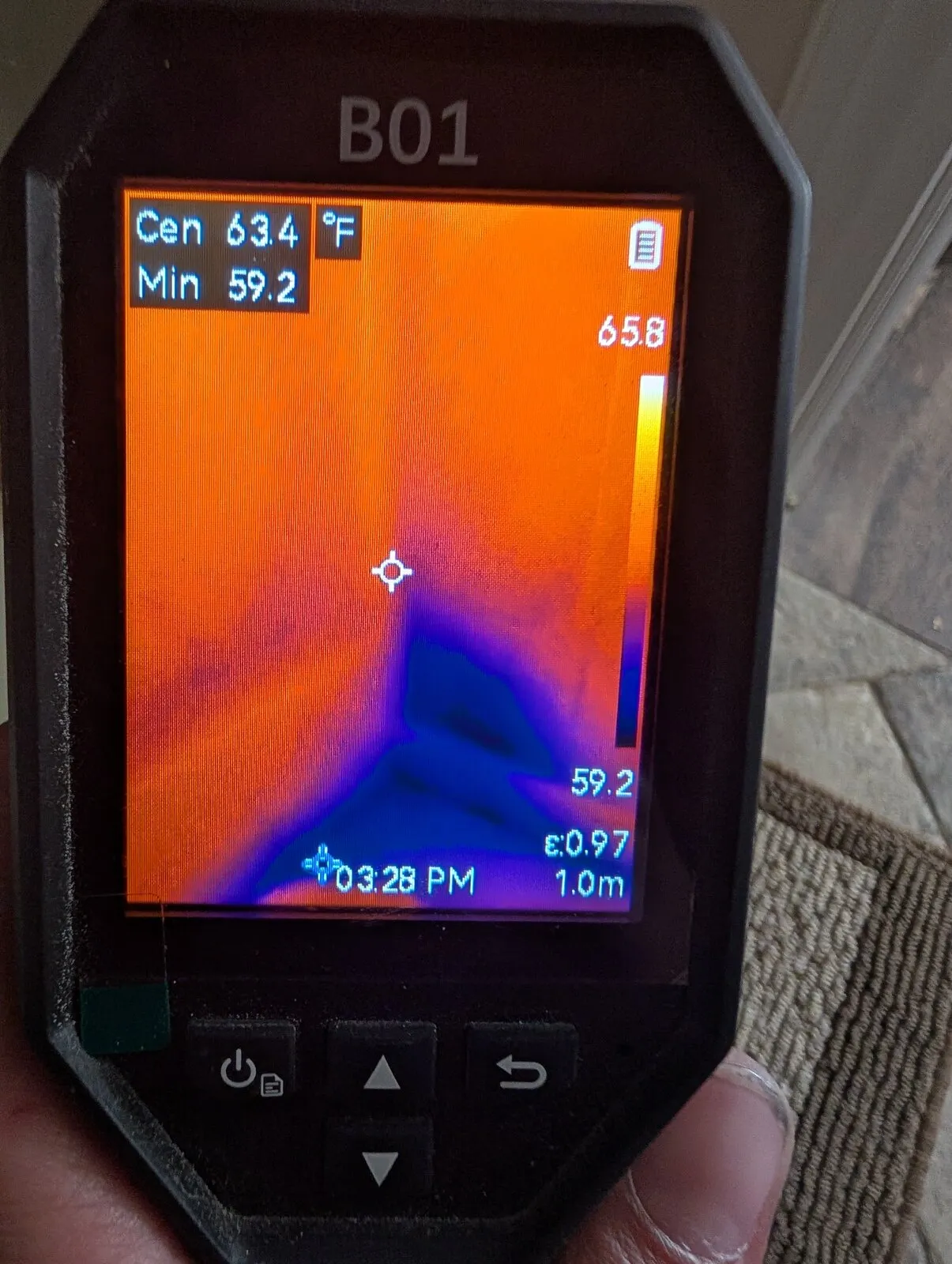
So we read the assembly before any of it comes out. A thermal camera shows wet material as a cold shape through a finished surface, calibrated meters put a number on it at the edges, and the boundary between wet and dry gets marked on the ceiling or the wall. That mark is what decides how much board comes down and how much stays up.
The Inside Half
What Roof-Leak Repair Covers Indoors
The roof gets closed by Warrior Roofing. Everything the water touched under the deck is ours, and it starts with a tarp so the next rain adds nothing to the loss.
Damage Assessment Indoors
We start where the water came out and work back toward where it got in. If there's an attic, that's the first look: stained sheathing and matted insulation read the run better than a finished ceiling does.
Emergency Tarping and Board-Up
Our own crew covers the opening, and boards anything wind or a fallen limb tore wider than shingles. That happens on the first visit, ahead of any tear-out.
Contents and Pack-Out
Furniture, boxes and whatever is on the closet shelves come out of the wet area first. What can be cleaned gets cleaned, and anything that has to be off the floor while the room is open goes into off-site storage.
Water Removal Indoors
Portable extraction units take standing water off floors and out of carpet and pad below the leak. Saturated pad comes up so the subfloor under it can be metered.
Finding the Entry Point
Daylight through the deck, a dark rafter, a cracked boot around a vent pipe. The entry usually sits well away from the stain, and locating it is what tells the roofing side where to work.
Drying the Cavity and the Attic Side
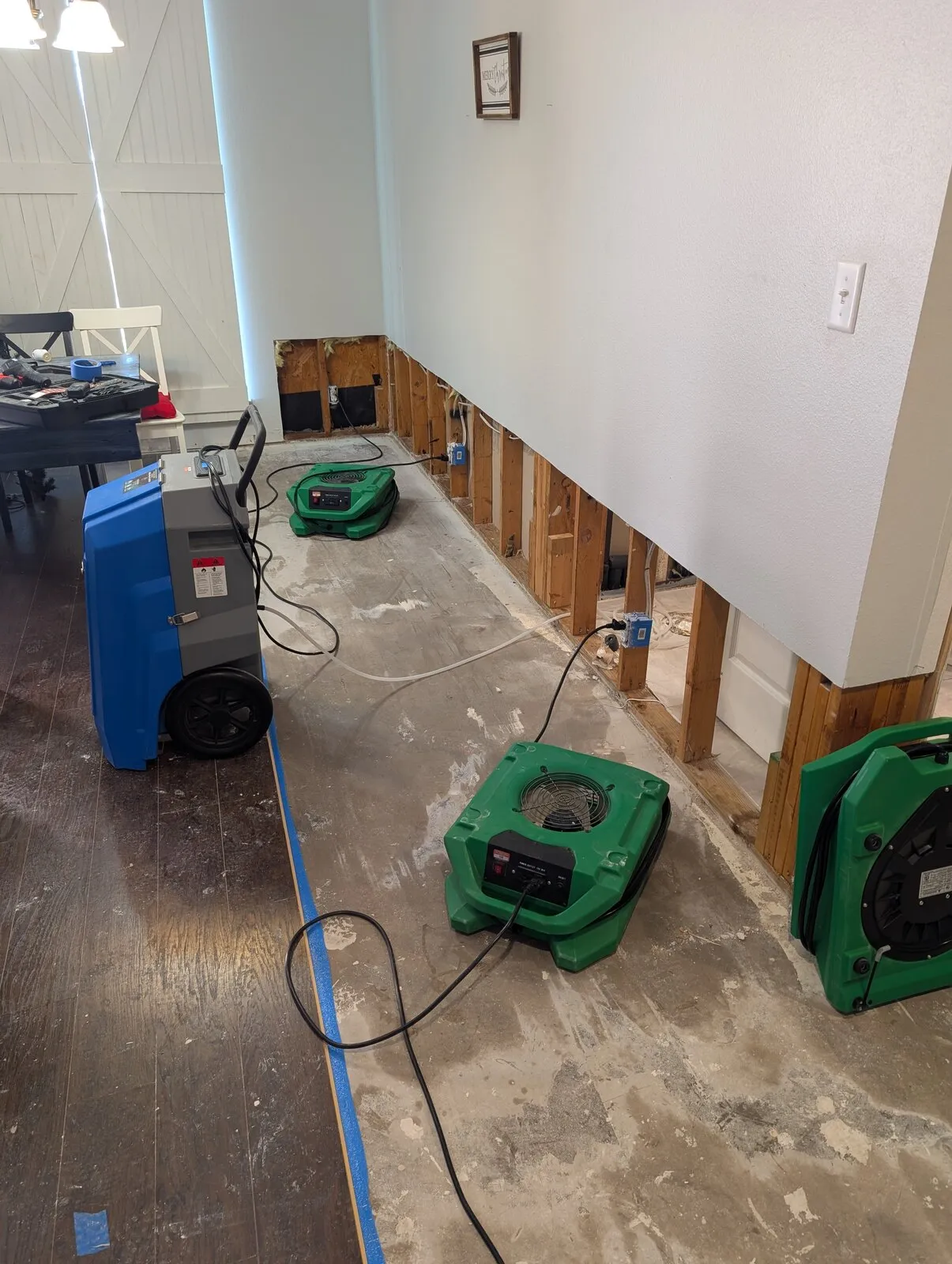
Wet blown-in insulation comes out with HEPA vacuums. Air movers run on open framing and the underside of the deck, Injectidry panels feed air into wall cavities rather than opening them up, and dehumidifiers carry the load out of the rooms below.
Interior Rebuild
Reconstruction is in-house, so the crew that opened the ceiling is the crew that closes it.
Scope and Supplements
Your scope goes to the carrier line by line out of Estimate Rocket, and we're there when the adjuster comes to look at it.
Order of Work
What Happens After You Call
The source of this one sits outside the house and the damage sits inside it, so the sequence runs from the opening inward.
The Call
Tell us where it's showing, what the weather has done since, and whether water is still coming through. We take that call at any hour, and the first visit is set from it.
Cover the Opening
We tarp the opening, and board up whatever got torn wider than shingles. Nothing indoors dries while the outside is still taking on water, so this comes first.
Find Both Ends of the Run
From the attic side: daylight, dark sheathing, matted insulation. From the room below: the stain, the soft spot, the swollen trim. Those two points rarely sit above each other, and the line between them is the job.
Take Readings and Mark the Boundary
Readings go in at the edges of the wet area, on the attic side and in the room below, and where wet turns to dry gets marked on the finish. You, our crew and the adjuster all work off the same mark.
Remove and Dry
Standing water comes up first. Saturated drywall, wet insulation and swollen trim get cut back to material that meters dry, then bagged and carried out. Equipment goes in behind it and stays until the readings hold dry.
Put the Inside Back
Insulation goes back to depth first, then board, tape and texture. Paint, trim and flooring follow, and fixtures and vent covers get reset last.
One Leak, Two Repairs
The Path Water Takes, and Who Owns Each Half
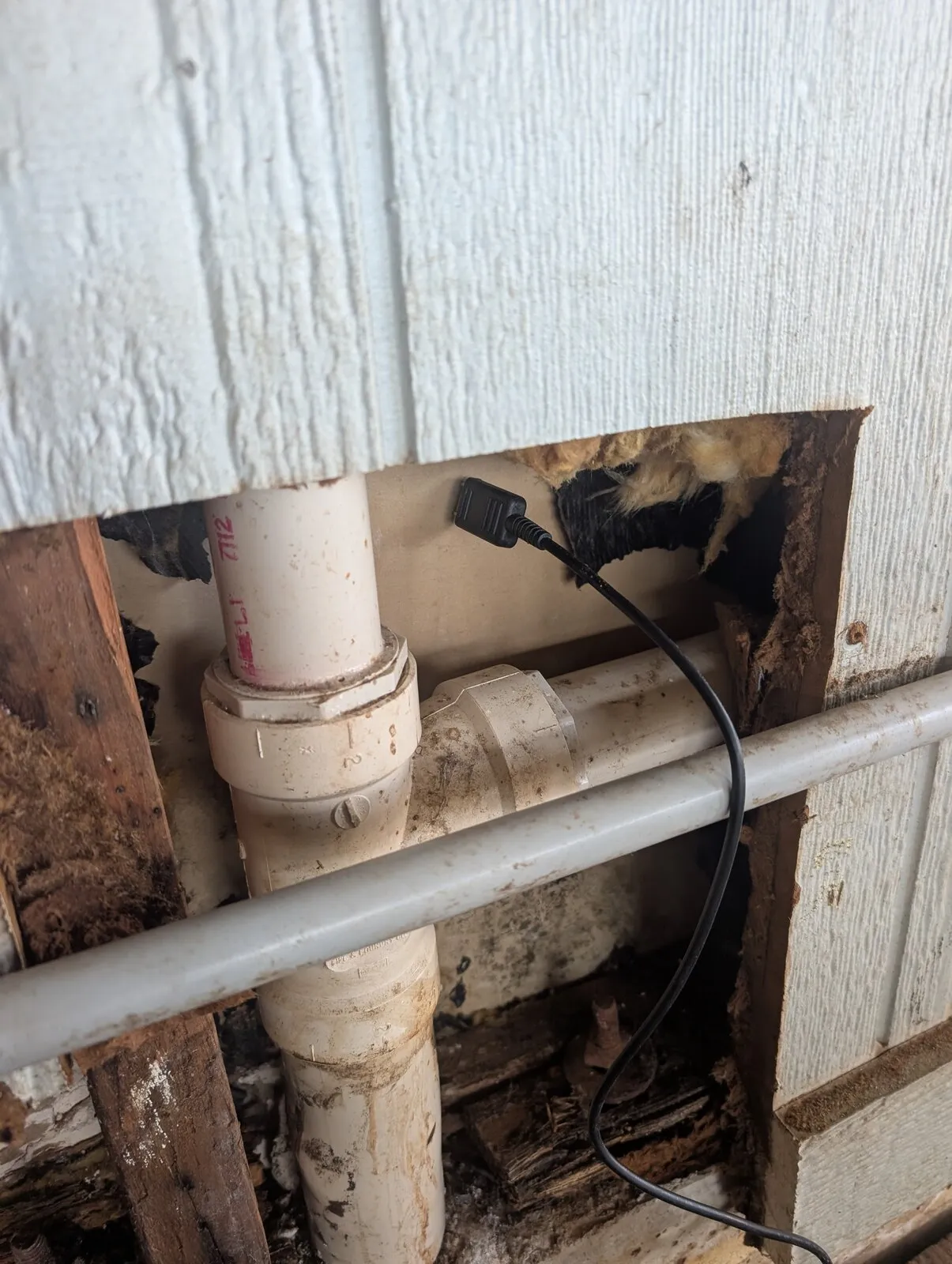
A roof leak starts at one opening: a lifted shingle, a nail backed out of the deck, a cracked boot around a vent pipe, flashing that's failed in a valley or against a chimney. Water gets past it, hits the deck, and then goes where the framing lets it go. It runs the underside of the deck until it meets a rafter, down the rafter to the top plate of a wall, and into the cavity from there. The stain is where the water left the assembly, not where it got in.
That run also has a history. Rain comes, part of what got in dries between storms and part of it doesn't, and the wet area reaches a little further each time. By the time a ceiling marks, the insulation over it has been holding water through more than one round of weather. How long the opening has been open is what sets the scope: how far the water travelled, how much material it soaked, and how much of that is still wet today.
Justin Miller owns both companies. Warrior Roofing takes the exterior: shingles, flashing, decking. Warrior Restoration takes the emergency tarping and board-up, everything the water reached indoors, and the rebuild that closes it back up. That's one phone call and two scopes written against the same loss, sequenced so the ceiling goes back under a roof that's already been dealt with.
Call (903) 993-5663What Sets the Scope on a Roof Leak
- Where the water got in: a lifted shingle drops it in one place, while failed valley or chimney flashing feeds a wider run
- How many storms the opening has been through, which decides how much material has been wet more than once
- Whether there's an attic over the room, or a vaulted ceiling where the assembly is closed and the readings have to come off the finish
- What's in the attic: blown-in insulation holds water in place, so it comes out instead of drying where it lies
- Whether the run reached a wall top plate and dropped into a stud bay, which turns drying from an open surface into a closed space
- Whether the water carried on past the ceiling into carpet, pad or hardwood on the floor below
- Whether the opening has already been closed by someone else, since the date it was covered sets how long the assembly took water
- Whether the loss is going to a carrier, since the interior scope goes to your adjuster line by line and the exterior half is scoped against the same loss
Related Services
Where a Roof Leak Sends You Next
If what's worrying you is the panel over your head, the wall that has to be cut, or how far past this room the water got, one of these is closer to it.
Water Damage Restoration
The full mitigation and rebuild sequence, for a leak that reached further than the room it showed up in.
Learn MoreDrywall Repair After Water Damage
Where the cut line lands once the wet board is out, and how texture and paint get matched back to the wall you had.
Learn MoreCeiling Water Damage Repair
What sits above a stained ceiling, and the point at which a sagging panel stops being a repair you can plan around.
Learn MoreSTILL GOT QUESTIONS?
Frequently Asked Questions
Call (903) 993-5663 with anything that isn't answered here. Someone picks up around the clock.
24/7 Emergency Response
One Call for the Tarp and the Repair Inside