Water Still on the Floor
Emergency Water Removal
Call at any hour and we respond within the hour. Water on the floor can soak into padding, drywall, cabinets and subfloor while its source is still being traced. Portable extraction units remove standing water; thermal imaging and calibrated meters show how far the wet area reaches.
Request Help Online
The Wet Spot and the Wet Area
Where the Water Has Already Gone
Standing water is the part you can point at. The rest of it has already left the room you found it in: soaked into a carpet pad, wicked up the bottom of the drywall, run along a subfloor seam into the next room, or slid under a floating floor where the surface still looks fine. In a kitchen, water can reach the toe kick and the wall behind the cabinets.
The distance between the spot and the wet area is what sets the size of the job, so it gets read before anything is opened up. A thermal imaging camera shows the cold zones sitting behind a finish, and a calibrated meter turns each one into a reading at the wall base and through the floor. Tear-out and drying then cover where the water went, not where it pooled.
Equipment and Decisions
What Emergency Water Removal Includes
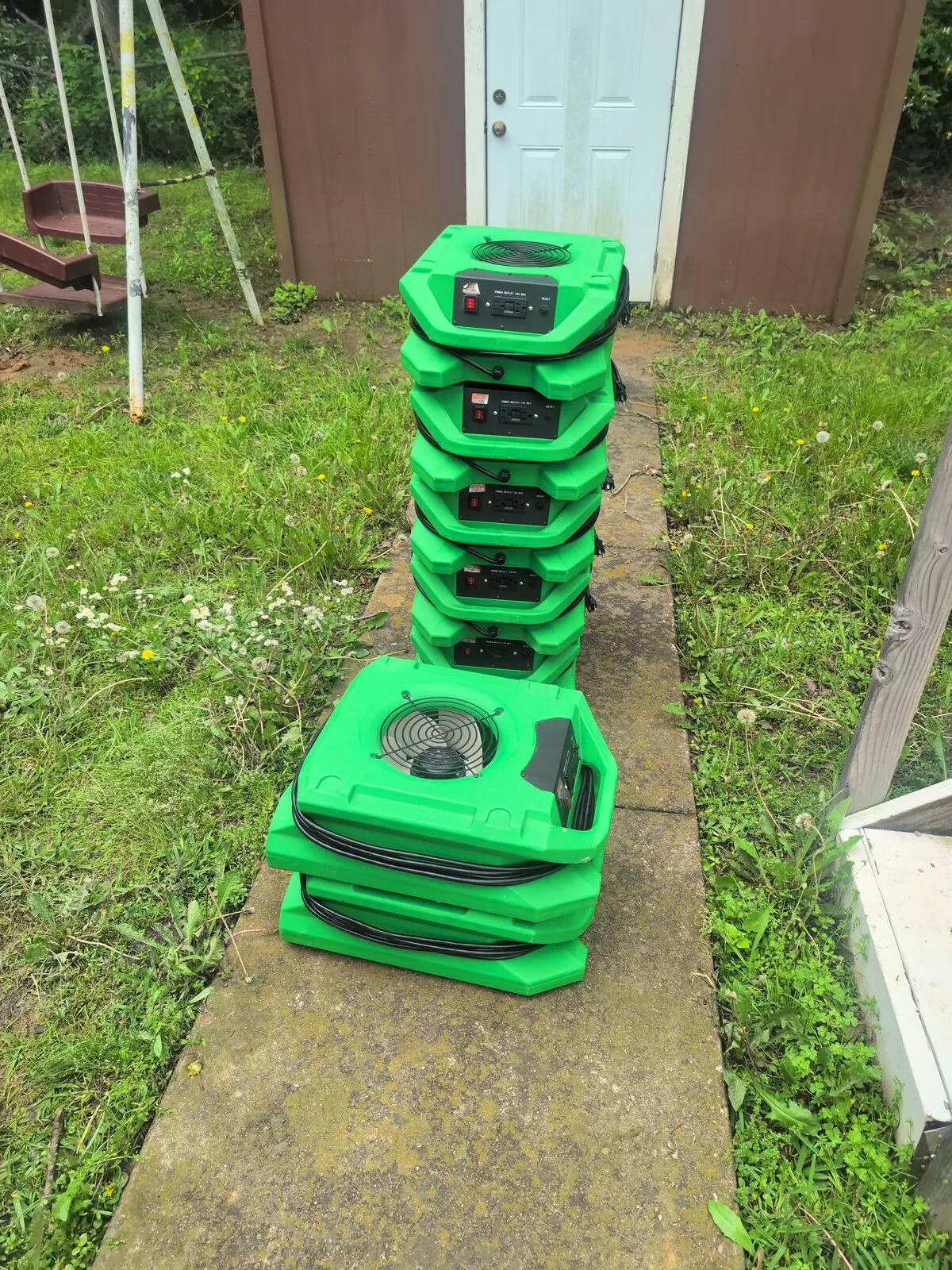
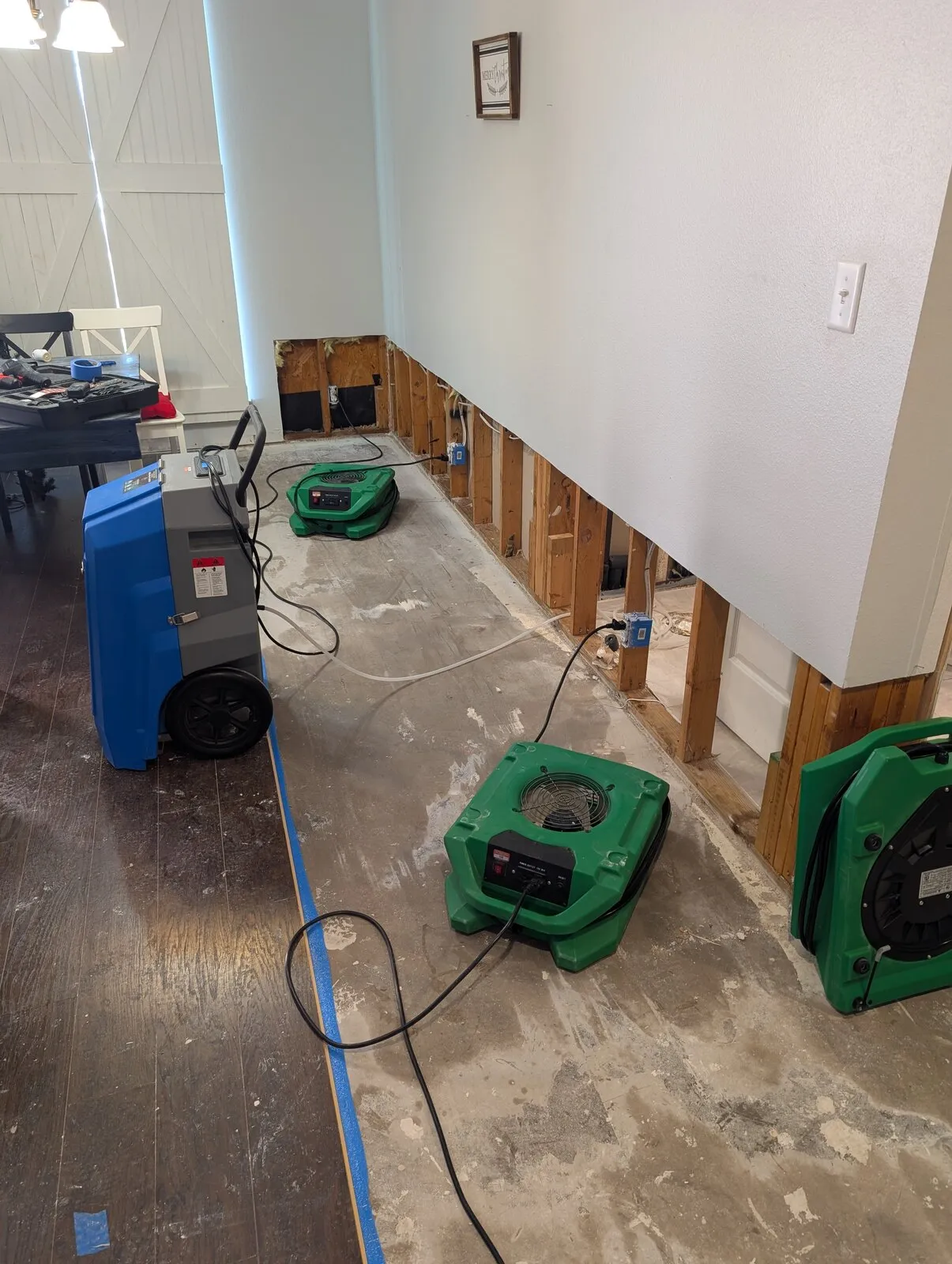
The equipment used for emergency water removal can include portable extraction units, air movers, dehumidifiers, generators and meters. Which pieces belong in the scope depends on where the water traveled and what materials are wet.
Stopping the Supply
Extraction removes water already in the room. If more water is still entering, controlling the source limits what replaces it.
Standing Water Out
Portable extraction units pull standing water from hard surfaces, carpet and pad. Carpet and pad can hold water below a surface that already looks clear.
Air Onto the Wet Material
Moving air across a wet surface is what hands the water over to a dehumidifier. The movers point at the material that is actually holding it, so the drying isn't spread thin over a whole room.
Dehumidifiers Running
Industrial dehumidifiers take back out of the air what the movers just put into it. They address moisture after portable extraction can no longer collect it as standing water.
The Dry Reading First
A moisture number on its own doesn't say much. The first reading of the visit comes off the same material somewhere the water never reached, and every wet reading is measured against that one. Dry drywall, dry framing and dry subfloor all sit at different numbers, so the mark has to come out of your own house.
How Far the Drying Reaches
The wet footprint decides how much equipment goes in and how far any tear-out runs. Too little, and a wall stays wet under a dry surface. Too much, and a room gets rebuilt that would have come back on its own.
Selective Tear-Out
Carpet pad, swollen baseboard and drywall that won't dry in place come out. Moisture readings and the water's contamination class both inform what can stay and what has to come out.
The Scope, Written On Site
The scope goes into Estimate Rocket at the house and out to your carrier from there. It connects the damage found at the house to the work submitted for the claim.
From the Call to the Drying
What Happens After You Call
The order on an extraction call is fixed. Two points in it are yours to decide, and both come with a reading in front of you.
You Call, Any Hour
Tell us what happened, whether water is still moving and whether it is near an outlet, a panel or a fixture. We respond within the hour, 24/7.
Electrical Hazards
Water near outlets, a panel or fixtures creates an electrical hazard. Tell us about it from outside the wet area. Generators provide a separate power source for drying equipment when the job requires one.
Contents Come Up
Furniture goes onto blocks, rugs come off the wet floor, and anything sitting in water moves out of the footprint. What you'd rather have packed out and stored off site than blocked up in place is your call.
Extraction Starts While the Source Is Traced
Portable extraction addresses water already in the room while source tracing identifies where it entered. That separates the immediate extraction work from the source question.
You Decide What Gets Opened
Where a meter reads wet inside a wall or under a floor, there are two ways forward: dry it in place with Injectidry panels feeding air into the cavity, or open it. You hear the reading and what each way means before anything is cut.
Drying Equipment
Air movers and dehumidifiers address moisture that portable extraction can't collect as standing water. Their placement follows the wet line measured with meters and thermal imaging.
The First Three Hours
Working While the Source Is Still Being Found
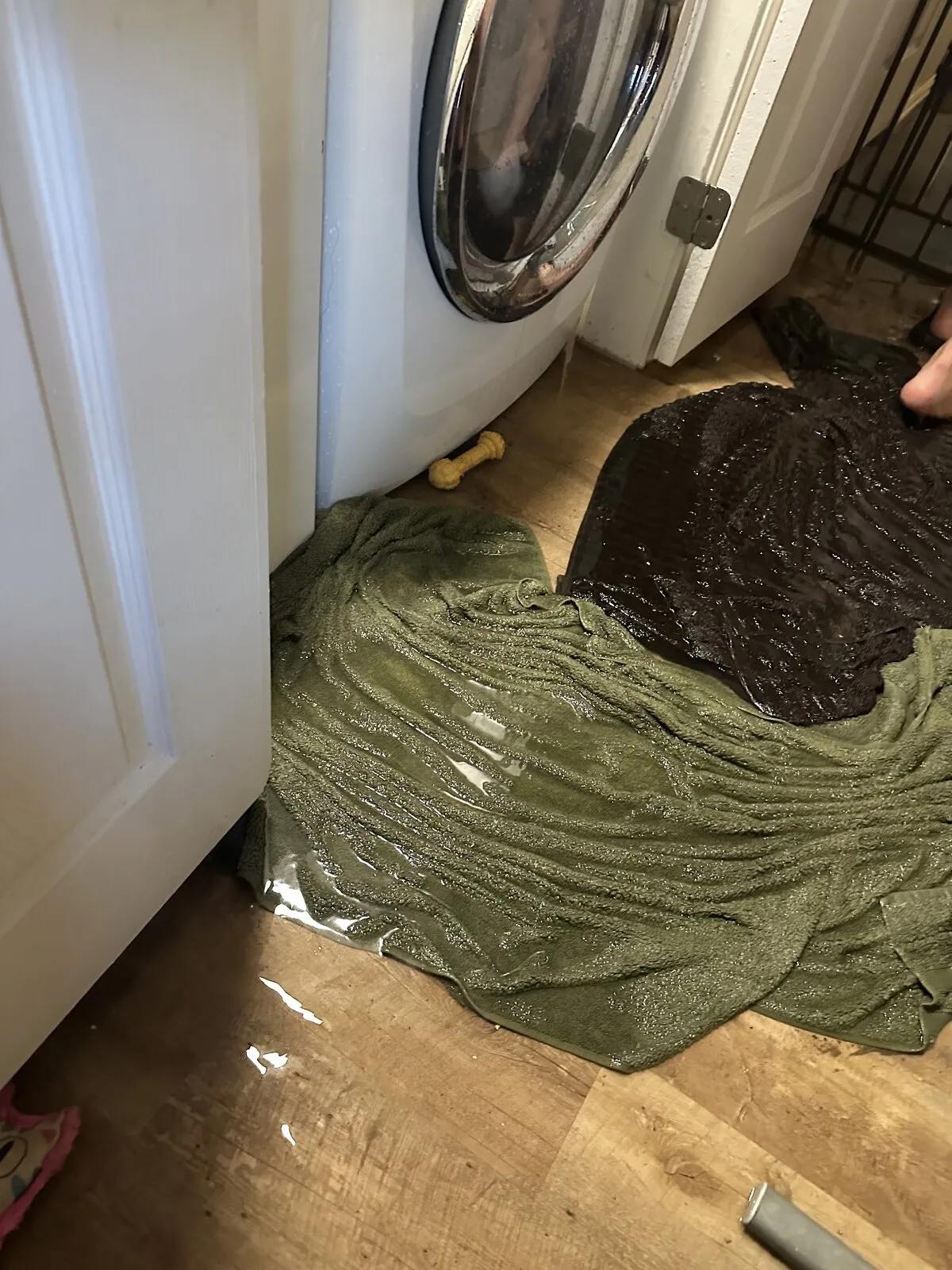
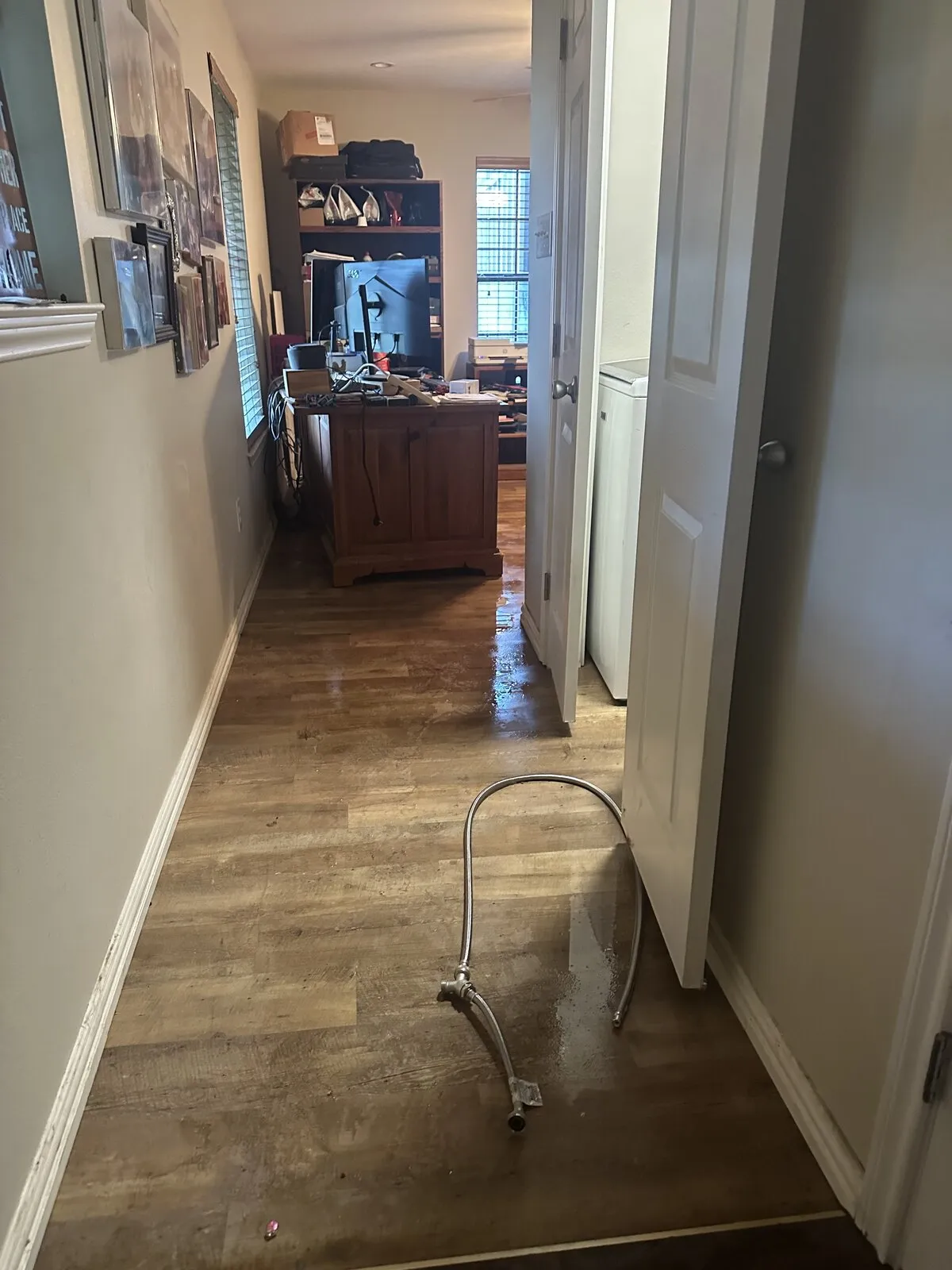
Water on a kitchen floor can be the supply line behind the refrigerator, a dishwasher gasket, a drain under the sink, or a fitting inside the wall behind the cabinets. Finding the source can mean checking several possible entry points and following the wet area beyond the room where it appeared. The source question doesn't change the water already on the floor. Extraction can proceed while that question is still open.
Extraction takes free water: what's standing on the floor, held loose in a carpet pad, pooled under a floating floor. Water absorbed into materials is no longer free water; air movement and dehumidification move it out differently than portable extraction does. The first hours are the window where free water is still free. Every hour it sits, more of it crosses over.
Two things are worth doing before we get there, if they're safe to do. From a dry area, note where the water is entering and whether it is still moving. Then photograph the room and the visible water before cleanup begins.
Call (903) 993-5663Equipment Used for Emergency Extraction
- Portable extraction units, sized to go up a staircase and into the room the water is in
- High-velocity air movers, aimed at what is actually holding water
- Industrial dehumidifiers, for moisture moving out of wet material
- Calibrated moisture meters, for readings at the wall base and through the subfloor
- A thermal imaging camera, for the wet sitting behind a finish
- Injectidry panels, for a cavity that would otherwise have to be opened
- Generators, for equipment on a circuit that had to come off
- HEPA vacuums, for the silt and debris left once the water is gone
Related Services
What Comes After the Water Is Out
Extraction is the first phase of a water loss. What follows it depends on what the water was carrying and how far into the house it got.
Water Damage Restoration
The whole job in one place: mitigation, drying, the insurance scope, and the rebuild that puts the room back.
Learn MoreFlood Damage Cleanup
Water out of a drain, a sewer line or a storm carries a contamination class with it, and that class decides what can be cleaned and what has to go.
Learn MoreStructural Drying
After the standing water is gone, structural drying uses psychrometrics and readings to determine whether a wall is dry instead of relying on touch or feeling.
Learn MoreSTILL GOT QUESTIONS?
Frequently Asked Questions
Call (903) 993-5663 at any hour with a question about emergency water removal.
24/7 Emergency Response
Call Any Hour for Emergency Water Removal