Water Coming From Above
Ceiling Water Damage Repair
By the time water shows on a ceiling, it has already crossed the space above it. Call at any hour and we respond within an hour, 24/7. We find what's feeding the ceiling and close it off, make the call on whether the assembly is safe to leave up, take down the board and insulation holding water, dry what's overhead, and put the ceiling back.
Request Help Online
Water travels before it shows.
The Wet Area Runs Past the Stain
Water gets into a ceiling in one place and comes out in another. It soaks the insulation lying on the board, runs along a joist, and shows itself wherever the assembly is weakest: a taped seam, a screw head, the edge of a light box. The brown ring marks the way out. It says nothing about how much board is wet, how far the insulation above it is soaked, or whether anything is still running up there.
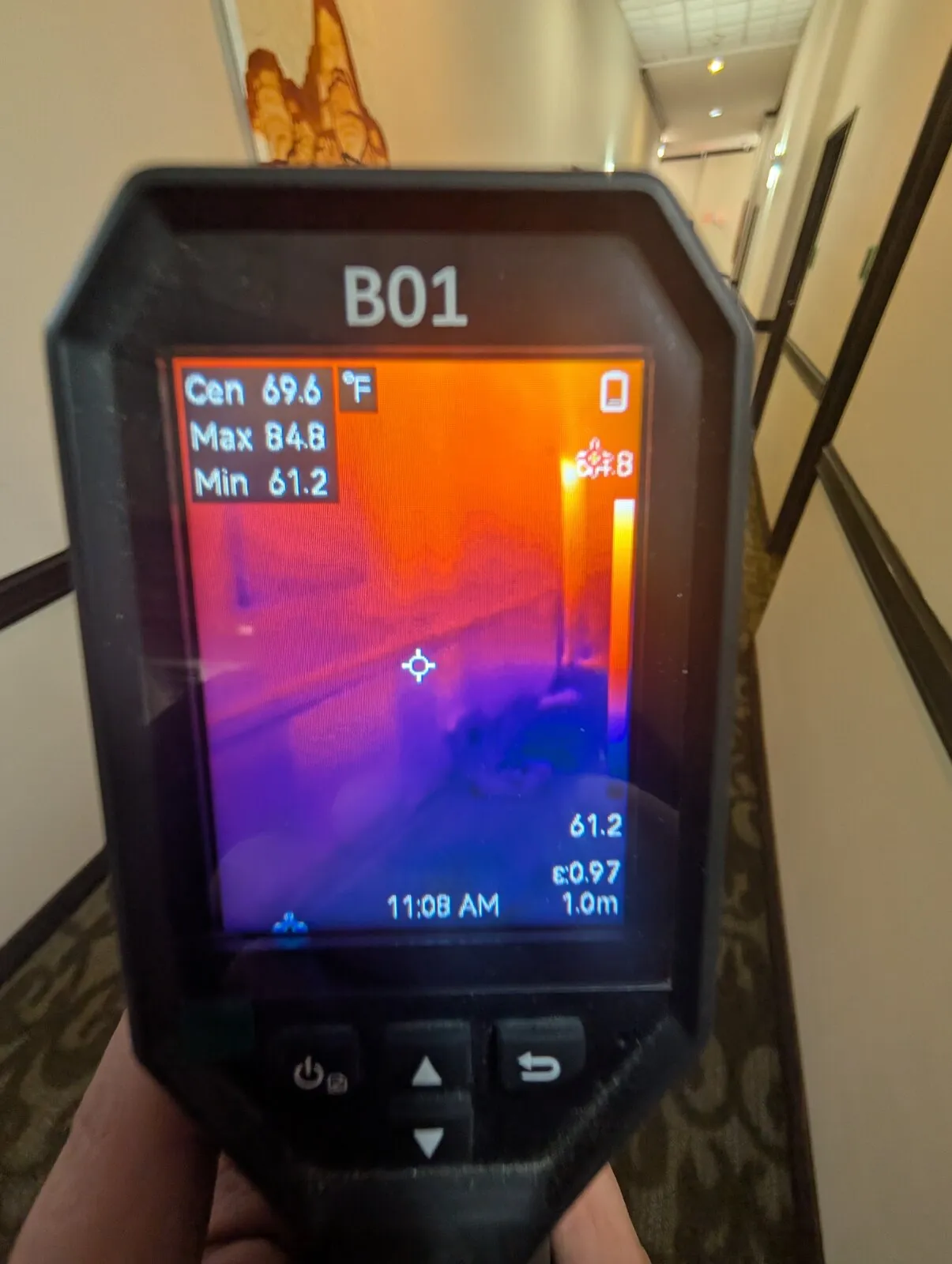
So the wet field gets read before a single screw comes out, and the boundary gets marked on the ceiling. It nearly always sits well outside the ring, and a box fan pointed at the ceiling won't touch it: the paint dries and the water stays on the other side, in the insulation, against the board.
What We Do
What a Ceiling Repair Covers
Ceiling work is our own crew and our own equipment, from the first moisture reading through the last coat of paint on the finished board.
Finding the Source
We work back from the wet field to whatever is actually feeding it, then close that off. Drying counts for nothing while water is still arriving.
Relieving Trapped Water
Drywall will hold a pocket of water in a bulge until the paper face gives out. We drain it through a small controlled opening over a bucket before the panel does it on its own.
Drying the Cavity
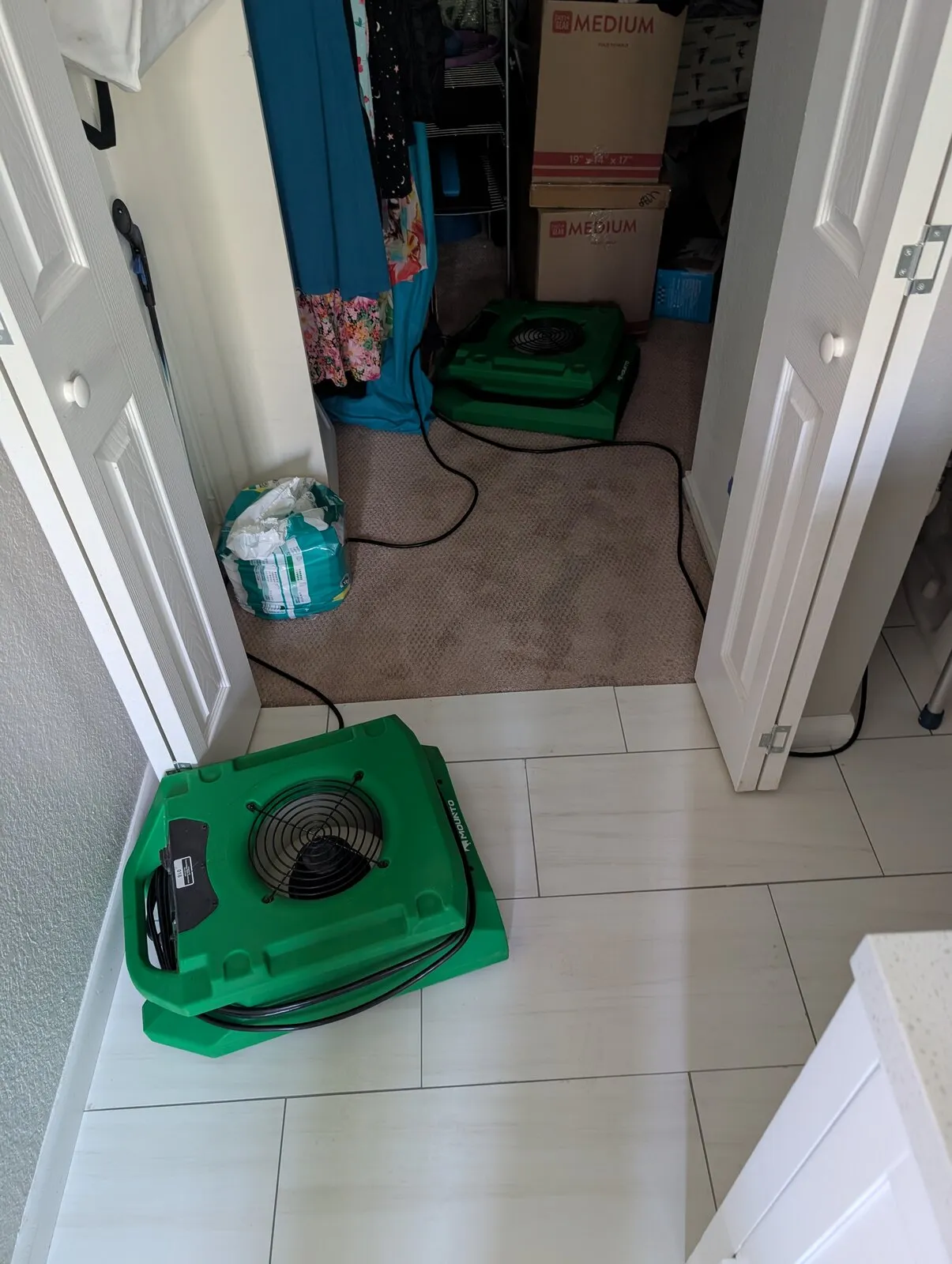
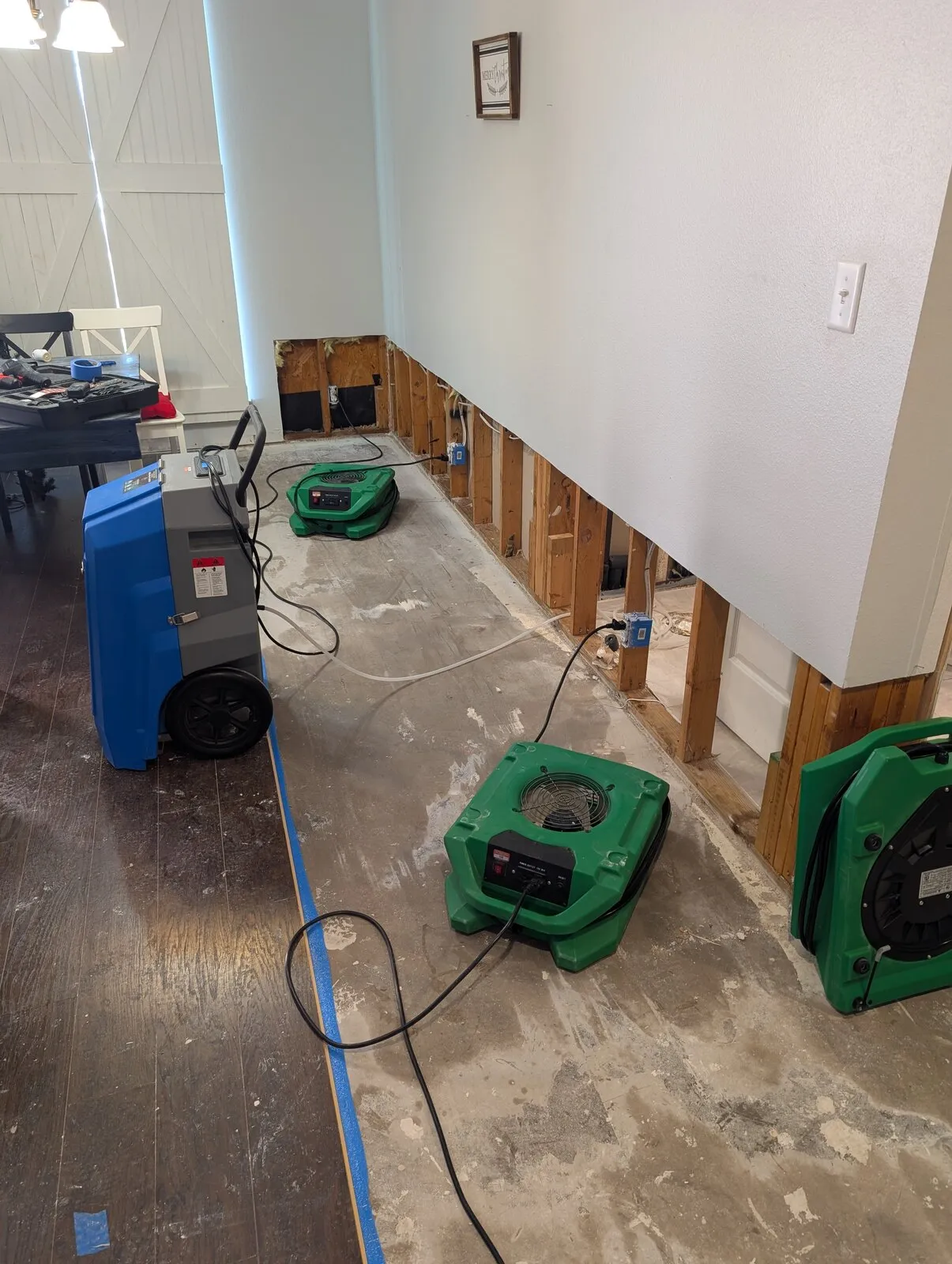
High-velocity air movers across open framing and the underside of the roof deck. Injectidry panels feed air into joist bays that stay closed.
Dehumidification Below
Commercial dehumidifiers run in the room underneath and pull off the moisture the cavity gives up as it dries.
Moisture Mapping
A thermal imaging camera shows the wet shape through the paint, and calibrated meters confirm where it ends in the board and the framing.
Deciding What Comes Down
The cut is scoped off the readings, so saturated board and wet insulation come out back to material that meters dry.
Putting the Ceiling Back
Insulation back to depth, board hung, taped and finished, texture, paint, fixtures reset. The same crew does the tear-out and the rebuild, so the ceiling closes without a handoff.
The Written Scope
The on-site estimate is free and it comes back in writing: what has to come out, what goes back, and why. It goes to your carrier directly.
How We Work
From the Call to the Ceiling Going Back
The order is the same on a hallway ring and on a ceiling that's already on the floor. What changes is how much of it is still up when the drying starts.
The Call
The line is answered at any hour, and a wet ceiling gets treated as an emergency call. Say which room it's in, what's above that room if you know it, and whether the ceiling has started to bulge. While you wait: stay out from under it, leave the bulge alone rather than draining it yourself, and close the fixture stop or the main if you know where it is.
Power, Then the Weight Call
Recessed lights and bath fans are holes in the assembly and water finds them, so the circuits feeding that ceiling go off at the panel first. Then we judge whether the ceiling is sound enough to work under or whether it comes down deliberately, with the room emptied and nobody standing in the doorway.
Shut Off What's Feeding It
The water gets isolated at the fixture stop or the main, whichever kills the run above that room. Where the source won't show itself, we open a small inspection point at the wet end. Nothing dries while something is still filling the space.
Open It and Clear It Out
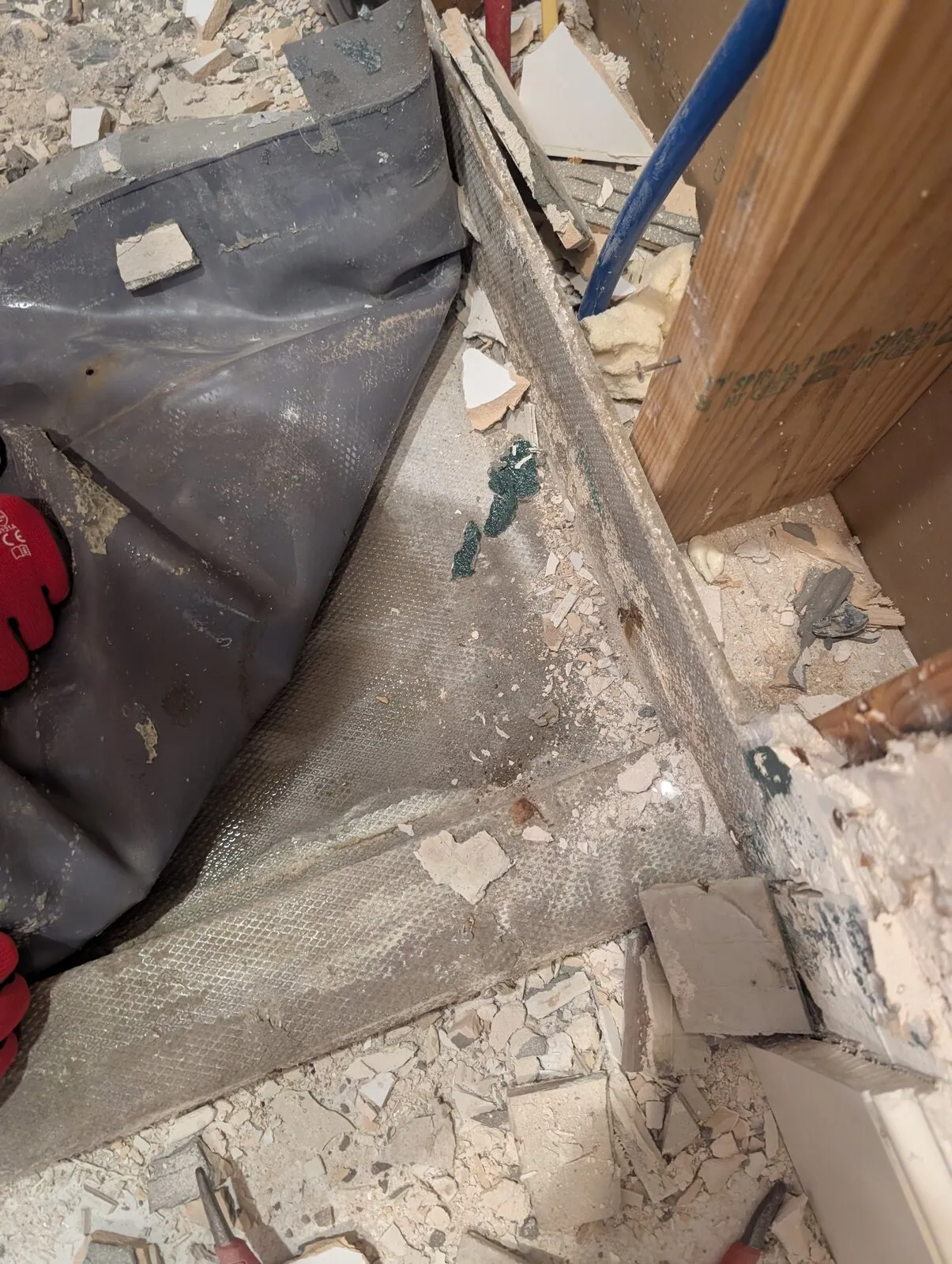
A bulge is drained on purpose. Saturated drywall and wet insulation come down and get bagged, and HEPA vacuums pick up the blown-in left sitting on the framing.
Dry What's Overhead
Air movers across the open bays and the roof deck, Injectidry panels into anything that stays closed, dehumidifiers in the room below. Readings continue at the marked points until the framing and the surrounding board meter dry.
Close It Back Up
The rebuild starts on the readings, not on a date. Once the assembly meters dry, the ceiling goes back together in the reverse of the order it came apart, the room gets cleaned, and the drying equipment leaves on the same trip.
The Load Overhead
What's Above the Stain Decides the Job
A ceiling isn't a surface. It's an assembly: board screwed to the underside of the framing, seams held together with paper tape, and above it either an attic or the floor of the room upstairs. Insulation sits on top of that board. In plenty of houses so does the air handler and its condensate line. Whatever gets loose up there soaks the insulation first, tracks along the framing, and only then comes through where you can see it.
Weight is what separates a wet ceiling from a wet wall. A wall drains. A ceiling holds, and saturated insulation lying on wet board puts load on screws and taped seams that were sized for a dry assembly. A bulge, a sag, or a crack opening along a seam means it's already past that point. Everyone out of the room, the breaker for those fixtures off, and nothing poked or propped up: relieving trapped water is a deliberate opening over a bucket, made by somebody who knows what's sitting on the other side.
What's up there also decides how much ceiling you lose. With an attic overhead we can work from on top: the soaked insulation comes out, air moves across the framing and the underside of the deck, and the ceiling below often stays where it is. Under a second floor there's no attic to work from, so closed joist bays get dried through Injectidry panels and a small opening instead of being taken apart end to end. Either way the wet insulation leaves, because it holds water against the board and keeps the cavity from drying at all.
Call (903) 993-5663What Can Sit Above a Wet Ceiling, and What Each One Changes
- A supply line in a joist bay: it's under pressure, so the ceiling keeps taking water until the stop or the main is closed.
- A tub or shower drain: it only leaks while somebody upstairs is using it, which is why the stain grows a little at a time and then stops.
- A toilet flange: that's Category 3 water, so the board and the insulation come out rather than getting dried in place.
- An attic air handler and its condensate line: a slow, steady drip that lands wherever the pan overflows rather than under the unit.
- An opening in the roof: water enters at one point and travels down the framing, so the wet ceiling is often in a different room.
- Blown-in insulation: it soaks, it stays wet long after the paint looks dry, and it's loading the same board it's holding water against.
- Recessed lights and bath fans: openings in the assembly, so water comes through at a live fixture and the circuit has to go off.
- Whatever's stored in the attic: it sits on the joists over the wet field and has to come off before the insulation can.
Related Services
If the Water Went Further Than the Ceiling
Water that came through a ceiling started somewhere and landed somewhere. Both ends are their own job.
Water Damage Restoration
For when the ceiling is one room of several and the floors, the walls and your contents took water too: the whole mitigation and rebuild sequence in one scope.
Learn MoreRoof Leak Water Damage Repair
If it's coming in above the deck, start here. That page follows one entry point down through the assembly and sorts out which half of the repair is interior work and which half is the roof.
Learn MoreBasement Water Removal
Water leaving a ceiling keeps going down. If it reached a crawl space or a finished lower level, that's where it's standing now.
Learn MoreSTILL GOT QUESTIONS?
Frequently Asked Questions
If yours isn't here, call (903) 993-5663. The line is answered 24/7 and the on-site estimate is free.
24/7 Emergency Response
Free On-Site Estimate on Ceiling Water Damage Repair