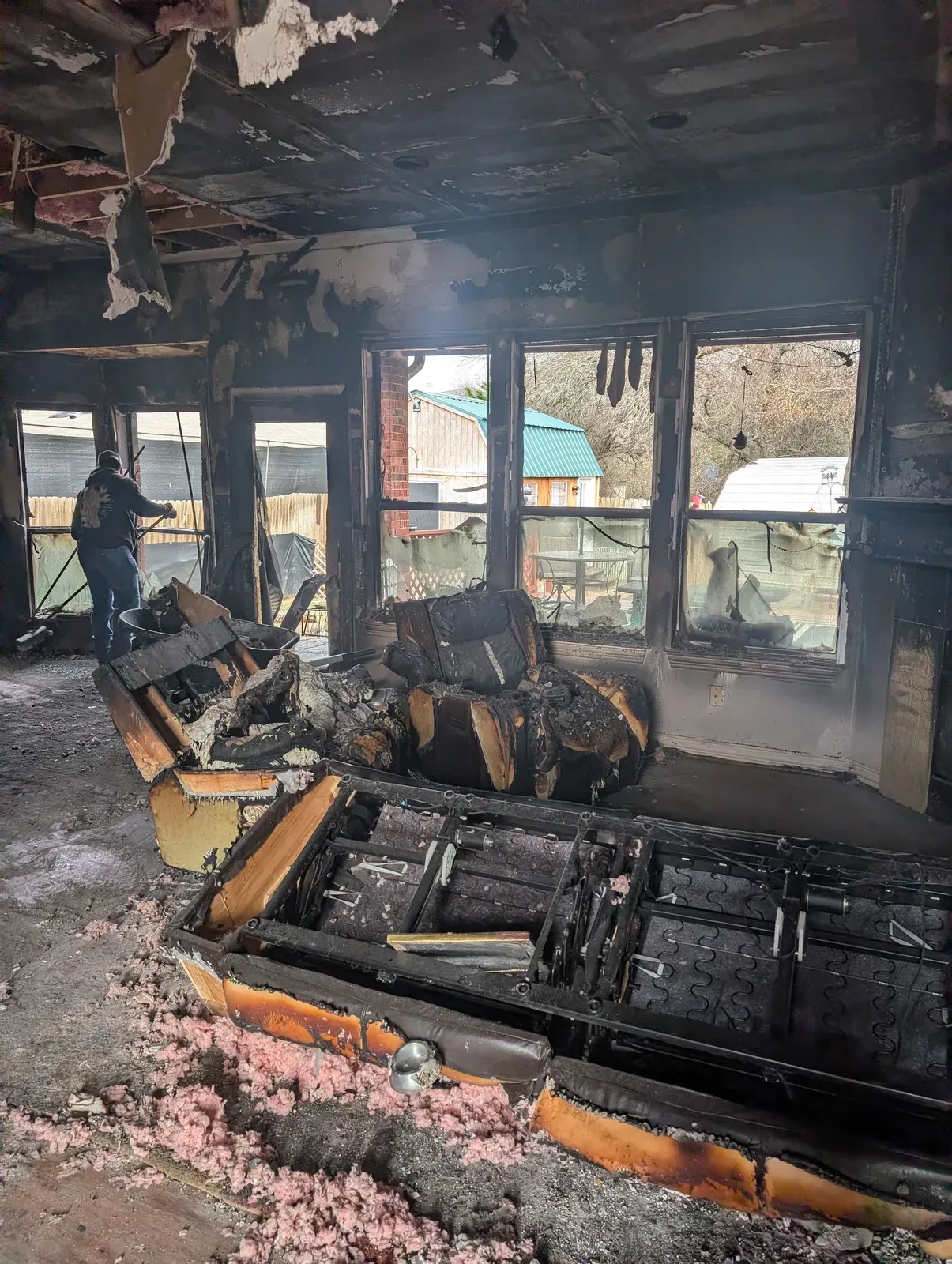
What Burned, and What It Left
Soot Removal After a Fire
The fire's out, and there's a black film on walls in rooms the flames never touched. That's soot. What it is, and what will lift it, depends on what was burning when it was made, and on every version of it the first pass is dry: water is what turns a loose deposit into a permanent stain. Warrior Restoration is owner-operated, answers 24/7, and responds within an hour of the call. The on-site estimate is written, and it's free.
Request Help Online
Before Anything Gets Cleaned
What Soot Is Doing While It Sits There
A soot deposit isn't inert, and it isn't only on the surfaces you're looking at. It's acidic, so on chrome, brass, appliance faces, marble and grout it starts working on the finish underneath it while it waits. On a painted wall it settles from something sitting on the paint into something in the paint. The black you can see on day one and the black you can see on day ten are the same deposit, and they are not the same job.
So the first visit is a reading of the surfaces. We go room by room, because one house fire usually leaves more than one kind of residue, and we say which surfaces are still cleanable and which ones have gone past that and need sealing and refinishing instead. That's what the written scope is built on, and the visit and the estimate cost nothing.
What This Covers
What a Soot Clean Reaches
Soot goes where the air went, so the scope is set by where the residue landed and not by where the flames stopped. All of it is our own crew: the cleaning, the contents, and the board and paint at the end. How far the residue carried into rooms that never burned is a different scope from the surfaces in this list.
Ceilings, Walls and Trim
Painted surfaces are lifted dry, ceilings first and then down the walls, so nothing falls onto a section already finished. Door casings, crown profiles and the tops of baseboards hold more than flat wall does, and they get worked on their own.
Floors and Hard Surfaces
Tile, sealed wood, laminate and vinyl are last in the room. What comes off a ceiling has to be down and out of the air before the floor is worth touching.
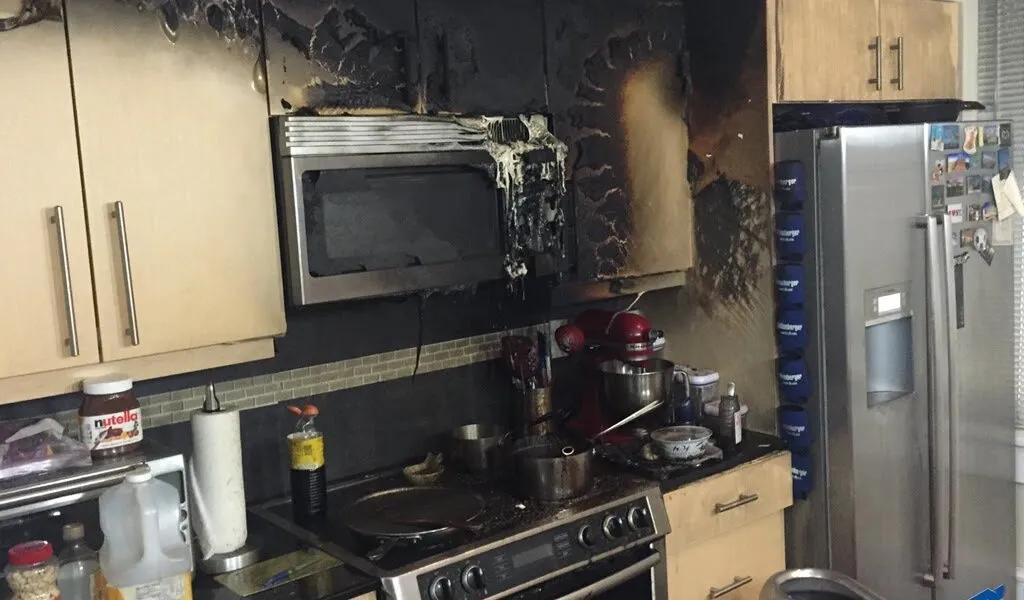
Kitchen Grease and Protein Residue
A grease or food fire leaves an amber film that carries a strong smell and shows almost nothing on a white wall until a cloth drags it. Washable surfaces in that room get a degreaser after the sponges have done their part.
Registers, Grilles and Duct Runs
If the system ran while soot was in the air, the runs behind the registers are part of the loss. Registers, grilles and the duct behind them are cleaned in place by our own crew.
Contents and Belongings
Furniture, cookware, clothing and keepsakes are all in scope. What cleans up gets cleaned, and what the residue went all the way into is listed for the claim with the rest of the loss.
The Places Soot Collects
Deposits build on the top edges of door casings, inside upper cabinets, behind switch plates and along the backs of closet shelves. Those are the ones that turn up on a white cloth months later, so they get checked while we're still in the room.
What Won't Clean Comes Out
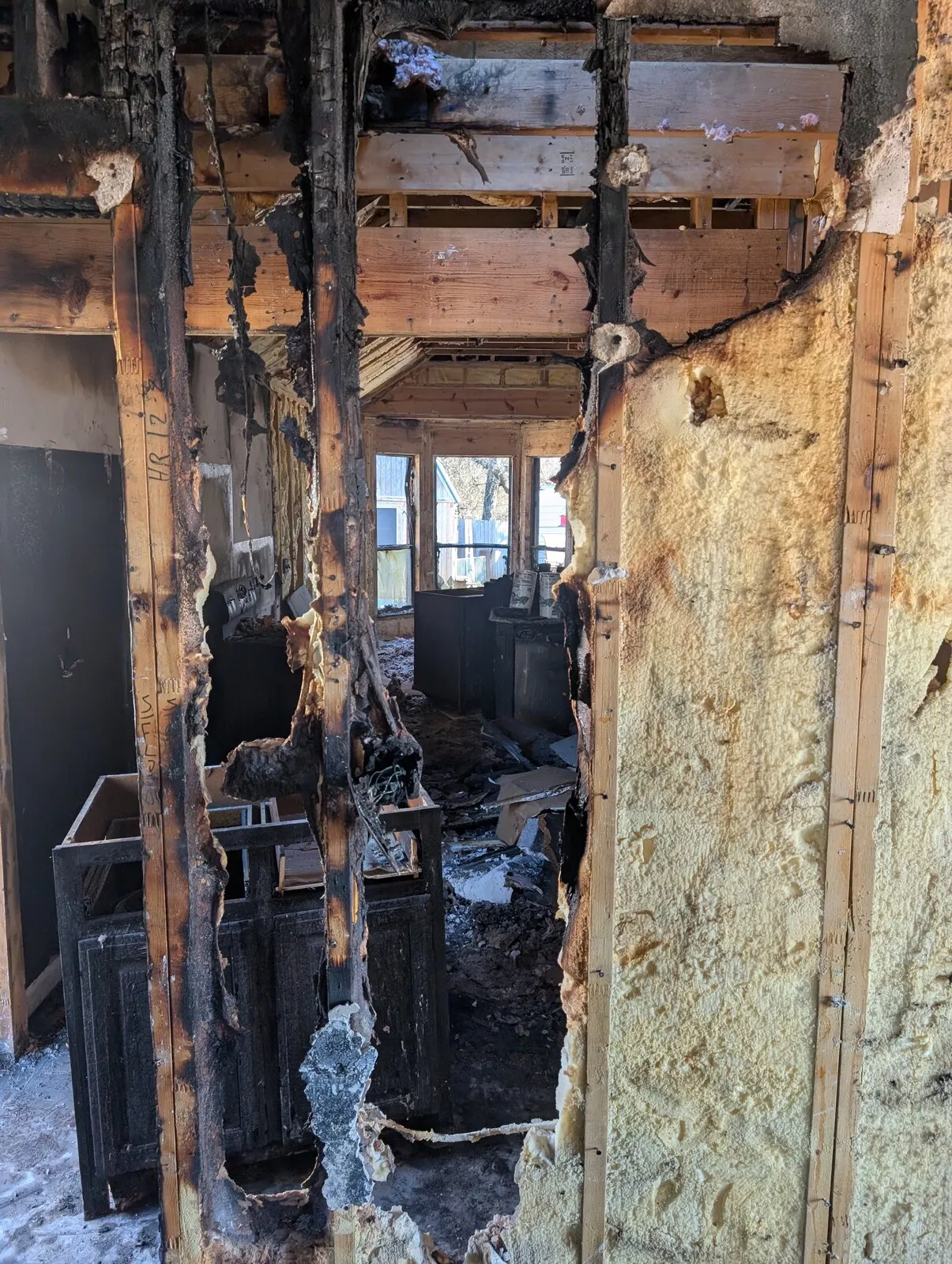
Charred framing, scorched insulation, carpet pad and porous material the residue soaked into come out instead of getting scrubbed. That call is made surface by surface, on what the cleaning actually lifts.
Sealer, Paint and Flooring
Surfaces that cleaned up but kept a shadow take a stain-blocking sealer. Then what came out goes back: drywall hung, taped and finished, then trim, paint and flooring. Our own crew does the rebuild.
How We Work
Inside a Soot Removal Job
Every stage is arranged so the residue travels one direction only: off the surface, into a filter, and out of the house.
The Call
Somebody picks up, whatever time it is. What we want from you on the phone is the address, what burned, and which rooms have the smell in them, so the truck leaves loaded for the residue it's going to meet.
Reading the Surfaces
The kitchen rarely matches the garage, and the room the fire started in rarely matches the hallway down from it. We note which finishes are porous and which are sealed, then clean a test patch out of sight on each one. How the residue lifts off that patch sets the method for that finish everywhere else in the house.
The Dry Pass
HEPA air scrubbers go on before anything is touched and stay on while the room is worked. Loose material comes off with a HEPA vacuum and a soft brush head with no pressure behind it, and dry chemical sponges follow on painted and porous finishes. Most of the black leaves the house at this stage.
Wet Work, Where the Surface Takes It
Glass, tile, porcelain, sealed cabinetry and metal get a wet method once the dry pass has done what it can for them. Protein residue on a washable kitchen surface gets a degreaser. Flat paint, bare wood and unsealed masonry usually get neither, and go to the sealer instead.
Contents
Belongings wait until the room around them is clean, or they leave it. Where a room has to be emptied to work in, we inventory what's in it, pack it out, clean it on a bench off site, and store it with us until the rebuild is finished.
Sealing, Then the Rebuild
Cleaned framing and board take a stain-blocking sealer before new paint, so nothing still in the substrate bleeds back through the finish. Then the rebuild: drywall, texture, trim, paint and flooring, by the same crew that did the cleaning.
Dry First
What Burned, and Why Dry Comes First
What burned decides what you're cleaning. A fast, hot fire in framing, paper and cotton leaves a dry powder: very fine, very light, sitting on top of a sound finish rather than in it. A slow fire that smoldered in plastics, foam or cable insulation leaves close to the opposite, a dense residue that smears the moment anything drags across it. A kitchen fire leaves a third thing again, a thin amber film off grease and food that spreads well past the stove and is easier to smell than to see. One tool does not behave the same way on all three.
A dry chemical sponge is a block of open-pored rubber, dry, with no detergent or solvent in it. Drawn across a wall in one direction it lifts loose soot up into itself instead of pushing it along the surface. When a face loads up we turn it, and when every face is loaded we cut it back to clean rubber. On dry powder that one tool takes a ceiling most of the way back on its own. On a smeared residue it takes less, and the rest of the work moves to whatever that surface will accept.
Water is what ends the options. Fine carbon in suspension goes into the paint film, into grout, into unsealed wood and into the paper face of drywall, and once it's in, cleaning stops helping: that section gets sealed and refinished. A non-porous surface has no inside for the carbon to go into, which is why glass, tile, porcelain and metal are the ones a wet method suits, and why they take it before the porous surfaces in the same room lose the option. Everything porous in the room keeps its options open only as long as it stays dry. That's the whole reason the order runs the way it does.
Call (903) 993-5663Surface by Surface
- Flat and matte paint: dry sponge only. A wet cleaner leaves a ring where the pass stopped.
- Satin and semi-gloss paint: sponged dry, then wet-cleaned if the sponge left anything behind.
- Textured and popcorn ceilings: dry, and worked light. The finish is looser than the soot on it.
- Bare and stained wood: dry, then sealed if the grain took the residue in.
- Glass, tile, porcelain and sealed stone: wet-cleaned, and before the porous surfaces around them.
- Chrome, brass and appliance faces: first in the room, before the acid marks them.
- Carpet, pad, upholstery and mattresses: HEPA vacuumed, then judged on what's still in them.
- Sealed kitchen cabinetry after a grease fire: dry pass, degreaser, in that order.
Related Services
Other Fire and Smoke Work
If what's in front of you is bigger than the black on the walls, or smaller and only a smell, one of these is closer to it.
Fire Damage Restoration
The whole loss in one place: the board-up on the night, the water the hoses left behind, the structure, the contents and the rebuild after.
Learn MoreSmoke Odor Removal
For a house that still smells once the residue is off it. The smell is being held inside something porous by then, and that job starts with finding which material has it.
Learn MoreSmoke Damage Cleanup
For how far it all carried: what the smoke put into closets, ceilings and belongings two rooms away from anything that burned.
Learn MoreSTILL GOT QUESTIONS?
Frequently Asked Questions
What people ask in the first day or two after a fire. For a surface in your own house, call (903) 993-5663 and describe it.
24/7 Emergency Response
Start With a Free Soot Removal Estimate