Dried to a Reading
Structural Drying
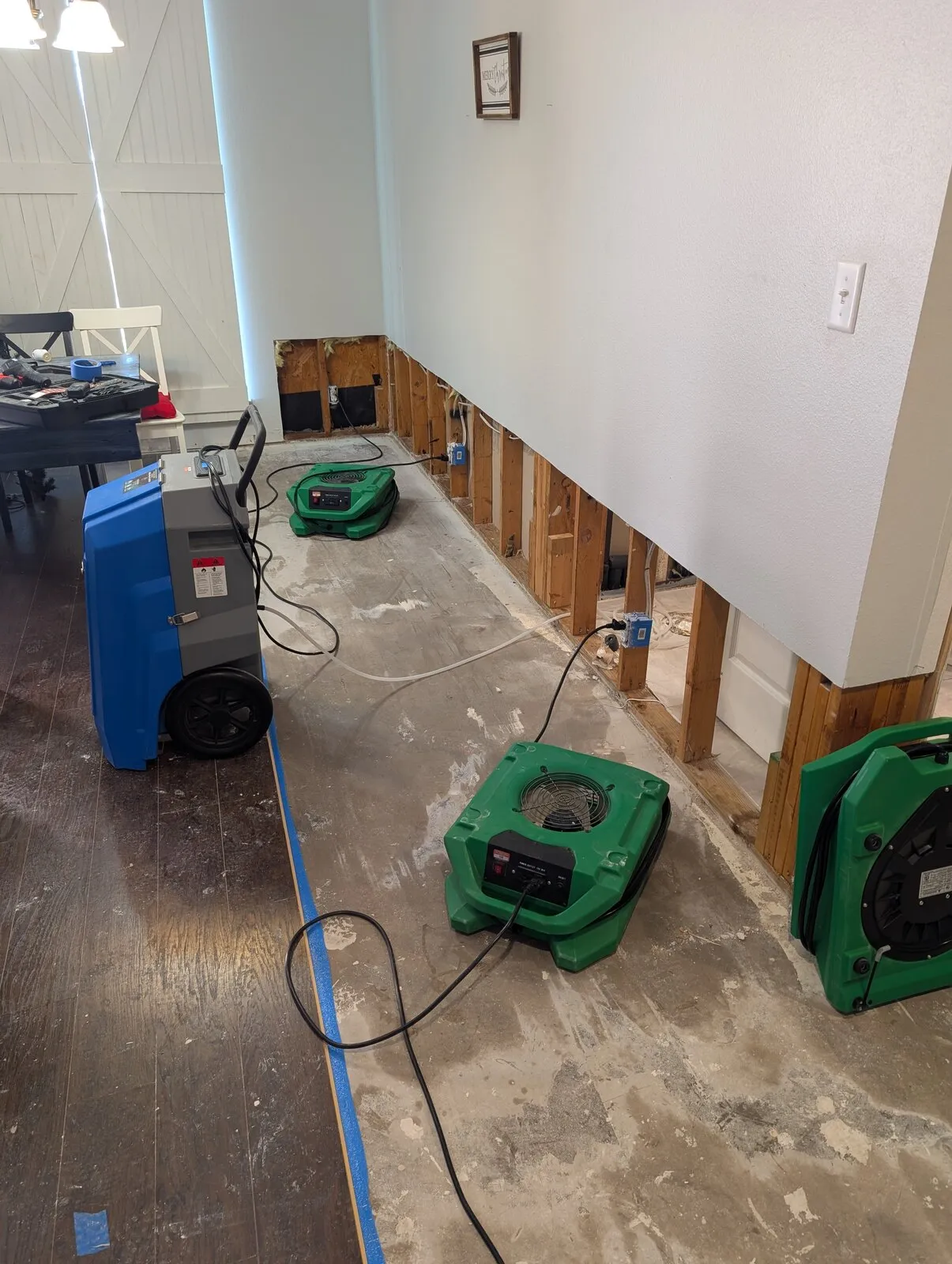
The floor can be dry while the framing behind the wall isn't. Warrior Restoration dries the structure itself: the studs, subfloor, insulation and wall cavities that hold water long after the surface looks fine. Drying what you can see doesn't reach them. Our own crew brings the extraction, the air movers and the dehumidifiers, and we measure the water still inside the material. We answer around the clock and respond within the hour.
Request Help Online
What Is Still Wet
Where the Water Went
Water leaves the surface first. It wicks up drywall, runs along the bottom plate of a wall, soaks into subfloor and sits in insulation inside a cavity, where nothing in the room tells you it's there. Carpet can feel dry over a wet pad. Hardwood can look flat for a week and then cup.
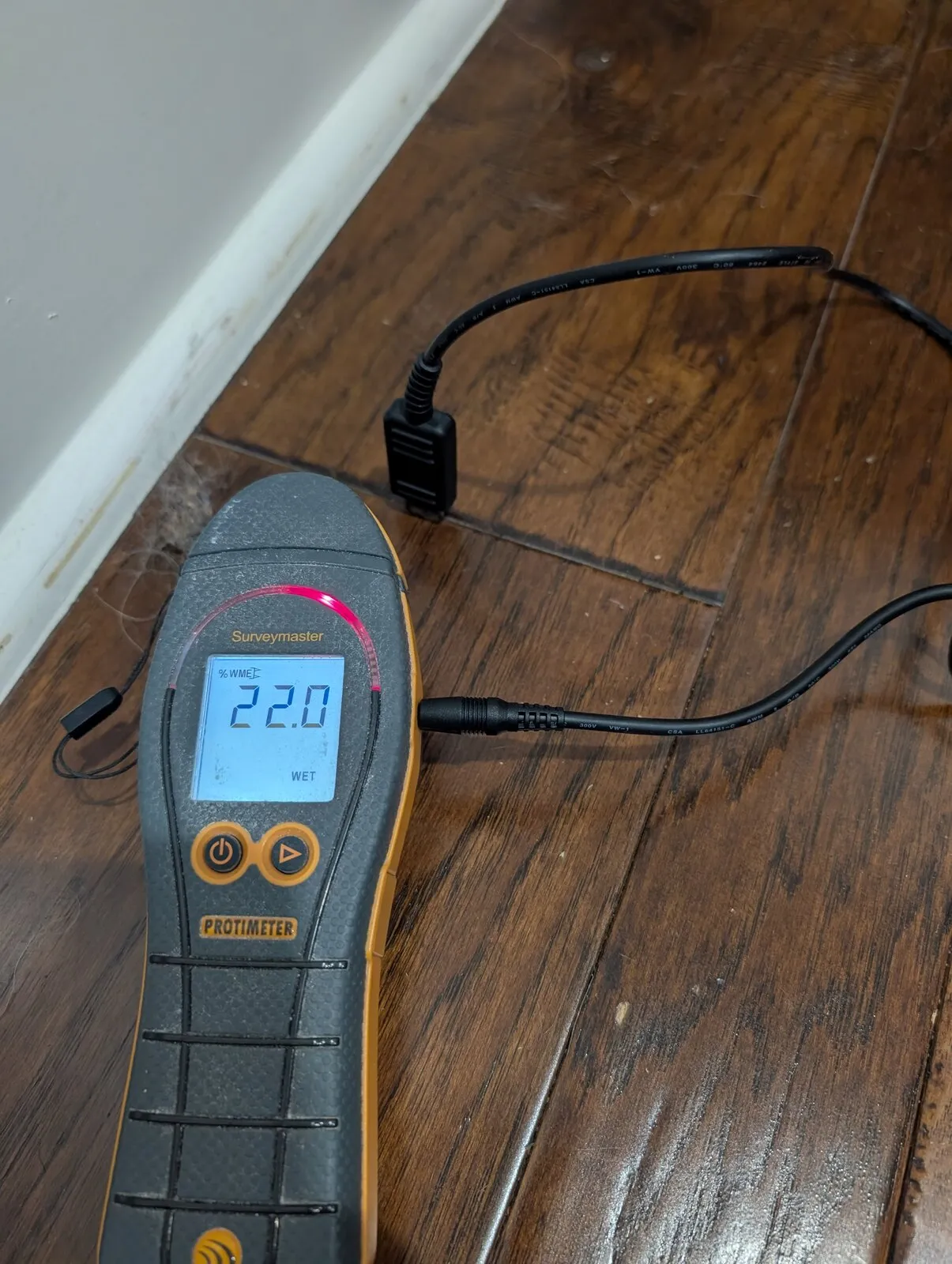
So we measure the extent before anything is torn out. A thermal imaging camera shows the temperature difference where evaporation is cooling a surface, which is how we know where to check. A calibrated meter then reads the material and returns a number. What comes out and what stays is settled on those numbers rather than on the outline of the wet patch on the floor.
Inside the Scope
What a Drying Job Includes
All of it is done by our own crew, with equipment off our own trucks.
Extraction First
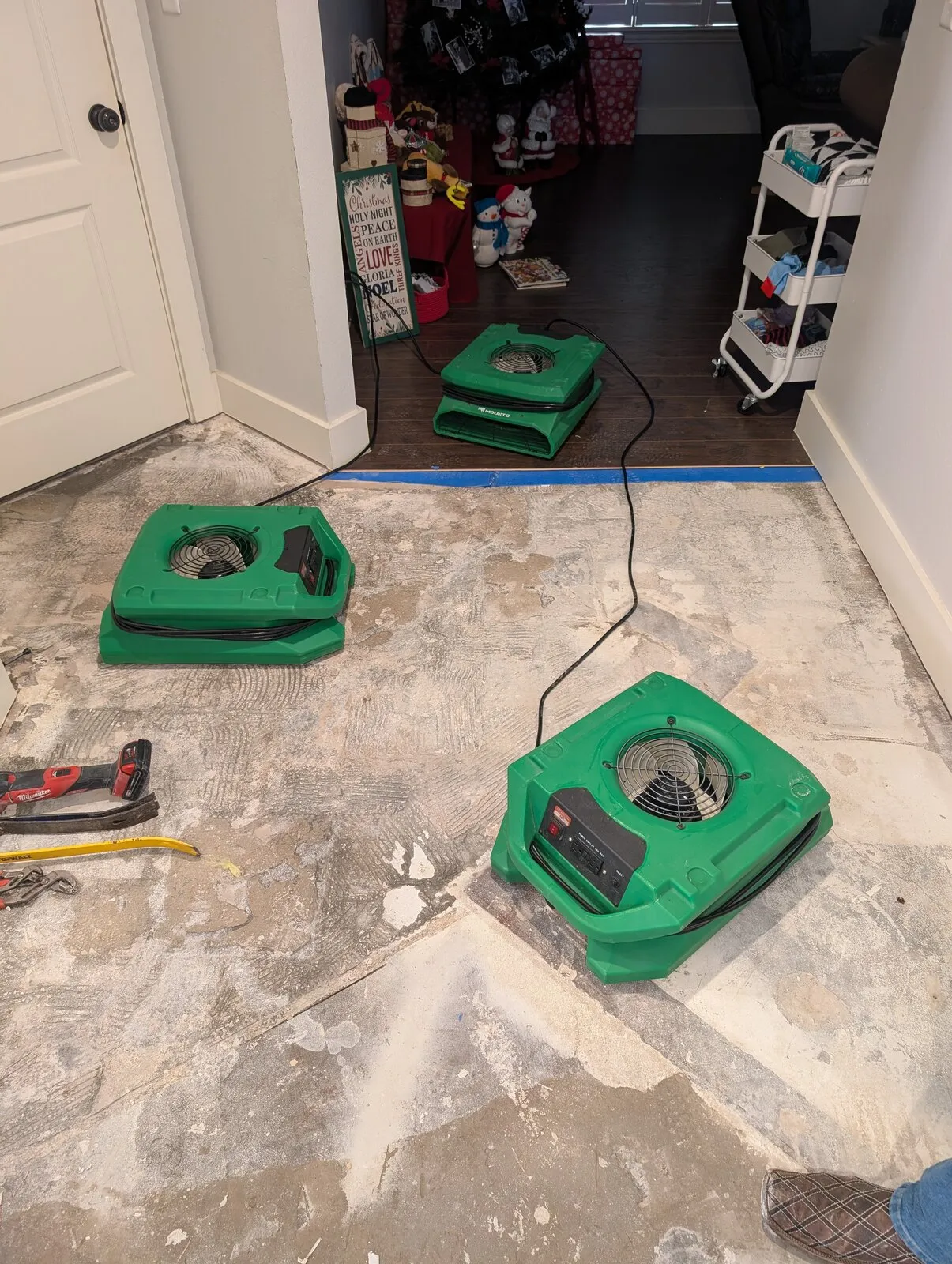
Portable extraction units pull the standing water and then pull it back out of carpet and pad. Air movers can't dry a floor that still has water sitting on it, so nothing else starts until this is done.
Reading the Materials
We read framing, subfloor, drywall and the plate at the bottom of a wall with a calibrated moisture meter. Materials hold water differently, so each one is read on its own terms.
Air Across Wet Surfaces
High-velocity air movers sit low and aim along a wet floor or wall rather than straight at it. Angled that way they sweep the still, damp air off the surface so the material underneath keeps giving water up.
Pulling the Air Dry
Industrial dehumidifiers take that moisture back out of the room air. Dry air keeps drawing water out of a stud or a subfloor; humid air lets it soak straight back in.
Finding Hidden Moisture
A thermal imaging camera shows where water has traveled behind a finish: under flooring, above a ceiling, inside a stud bay. That is where the meter goes next.
Equipment Sized to the Room
The volume of a room and the amount of wet surface in it decide how many air movers go in and how much dehumidifier capacity the space needs. We work that out room by room before anything is plugged in.
Only What Has to Come Out
Wet insulation can't be dried in place and comes out, and saturated carpet pad usually goes with it. Baseboard comes off where the plate behind it is holding water. What stays is what the meter says will dry.
The Rebuild, By the Same Crew
Once the numbers are where they need to be, our crew hangs, tapes and finishes drywall, paints and puts flooring back. The drying and the repairs are the same company.
From the Call to the Rebuild
The Order a Drying Job Runs In
What happens, and when, once you call.
You Call
Tell us what happened, where the water came in, and whether it has been shut off. We respond within the hour, day or night.
A Free On-Site Assessment
We walk the loss with a camera and a meter and map how far the water traveled. The written estimate costs nothing, and it is the point where you decide whether this goes through your carrier.
Extraction and Removal
Standing water comes out first, then the materials that can't dry in place: saturated pad, wet insulation, anything already breaking down.
Equipment Placed
Air movers and dehumidifiers go in sized to each affected room, and Injectidry panels go onto the cavities that would otherwise have to be opened up.
Read Again While It Dries
The affected materials get read again while the equipment runs. If a number stops moving, equipment shifts or capacity gets added. The numbers set how long the equipment stays in a room.
Equipment Out, Finishes Back
When the affected material reads at the target, the equipment comes out and the repair scope goes to your carrier. Paint, trim and flooring go back after that, not before.
The Dry Standard
Why a Wall Is Dry on a Number
Dry isn't a feeling and it isn't a look. It is how much water a material is holding, and that figure only means something next to another one. Before equipment goes in, we take a reading from a stud, a plate or a section of subfloor the water never reached somewhere else in the building. Every house sits at its own level depending on what it is built from and the weather it has stood in, so that reading becomes the target the affected material has to come back to. This is the method the IICRC S500 standard sets out for structural drying.
Two instruments do two different jobs. A thermal imaging camera reads surface temperature, and evaporation makes a wet surface run cooler than the material around it, so the camera says where to look. It can't say how wet anything is. A calibrated moisture meter reads the material and returns a figure you can hold against the target. We decide what gets opened, what gets removed and what gets left alone on the meter, with the camera deciding where the meter goes.
Air movers and dehumidifiers work as a pair, and both are sized to the space. Air movers push moisture out of a material and into the room air; the dehumidifier takes it back out of that air. Too little dehumidification only moves the water around, and the material takes it back overnight. The numbers decide the rest: whether equipment stays where it is, whether more capacity goes in, and when all of it comes out. Finishes wait on that. Drywall closed over a wet cavity, or flooring laid on a subfloor that hasn't come back to the target, turns into a second loss with new finish work sitting on top of it.
Call (903) 993-5663What We Bring on a Drying Job
- Portable extraction units, on the first visit
- High-velocity air movers, counted by the room
- Industrial dehumidifiers, the half of the pair that takes water out of the house
- Calibrated moisture meters, so one reading can be held against another
- A thermal imaging camera, which locates and leaves the measuring to the meter
- Injectidry panels, for drying a stud bay through small access points
- HEPA vacuums, for the debris that removal leaves behind
- Generators, for a house with the power off
Related Services
Where Drying Sits in the Job
Drying is one phase of a water loss.
Water Mitigation
Mitigation is the word your adjuster uses for this phase of the claim. It's the scope your claim gets written against.
Learn MoreResidential Water Damage Restoration
Equipment runs day and night while your family is still in the house. How you live around it is answered there.
Learn MoreDrywall Repair After Water Damage
An opened wall has to be closed again. The cut line and the finish match get settled there.
Learn MoreSTILL GOT QUESTIONS?
Frequently Asked Questions
Questions homeowners ask while the equipment is running. Call (903) 993-5663 if yours is not here.
24/7 Emergency Response
Structural Drying, Checked Against a Reading