Rooms the Fire Never Reached
Smoke Damage Cleanup
The fire stopped somewhere. The smoke didn't. Residue rides the air out of the burned room and settles where the house is coolest, on walls and glass and clothes hanging in a closed closet. We inspect every room before anything is cleaned, then clean the surfaces, the belongings and the air system that carried it. Call at any hour and we respond within an hour.
Request Help Online
Past the burned room
Smoke Doesn't Stop Where the Fire Stopped
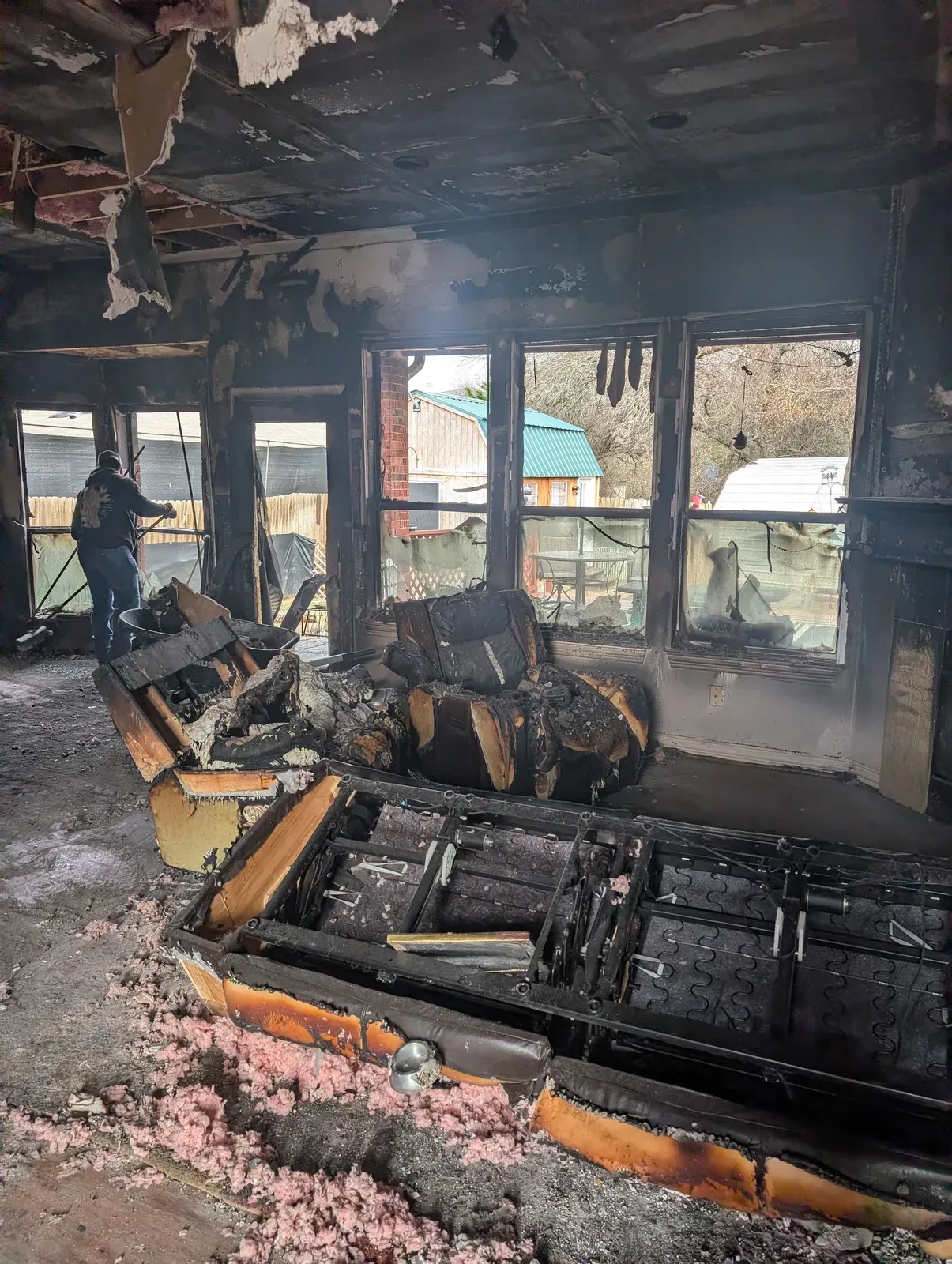
A fire heats the air around it, and heated air expands and has to go somewhere. It goes through the gap under a closed door, into wall cavities, up around light cans and vent boots, and out along whatever route the house offers. What rides with it settles as it cools, heaviest on the coolest surfaces it finds: exterior walls, window glass, the metal of a door frame, tile. Two rooms away that can look like nothing at all, until a hand goes across a painted wall.
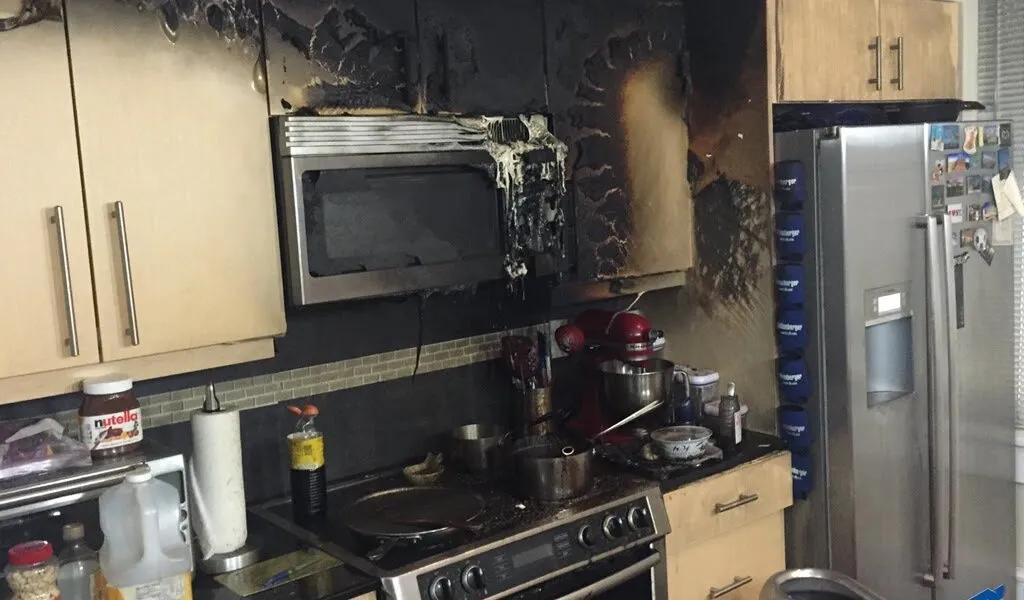
So the first work on a smoke loss is finding where the residue actually stopped, and that means an inspection of the whole house rather than the burned end of it. Rooms holding residue go into the scope with what each one needs: surfaces cleaned, contents cleaned, material that can't be cleaned taken out. Rooms that are clear stay off the estimate. A kitchen fire can end up with a scope that covers the far end of the house, and it isn't the fire that put it there.
What's in the Job
What a Smoke Damage Cleanup Covers
Residue lands on three things at once: the structure, everything inside it, and the air system tying the rooms together. Leave one of the three out and it puts smoke back onto the other two.
Board-Up and Tarping
Openings the fire or the fire department made get boarded and tarped first, so weather and outside air stop moving through the house while the cleaning goes on.
Surface Cleaning
Ceilings, walls, trim, doors and cabinet faces are cleaned by hand with dry chemical sponges, top of the room downward, so nothing drops onto what has already been finished.
The Deodorizing Pass
Thermal foggers carry deodorizer along the same air paths the smoke used. It's the last thing a room gets, once the residue is off the surfaces.
HVAC and Duct Cleaning
If the air handler was running while the house smoked, the returns pulled residue in and every register on the run put it back out. We clean the ductwork rather than replace it, so the system stops feeding rooms that are already done.
Contents and Pack-Out
Furniture, clothing, kitchenware, paper and electronics each hold residue differently, so each gets its own handling. Cleaning happens where an item stands when that works and off site when it doesn't, with storage until the house can take things back.
Damage Assessment
The inspection decides the size of the job: which rooms are in it, which surfaces get cleaned, which materials leave the house, and what the rebuild has to put back.
Rebuild
Some material holds residue all the way through and doesn't clean back, so it comes out. Our own crew handles the drywall, trim, paint and flooring that puts the room back together after it.
The Scope for Your Carrier
Your estimate goes to the carrier directly, room by room, and we meet the adjuster at the house to walk the ones it covers.
The Order of It
How a Smoke Job Runs
The sequence exists to protect the rooms that are still clean. Everything ahead of the cleaning is there so the cleaning itself doesn't carry residue somewhere new.
You Call
Someone picks up, day or night. What we need from you first is what burned and whether the heating and air was running at the time, because both change what we expect to find. If that system is still running now, switch it off at the thermostat.
We Look at the Whole House
The first visit is an inspection. We go through every room, the ones nobody reported included, and set down what each one needs and what it will cost to do. That estimate is free and it's written.
The House Gets Closed Up
Openings are tarped, and the heating and air stays down so nothing is pushing air between rooms. HEPA air scrubbers go into the rooms being worked and run through the cleaning.
Belongings Come Out
We inventory what's in the affected rooms, clean in place where that's the right call, and load the rest out to storage. Anything the smoke went all the way through is listed for the claim.
Surfaces and Ducts Are Cleaned
Rooms are cleaned in the order that keeps residue falling onto unfinished work rather than finished work. The duct system is cleaned in the same phase, not after the rooms are done.
Deodorizing, Repairs, and Your Things Back
Foggers finish the rooms that need it. The rebuild follows: drywall, trim, paint, flooring. Contents come home once the finishes are dry.
Cross-Contamination
What Carries Smoke Into a Closed Room
Two things carry it. The first is pressure. A fire heats the air, the air expands, and it leaves through every gap the house has: the inch under a door, the space around a light can, the stud bay behind an outlet. A closed door slows that down. It doesn't stop it. The second is the heating and air system, and it's the one that catches people out. An air handler running during the fire takes smoke in at the return and hands it to every register on the run, so a shut upstairs bedroom can finish dirtier than the hallway outside the kitchen.
What residue lands on decides how much trouble it is. Hard, non-porous surfaces (glass, sealed tile, finished cabinetry) hold it on the face and come back well. Plastics and vinyl take it in and keep it, which is why switch plates, blind slats and appliance housings stay marked after the wall behind them is clean. Bare metal dulls and pits, because smoke residue is acidic and keeps working on whatever it's sitting on. Fabric, carpet, insulation, paper and unfinished wood absorb it outright, and those get a keep-or-go decision before they get a cleaning method. That's the cost of waiting: the longer it sits, the more of the house moves from the first group into the last one.
So the clean runs as far as the residue did, and its size follows the air the house moved rather than the distance from the fire. Two questions sit just outside that. If a surface isn't coming clean, what burned decides which method it takes, and soot removal is where that's worked out. If a room is clean to the hand and still smells, the smell is inside a material somewhere, and smoke odor removal is the job of finding it.
Call (903) 993-5663Where It Shows Up First
- Exterior walls, where warm air met the coldest surface in the room
- Window glass, and the metal of door frames, hinges and handles
- The inside face of return and supply grilles
- The wall and casing above a door, over the gap the air used
- Closets that stayed shut, on shelves and on hanging clothes
- Switch plates, outlet covers and blind slats
- The top side of ceiling fan blades and light fixtures
- Upholstery, mattresses and curtains, which hold it without showing it
Fire and Smoke
If Your Question Is a Different One
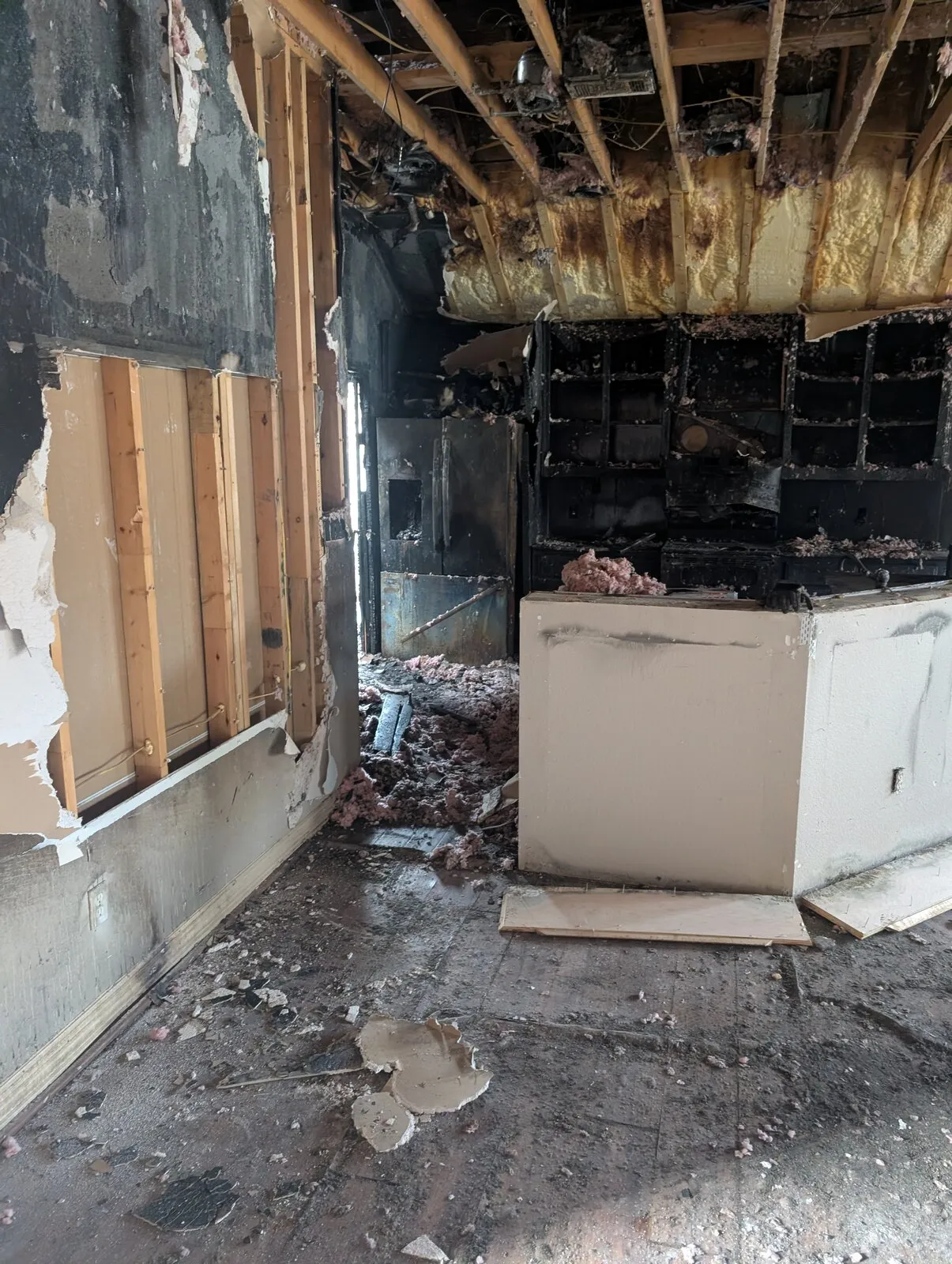
Three things come up on nearly every smoke job: the fire damage itself, a surface that won't come clean, and a room that smells after it's clean.
Fire Damage Restoration
The loss as a whole: securing the building, the water the fire department left behind, what has to come out, and the rebuild that follows.
Learn MoreSoot Removal
What the residue is made of depends on what burned, and that decides the method a surface gets. Start here if a wall or a cabinet isn't coming clean.
Learn MoreSmoke Odor Removal
For a room that reads clean and still smells: finding the material holding the smell, and getting that material out of the house.
Learn MoreSTILL GOT QUESTIONS?
Frequently Asked Questions
Call (903) 993-5663 with anything that isn't answered here. The line is answered 24/7, and coming out to look and writing the estimate costs nothing.
24/7 Emergency Response
Find Out How Far the Smoke Got Into Your House