For Realtors, Property Managers and Adjusters
Realtor and Insurance Restoration Services
A property under contract or under management turns up water, fire or mold damage, and it has to be placed with a contractor before anything else moves. Warrior Restoration comes in as the sub. What comes back to you is a property that is dry, rebuilt and priced, and a file that says how.
Request Help Online
How the engagement is set up
Who Holds What on a Restoration Job
On most of this work the realtor or the property manager is acting as the general contractor, and Warrior Restoration is the sub. You keep the relationship with the seller or the owner, and the decisions that cost them money stay theirs. We take the scope, the documentation and the carrier conversation, and we answer to you for all three.
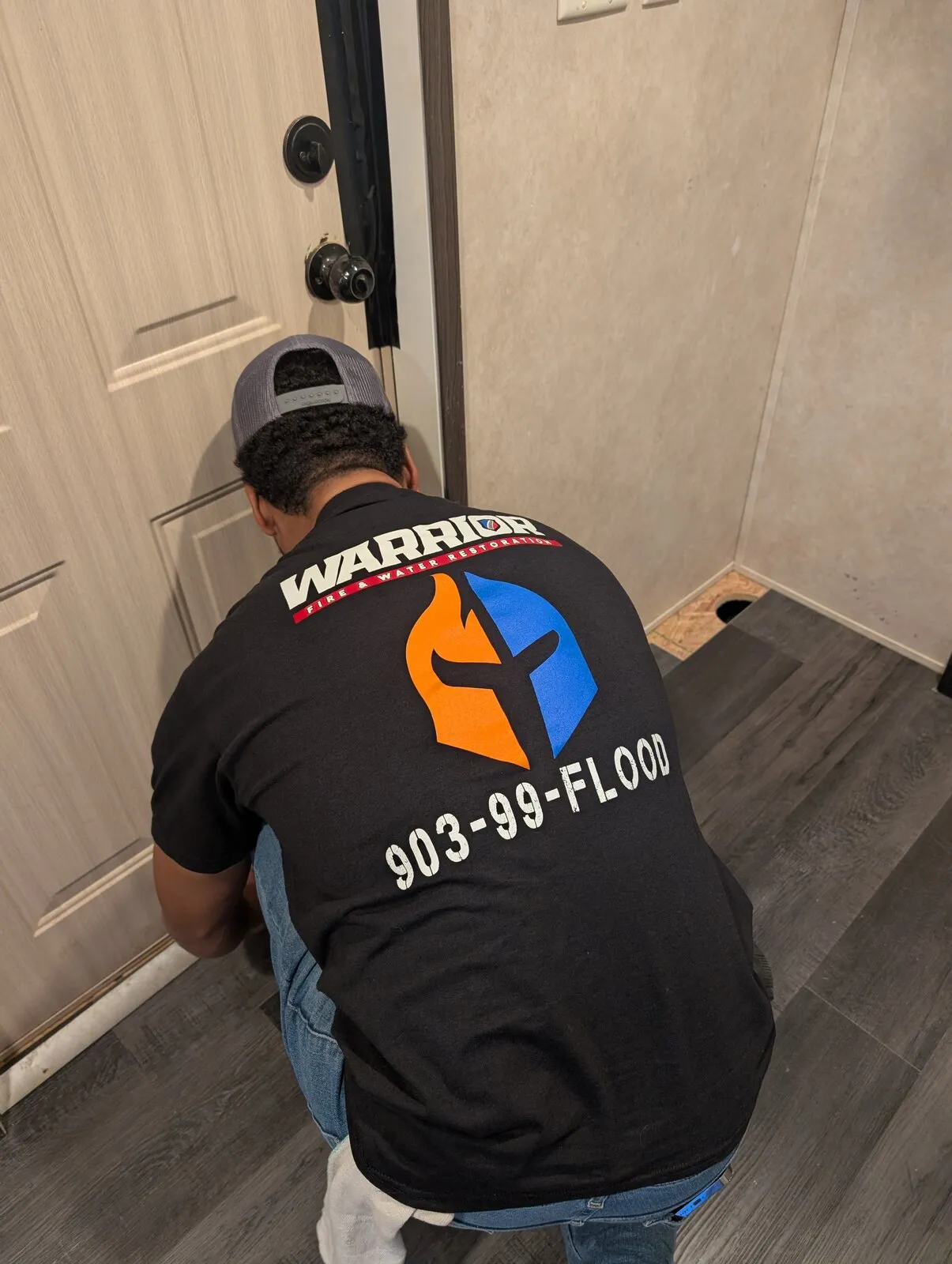
Warrior Restoration is owner-operated. Justin Miller, a disabled veteran, works the jobs with a crew of 6 and three response units, and holds IICRC WRT, ASD, AMRT and FSRT as a technician. The person who walks the property with you is the same person who walks it with the adjuster.
What We Take On
What We Cover on a Listing or a Managed Property
One contractor carries the loss from the first extraction to the last coat of paint, and the two places that work stops are the exterior roof and, on jobs that require one, a mold clearance.
Written Line-Item Scope
A free on-site estimate, priced line by line in Estimate Rocket, in a form an adjuster can set beside their own numbers.
Water Damage and Drying
Extraction with portable units, then commercial dehumidifiers, high-velocity air movers and Injectidry panels where a wall cavity is holding water.
Thermal Imaging and Moisture Mapping
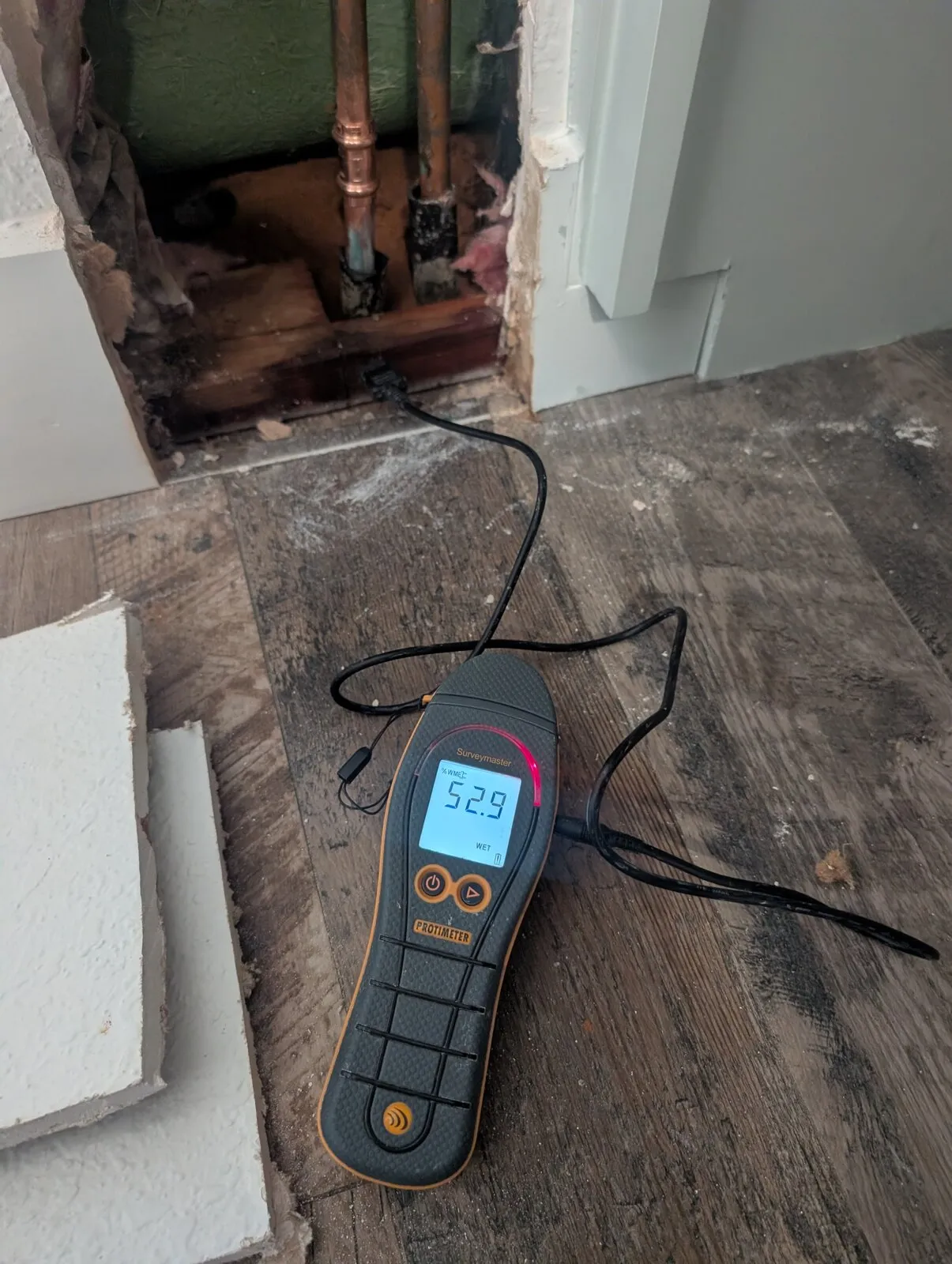
A thermal camera and calibrated meters find the wet line where the surface still looks dry, so the scope covers what is actually wet.
Duct Cleaning After a Fire
Smoke moves through the return and settles in the runs, so the ducts get cleaned as part of a fire scope. They are cleaned, never replaced.
Fire, Smoke and Storm Losses
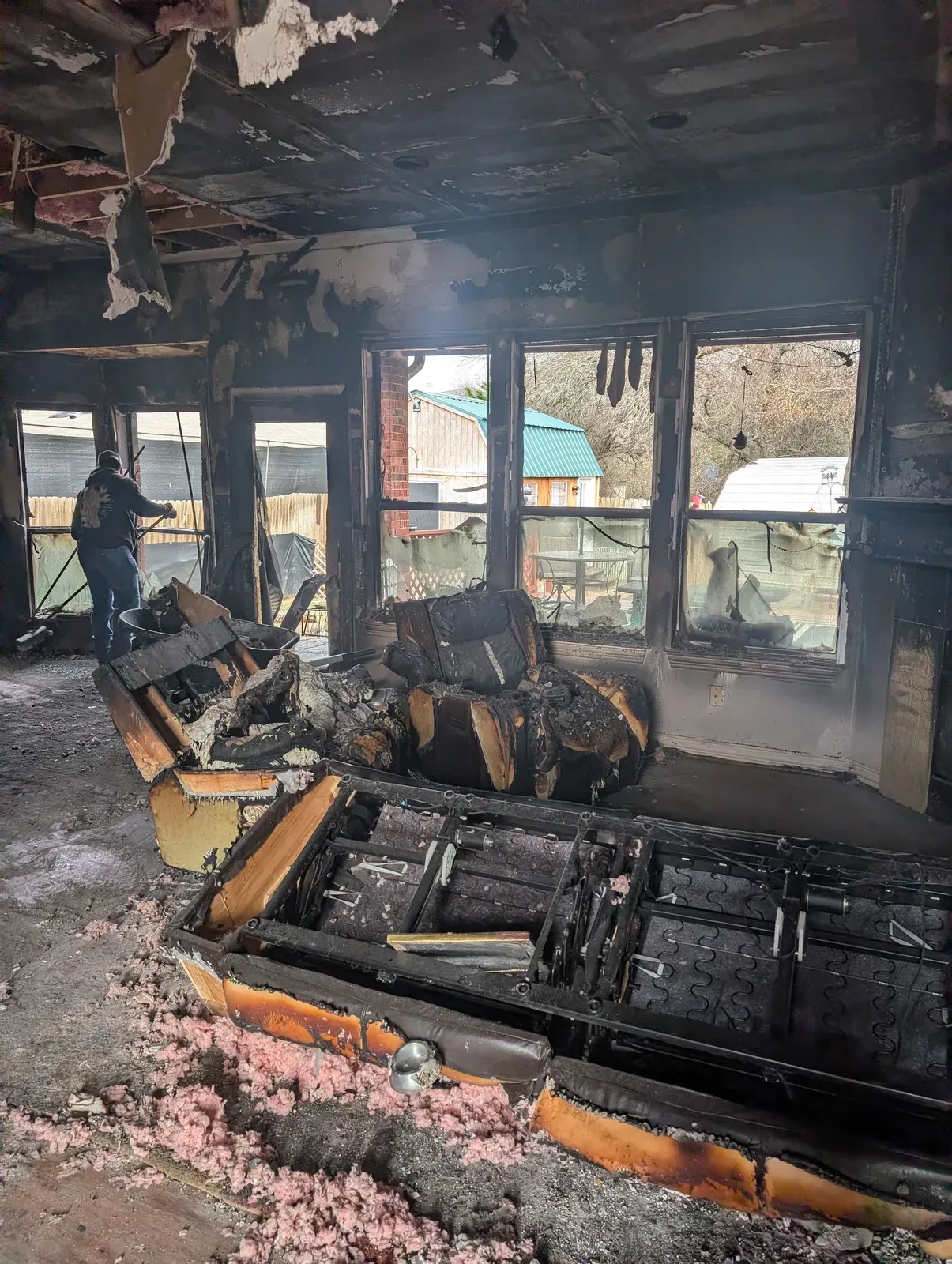
Soot removal, smoke odor work, content cleaning, pack-out and off-site storage, plus emergency tarping and board-up while the structure is open.
Mold Remediation
Poly containment with zipper doors, negative air and dedicated HEPA scrubbers, removal of the affected material, and antimicrobial application on what stays.
Reconstruction Back to Finish
Demolition, drywall hang, tape and finish, texture, paint, trim and flooring, all of it in house.
Workmanship Follow-Through
If our tile or flooring installation causes an issue, we return to fix it.
How We Work
Inside a Job You Hand Off
The work runs in a fixed order, and each stage settles something the stage before it could not. Where you have to commit to something before it is settled, you can name the stage that settles it.
The Call
Give us the address, the access arrangement, and the name of whoever can approve spend on the owner's side. Those last two are often different people.
The Walkthrough
We walk the property with calibrated moisture meters and a thermal imaging camera. What comes out of it is the extent: how far the water or the smoke actually travelled, and which materials are staying.
The Written Estimate
The scope is written in Estimate Rocket and priced line by line. This is the first point at which the job has a number attached to it rather than a guess.
Scope to the Carrier
That scope is submitted straight to the carrier, with the photographs from the walkthrough behind it, so the claim opens on a priced document instead of a phone description.
The Adjuster Walk
Justin meets the adjuster at the property and walks the loss with them, so what is being priced has been seen by both sides.
Tear-Out and Rebuild
Drying, tear-out and reconstruction run against the approved scope. When a wall comes open on more than that scope priced, the extra goes back to the carrier before it gets built.
Insurance Claims
How the Money Moves on a Claim
Most of what an owner will ask you about is money, and most of it gets decided in the billing chain rather than at the property.
- We take the carrier's approved amount as payment in full. That amount minus the deductible is what we are paid, so nothing arrives as a gap invoice at the end of the job.
- We bill the mortgage company directly. When the lender's name is on the check alongside the owner's, we deal with the lender to get the funds released.
- Supplements cover what the first approval missed. Hidden damage that turns up after approval is filed with the carrier as a supplement, so it does not reach the owner as a change order.
- Disagreements about extent and price go to the adjuster. Where our line items and the carrier's don't match, we negotiate scope and pricing with the adjuster on the homeowner's behalf. The claim itself is settled between the carrier and the policyholder.
- A public adjuster already on the job changes nothing at our end. We coordinate with public adjusters where one is engaged, and the same documentation goes to the carrier either way.
Free On-Site Estimates
We walk the property and hand over a written, line-item estimate at no charge, with no obligation to file a claim off the back of it.
Call (903) 993-5663Workmanship Follow-Through
If our tile or flooring installation causes an issue, we return to fix it.
The documentation
What Ends Up in the File
The file is the part of this work a professional actually handles. You are unlikely to be standing there when the wall comes open, and the owner may be in another state. What you have to work from afterwards is the record: what was found, what it priced at, what the carrier approved, and what changed after that.
So the record is built out of the job itself. Readings come off calibrated meters and carry the date they were read. Photographs in it show rooms as they were before anything was moved. The estimate is a dated document with line items on it, and the carrier's approved scope sits beside the version it was reconciled against.
That is what makes it useful later. A supplement filed weeks in refers back to a photograph from the first day on the property. A question from a buyer's inspector months on has a dated document behind it rather than somebody's memory of a Tuesday. The work ends; the record is still there when the next person asks.
Call (903) 993-5663What the File Holds
- Photographs of rooms as they were before anything was moved
- Moisture readings off calibrated meters, dated as they were read
- Thermal images where the wet line does not show on the surface
- A line-item estimate written in Estimate Rocket
- The carrier's approved scope, next to the estimate it was reconciled against
- Supplements filed for damage found after approval
- The assessment written on the first visit, before tear-out changed the property
- Where an independent licensed mold assessor is engaged, the clearance they write
Related Services
The Trade Behind the Line Items
A scope lists the work in line items. Where the loss came from decides which ones.
Water Damage Restoration
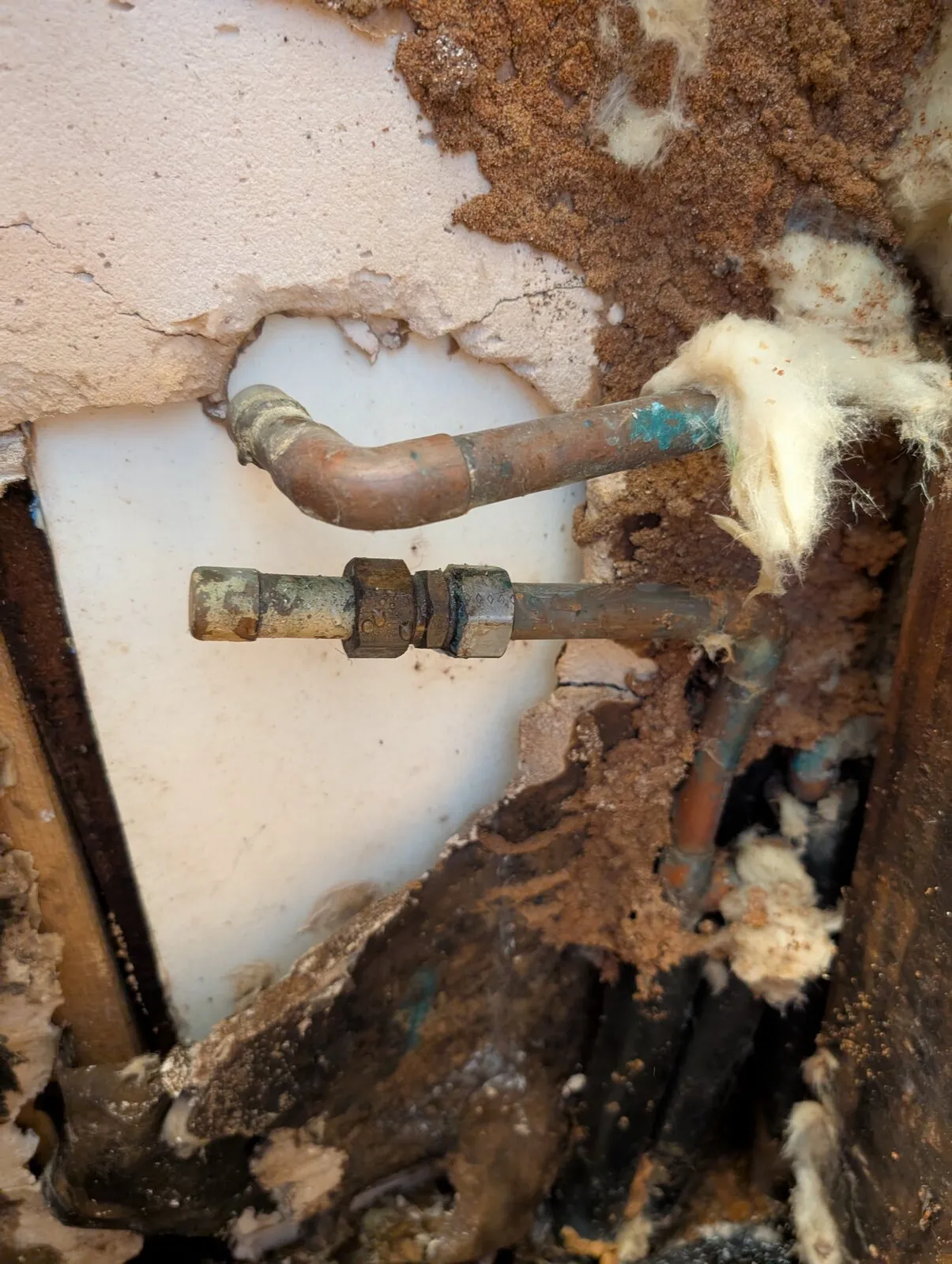
If it started with a supply line, an appliance or water that got in through the roof, extraction and structural drying are the trade the scope is built on.
Learn MoreFire Damage Restoration
If there was fire in the structure, the soot, the smoke odor, the contents and the ductwork each price as separate work.
Learn MoreMold Remediation
If there is visible growth, or a cavity that stayed wet long enough to grow some, the containment and removal sequence is its own trade.
Learn MoreSTILL GOT QUESTIONS?
Frequently Asked Questions
The questions that come up on a property that isn't the caller's own. For anything else, call (903) 993-5663.
24/7 Emergency Response
Bring Us In as the Sub on Your Next Restoration Job