Putting the Room Back
Mold Damage Repair in North Texas
Remediation leaves the room open. The board is out, the baseboard is off, and the flooring stops at a cut line. Putting all of it back is a second scope of work: drywall, texture, paint, trim and flooring, done by our own crew. Call at any hour and we respond within an hour, 24/7. The on-site estimate is free.
Request Help Online
What Came Out
Why the Opening Is Bigger Than the Growth Was
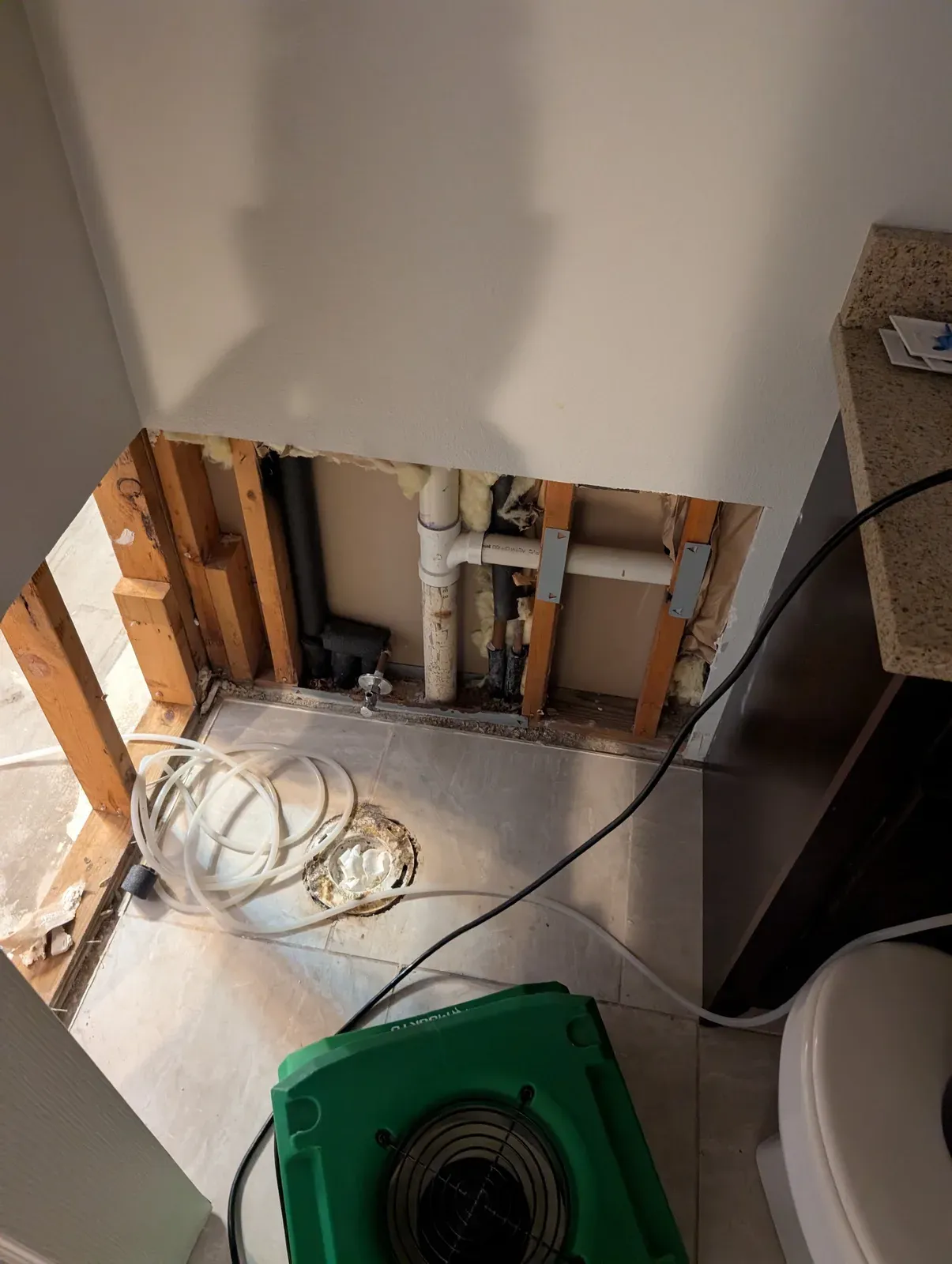
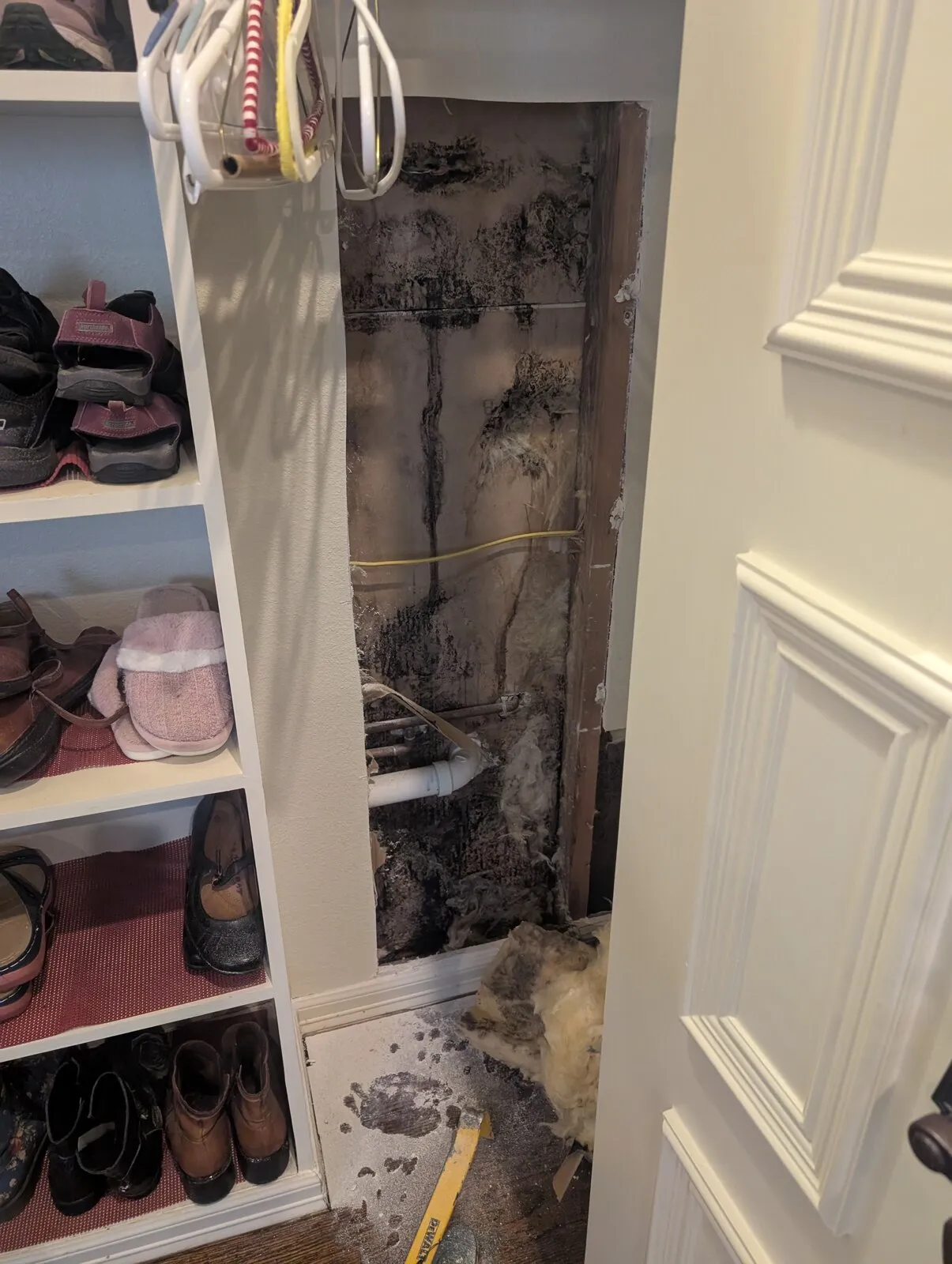
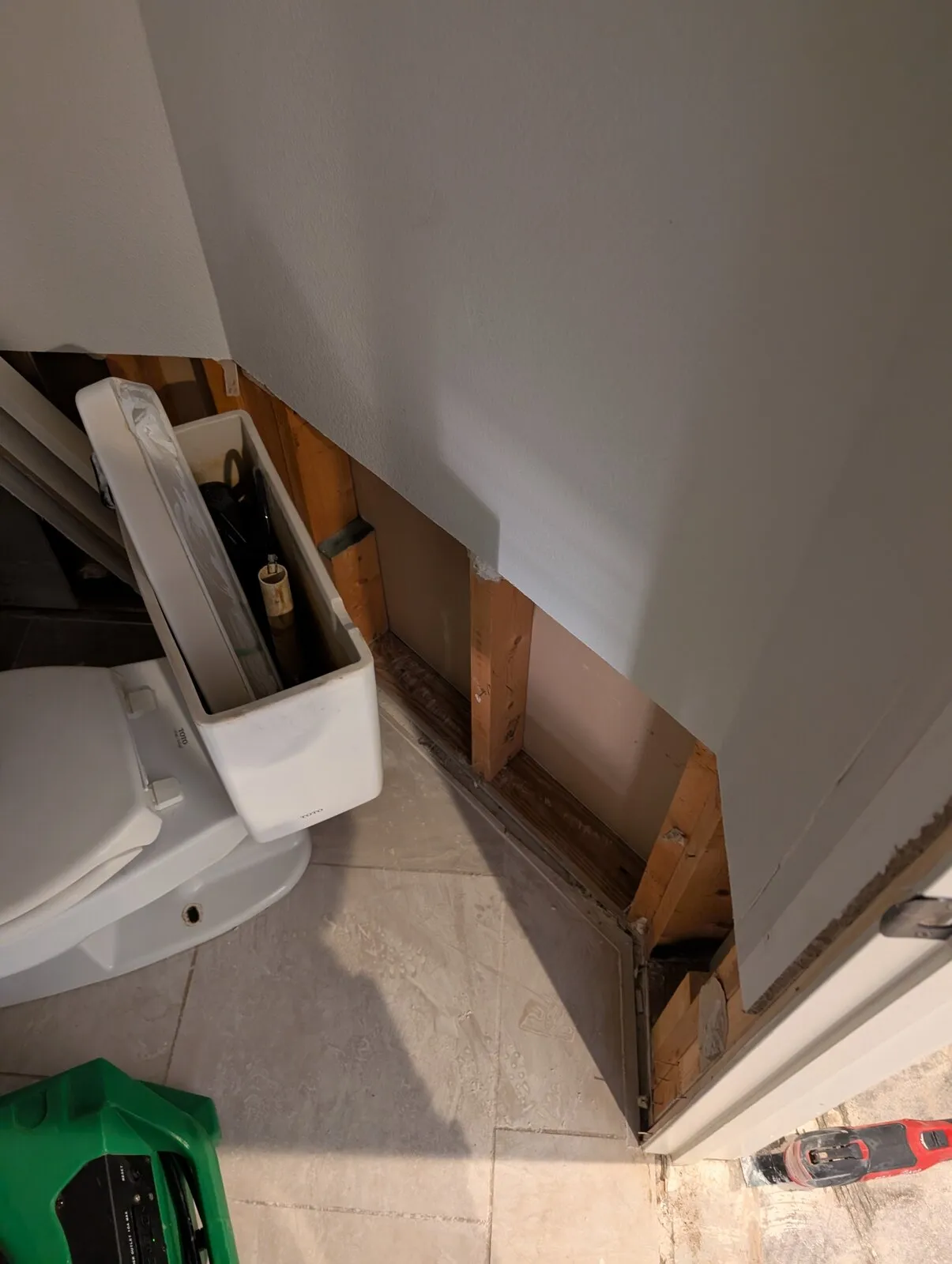
Growth on a wall shows where moisture surfaced. It doesn't show how far the water ran, and remediation takes out the porous material that can't be cleaned rather than the patch you could see. That usually means the board and the paper facing behind it, the batt insulation in the bay, and the baseboard and casing that sat against wet gypsum. Where water tracked under a floor, the covering comes up with it. The opening in front of you is a map of what was wet.
So the rebuild gets scoped off what's open. We measure the openings, count the sheets, add up the trim runs and the floor area, and write that as its own estimate. On a covered loss it reaches your carrier as a second scope, priced against material that has already left the house.
What We Put Back
What Mold Damage Repair Covers
What the removal took sets the list. These are the pieces that show up on most jobs, and our own crew of 6 does the rebuild.
Containment Comes Down
Poly barriers with zipper doors and negative air stay sealed through the removal and, where an assessment protocol governs the job, the verification. They come down before finish work starts, and the bagged debris leaves with them.
Assessor Verification First, If Required
Where an assessment protocol governs the job, the assessor samples the cleaned area and issues a written result. Finish work starts once that result is in hand.
Drywall and Ceilings
Board goes back on ceilings as well as walls, and a ceiling seam is floated wider than a wall seam because light crossing a ceiling finds a ridge. Texture is matched to the surface it runs into.
Dry Before It Closes
Calibrated moisture meters go back on the framing and the subfloor before any board goes up. A reading still high keeps air movers and dehumidifiers on the room.
The Water That Fed It
New board over a live leak grows the same problem again. Correcting the source comes before the cavity is closed, and it's the item most likely to move a start date.
Trim and Flooring
Baseboard and casing that came off whole go back on. Flooring is laid across the cut and matched to what stayed in the room, which is straightforward on a stocked plank and harder on a discontinued one.
Primer and Finish Coat
Primer goes over the new board and the compound, then the finish coat over the whole surface rather than the repair alone. A spot coat on aged paint shows as a halo.
Two Scopes, One Claim
Removal and repair are priced and approved separately on the same loss. We build both in Estimate Rocket and submit them straight to your carrier.
Order of Work
How a Mold Rebuild Runs
Each step waits on the one before it. Two of them are gates: the area has to be released for finish work, and the framing has to read dry.
The call
Tell us what came out, who did the removal, and whether an assessor is involved. That's usually enough to know whether your rebuild is waiting on a document or on a moisture reading.
On-site look and scope
We walk the open space, take readings, and write the rebuild. The visit and the written estimate cost nothing, and on a covered loss that scope is what goes to your carrier.
Released for finish work
Where a licensed third-party mold assessor is engaged, the post-remediation verification and the written clearance come first, and containment stays sealed until that document exists. The carrier's approval on the repair scope usually lands around the same point.
Dry, and the source
Framing, subfloor and the material either side of the opening get metered. Anything reading high stays open under air movers and dehumidifiers, and whatever fed the growth is corrected before the cavity is closed.
Board, tape, texture
New board is cut to the openings the removal left, hung, screwed off, taped and floated. Texture is mixed to match the surrounding surface and shot once the joints are sanded flat.
Trim and flooring
Once the paint is on, baseboard and casing go back and the flooring is laid across the cut. That closes the last of the openings the removal left.
Before Finish Work
What an Assessor's Clearance Changes for the Rebuild
Warrior Restoration remediates and rebuilds. The testing, the post-remediation verification and the written clearance belong to a licensed third-party mold assessor, hired separately and reporting separately. Texas keeps those two roles apart once a job passes a set size.
Where an assessor is engaged, that written result is the gate on finish work, and it changes the order of the job more than the content of it. Containment stays sealed and the walls stay open until the sample is taken, because a sample has to reach the material that was cleaned and not fresh board laid over the top of it. A wall closed early is a wall that may have to come back out.
The second thing it changes is what the estimate can be. A rebuild priced before the removal is priced against a guess, because nobody knows yet how much board leaves the wall or how far the flooring gets cut back. Once the area is released, the openings are fixed and the scope is countable: sheets of board, feet of base, square feet of floor. That's the number that goes to the adjuster, and we meet them on site in the open room to walk it.
Call (903) 993-5663What the Rebuild Start Waits On
- The assessor's written verification, where one is engaged on the job
- Meter readings on the framing and the subfloor, taken at the opening
- Whatever fed the growth, corrected before anything closes over it
- How far the removal cut the flooring back, which decides if the floor is in this scope
- How much of the baseboard and casing survived the removal, which decides what gets ordered
- How much of the ceiling came out, since overhead seams take longer to finish
- The carrier's approval on the repair scope, which is separate from the approval on the removal
- Whether a matching flooring plank is still stocked or has been discontinued
Related Services
The Rest of the Mold Job
If the growth is still in the wall, or a lab result has you stuck on what it means for the work, one of these is the page you want.
Mold Remediation
The stage before this one: containment, removal under negative air, antimicrobial treatment, and, where an assessor is engaged, the verification that releases the rebuild. Start here if nothing has come out yet.
Learn MoreDuct Cleaning
Growth near a return, or a system that ran while it was there, raises a separate question. This covers when a duct cleaning is actually indicated.
Learn MoreBlack Mold
If a lab report came back before the repairs started, this covers what a species name does and doesn't tell you about the work ahead.
Learn MoreSTILL GOT QUESTIONS?
Frequently Asked Questions
Questions that come up once the containment is down and the room is waiting on finish work. Call (903) 993-5663 to talk through your own rebuild.
24/7 Emergency Response
Free On-Site Estimate for Your Mold Rebuild