Available 24/7 with Emergency Response
Water Damage Restoration in Whitewright, TX
Hail that opens a roof doesn't put water in the house the same morning. It leaves a hole over the attic, and the next rain finds it. Warrior Restoration works water losses in Whitewright, and the line is open whatever time of day or night it is. We respond within the hour. We don't charge for the first look or for the estimate that follows it.
Request Help Online
Why Whitewright Homeowners Choose Warrior Restoration
Six People, Three Units, and No Second Company
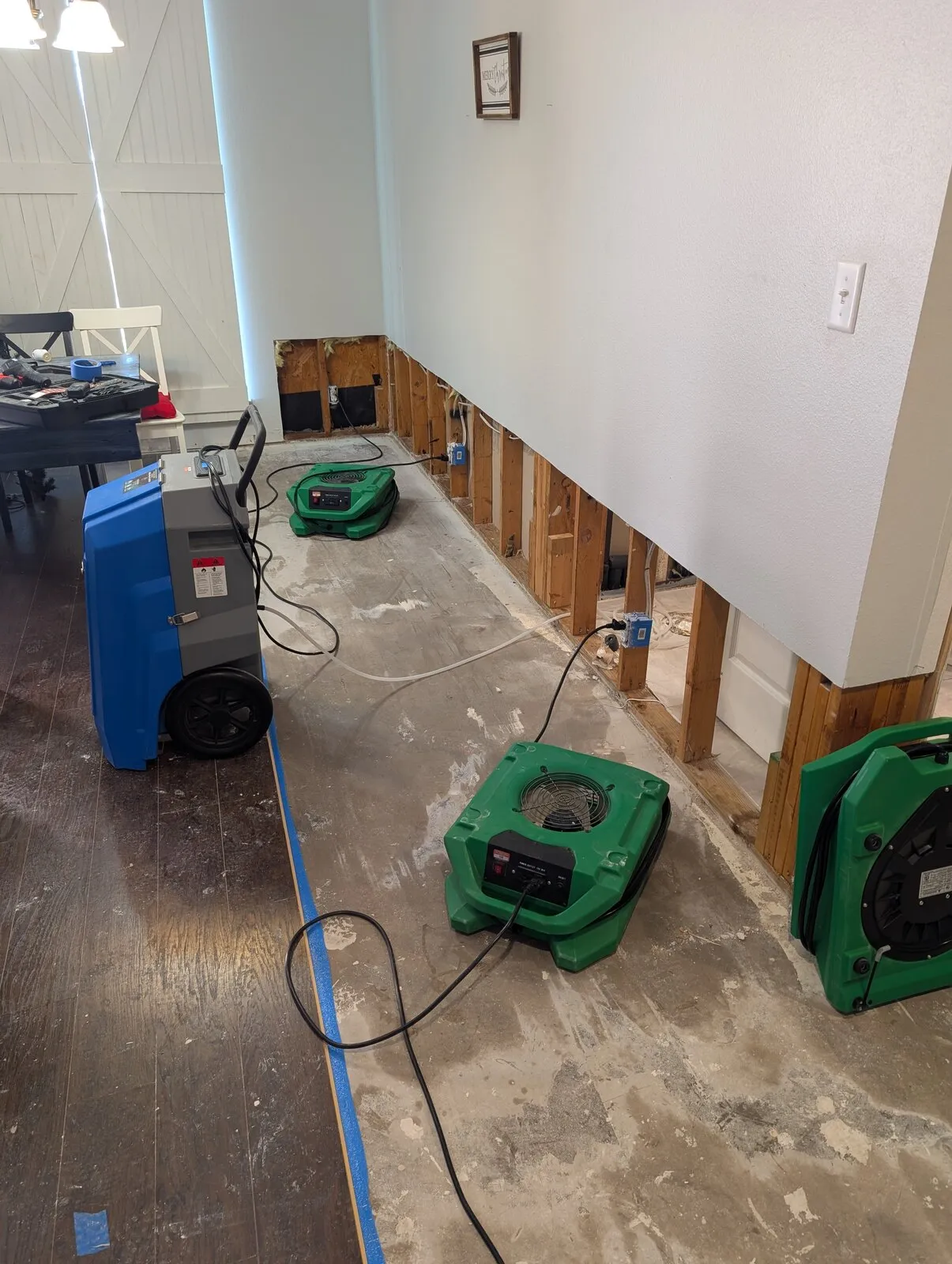
Justin Miller owns Warrior Restoration outright, he's a disabled veteran, and he's on the jobs himself. Six people, three response units, and a unit pulls up carrying everything a first visit can need: portable extraction units, industrial dehumidifiers, high-velocity air movers, Injectidry wall-cavity panels, calibrated moisture meters, a thermal imaging camera, HEPA vacuums and a generator. Nothing on that visit waits for a second trip to fetch it, so the standing water goes and the dehumidifiers start while we're there.
The people who open a wet ceiling are the people who close it again. Demolition, board, texture, trim, paint and floor covering are ours. That matters most on a storm job, where a tarp goes up on the first visit and the ceiling under it is rebuilt by the same crew once the readings hold, and your carrier reads a single scope the whole way through.
What We Do
Our Comprehensive Water Damage Services
The water's entry point and the time it sat there decide which parts of the work a house needs. After a hail morning that's usually the attic and the ceiling under it; a supply line that splits behind drywall starts lower and runs flat. All of it is our crew, with equipment off our own units.
Emergency Water Extraction
Portable extraction units take the standing water up off flooring, carpet and the pad beneath it. Where the water came down through a ceiling, the wet floor sits under the attic bay the water ran along, and it reaches wider than the drip line does.
Flood Damage Cleanup
Water that has come through a roof arrives carrying whatever the deck and the insulation were holding. Saturated insulation and ceiling board leave the house rather than sitting under a fan, HEPA vacuums clear the fine debris behind them, and an antimicrobial goes onto what stays.
Structural Drying
High-velocity air movers keep moisture leaving the material and industrial dehumidifiers take it out of the air. On a ceiling loss the slow readings are the attic insulation and the top plate, so the machines get set for those, and they come out when the meter says so.
Moisture Mapping
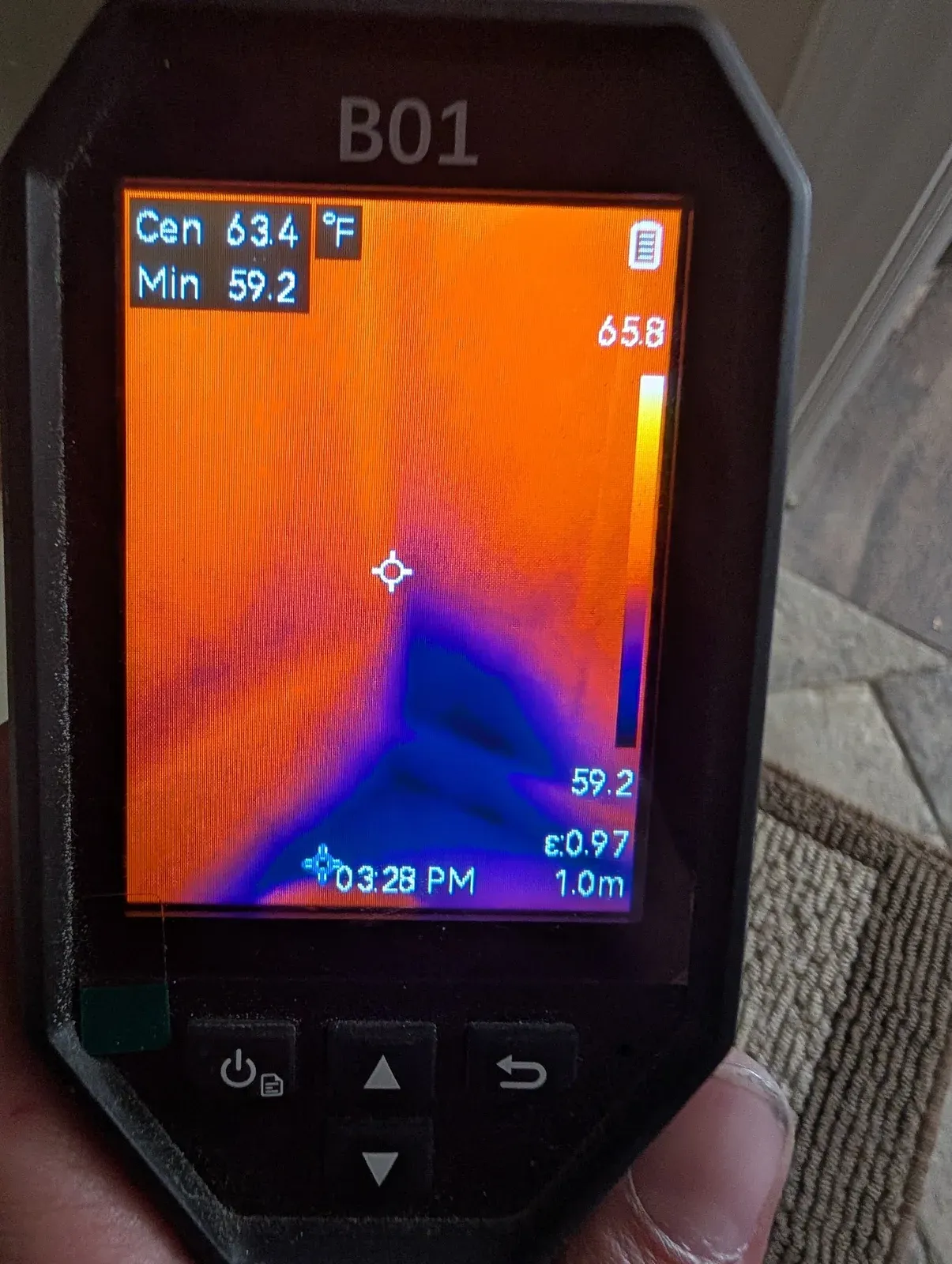
Thermal imaging and calibrated meters trace the route the water took. On a ceiling loss that route follows the joists and reaches further than the stain does, so what gets opened is what the map reads wet.
Wall-Cavity Drying
Injectidry panels dry a cavity from inside it, through ports small enough to patch, so the drywall and the baseboard stay on. Where water ran down a wall from a wet top plate, that's often what decides whether the bottom of the wall comes off at all.
Roof-Leak Water Repair
The opening gets closed with a tarp or a board-up, and everything under the deck is ours: soaked insulation down, the ceiling and the wall cavities behind it dried, then new board, texture, trim and paint. The covering over it belongs to Warrior Roofing, Justin's other company under the same ownership.
Mold Prevention
Mold needs material that stays wet, and wet insulation shut inside a closed ceiling cavity is the version of that a roof loss makes. Drying it to a measured reading is the prevention, with an antimicrobial on the surfaces that sat wet longest. Where something is already growing, the job stops being a water scope and gets written as mold remediation.
Repairs & Reconstruction
New board goes up, gets taped, floated and textured to meet the ceiling around it, then the paint, the trim and the floor covering. The same crew that took the wet ceiling down matches the new one to the room, so the rebuild only waits on the readings.
How We Work
Inside a Water Damage Restoration Project
The order never changes. After a hail morning the first step has a tarp going up while it happens, and the rest of it is the same on any water loss. What stretches is the drying, and a reading releases the step after it, not a date.
Emergency Assessment
What settles first is whether more water is still getting in. An opening in the roof gets closed on this visit with a tarp or a board-up. If it's plumbing, we'll shut a valve that's still feeding it; the repair to whatever gave way belongs to a plumber. Then thermal imaging and calibrated meters read the house, and there's no charge for that visit or the scope written from it.
Water Extraction
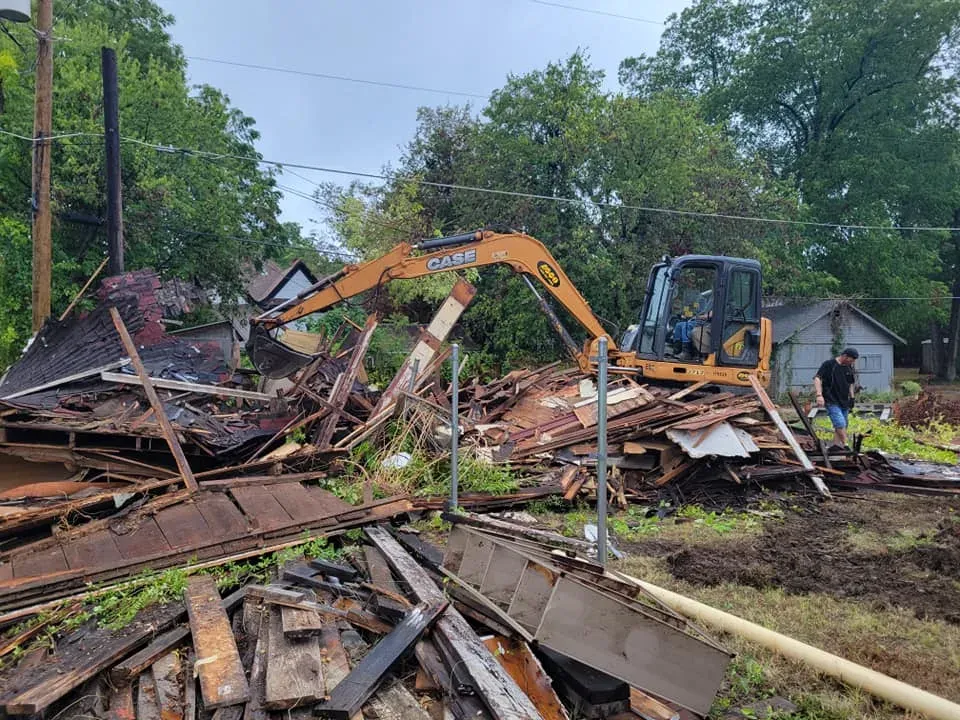
Portable units lift the standing water. Ceiling board that has come down, saturated attic insulation and carpet pad go out on the same visit, because none of it dries where it lies.
Structural Drying
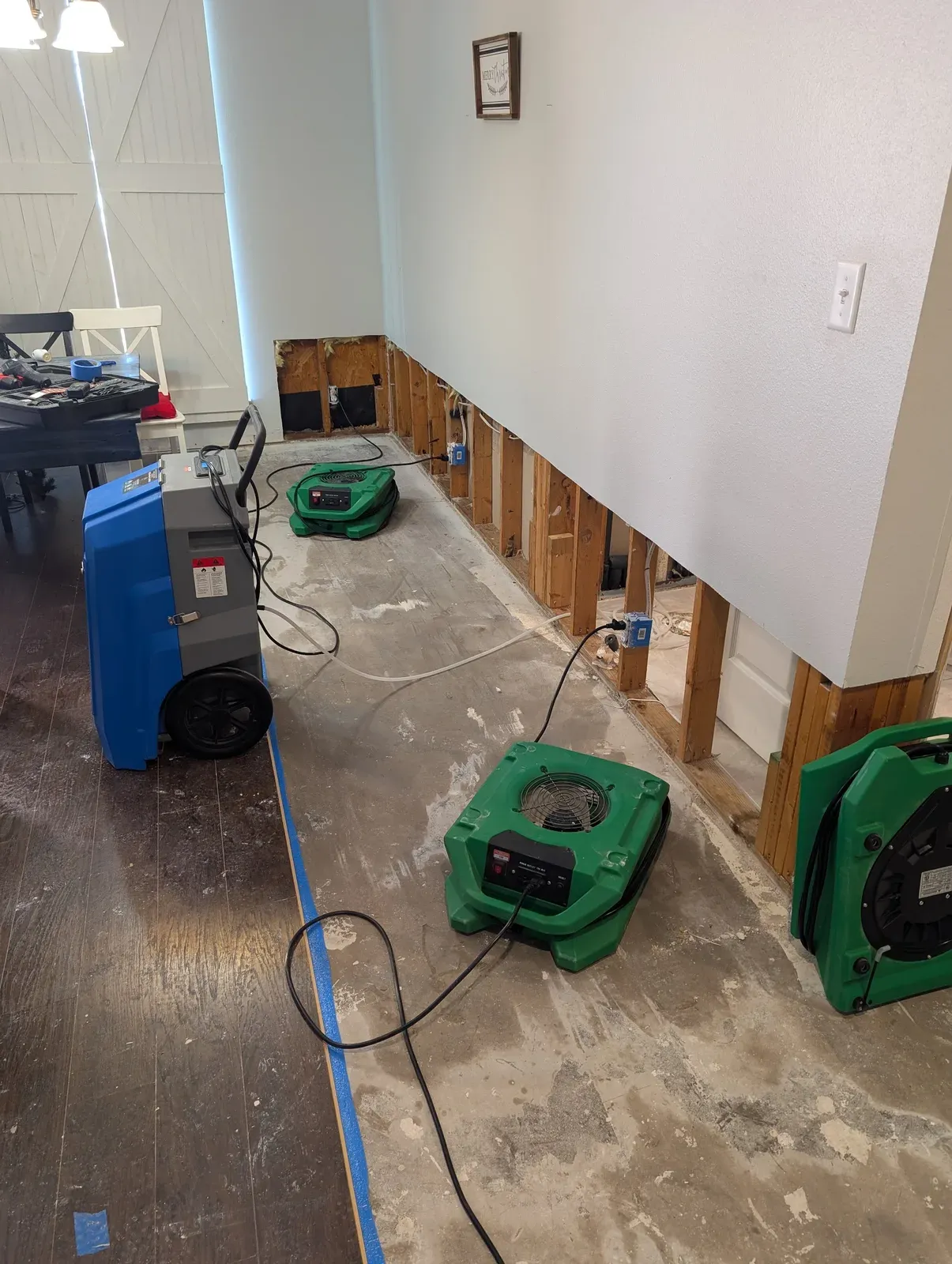
Air movers and dehumidifiers get placed off the moisture map instead of the floor plan. Cavities that can dry behind their finish get Injectidry panels instead of a saw. A generator covers an address the power hasn't come back to.
Moisture Monitoring
Every time we're back at the house, the same materials get read on the same meters. Those numbers move a machine, take one out, or release the rebuild. Nothing gets closed up over material that's still reading wet.
Repairs Begin
Reconstruction waits on the readings and starts when they hold: attic insulation, ceiling board, then flooring substrate. Anything the drying uncovered that the original approval missed is filed as a supplement before that work begins.
Final Reconstruction
Texture matched to the ceiling it meets, then paint, trim and the floor covering. The machines and the debris leave together.
Insurance Claims
We Handle Your Insurance Claim from Start to Finish
The scope gets written in Estimate Rocket, and it prices the material the meters read wet rather than the part of the ceiling that shows. Warrior Restoration is a restoration contractor, not a public adjuster. When a returned estimate falls short of the repair as we scoped it, those line items go back to the adjuster. If your claim already has a public adjuster on it, we work with them. What a policy covers stays your carrier's call.
- We bill your insurance carrier directly. We coordinate with your carrier's adjuster and submit the complete scope of damage.
- We meet adjusters on site. We walk the property with the adjuster so hidden moisture gets documented before approval, not discovered afterward.
- We file supplements. If drying uncovers damage the original approval didn't cover, we file supplements straight with your carrier.
- You never owe us anything beyond the deductible. We accept the carrier's approved amount minus your deductible as payment in full.
- We handle mortgage company checks. If your lender's name is on the insurance check, we coordinate directly with them to get funds released.
Free On-Site Estimates
We inspect at no charge and provide a complete damage assessment before any work begins.
Call (903) 993-5663Workmanship Follow-Through
If our tile or flooring installation causes an issue, we return to fix it.
Water Damage in Whitewright
A Town-Wide Hail Morning, and the Rain That Follows It
On the morning of 26 April 2026 a supercell put golf-ball to softball-size hail across Whitewright, and across Tom Bean, Trenton and Leonard with it, between roughly 6:00 and 7:30. NWS Fort Worth documented it as part of a North Texas outbreak that ran 24 to 29 April. Hail in that size range punctures asphalt shingles and dents or splits metal roofing. Whatever it did to a roof here, it did inside the same ninety minutes, to a town of about 1,800.
Hail like that does its damage twice, and the second time is the one that gets indoors. A punctured deck is open from that morning until something covers it, so what ends up inside a ceiling depends on how long the gap ran and how hard it rained into it. On the day of the storm there is nothing to read from inside a room. The stain arrives with the rain, days or weeks later, and the material above it was wet before anyone saw anything.
So the first piece of work is closing the opening, and that is water mitigation rather than roofing. Whitewright's median house was built in 1983 (City-Data.com), an age at which the roofing and the windows are often still original and near the end of their service life, so the same stone that bruises a newer covering goes through an older one. Both the tarp and the board-up are in-house work here, and neither waits on a decision about the roof covering, which is Warrior Roofing's side of it.
Once water is inside, it is an interior water loss and it runs like one: thermal imaging and meters to find the edge of it, extraction, then equipment on the wet material until the readings hold. What the assembly is made of sets how long that takes. The historic downtown business district is largely the rebuild that followed the fire of 12 June 1911, and brick and plaster give up water on a far longer timetable than drywall, so those walls sit under equipment longer. The storm gave the whole town the same date. The meter is what gives your house its own.
Call (903) 993-5663Equipment We Use for Water Jobs
- Portable water extraction units: remove standing water from floors and carpet
- Industrial dehumidifiers and high-velocity air movers: dry structural materials to certified standards
- Injectidry wall-cavity panels: dry behind drywall and under floors in place
- Negative-air machines: control airflow when a water loss needs a drying chamber
- Calibrated moisture meters: verify materials reach certified dry standards
- Thermal imaging cameras: find hidden water inside walls and ceilings
- HEPA vacuums: safe cleanup of debris and contaminated materials
- Generators: maintain power for drying equipment on site
More Restoration Services
We Restore Homes Across Grayson County
Two things sort out where to start: how far the water has already got, and which address the wet house has.
Ceiling Water Damage Repair
A brown ring that keeps widening on a ceiling weeks after the storm, with insulation above it nobody has been up to look at: that's ceiling water damage repair.
Learn MoreWater Damage Restoration in Farmersville, TX
Not every one of these calls is about the house the caller is standing in. Where the wet house has a Farmersville address, give us that address when you call.
Learn MoreWater Damage Restoration in Sherman, TX
If you're the one answering for a rental or a relative's place and it's the Sherman house that's wet, that address is covered the same way, by the same crew on the same equipment.
Learn MoreSTILL GOT QUESTIONS?
Frequently Asked Questions
The questions this town asks most after a hail morning. For anything else, call (903) 993-5663.
24/7 Emergency Response
Get Immediate Water Damage Restoration in Whitewright, TX